There are many water treatment options. Some are heavier and there may be lighter techniques, but after years of trial and error, these work well for me.
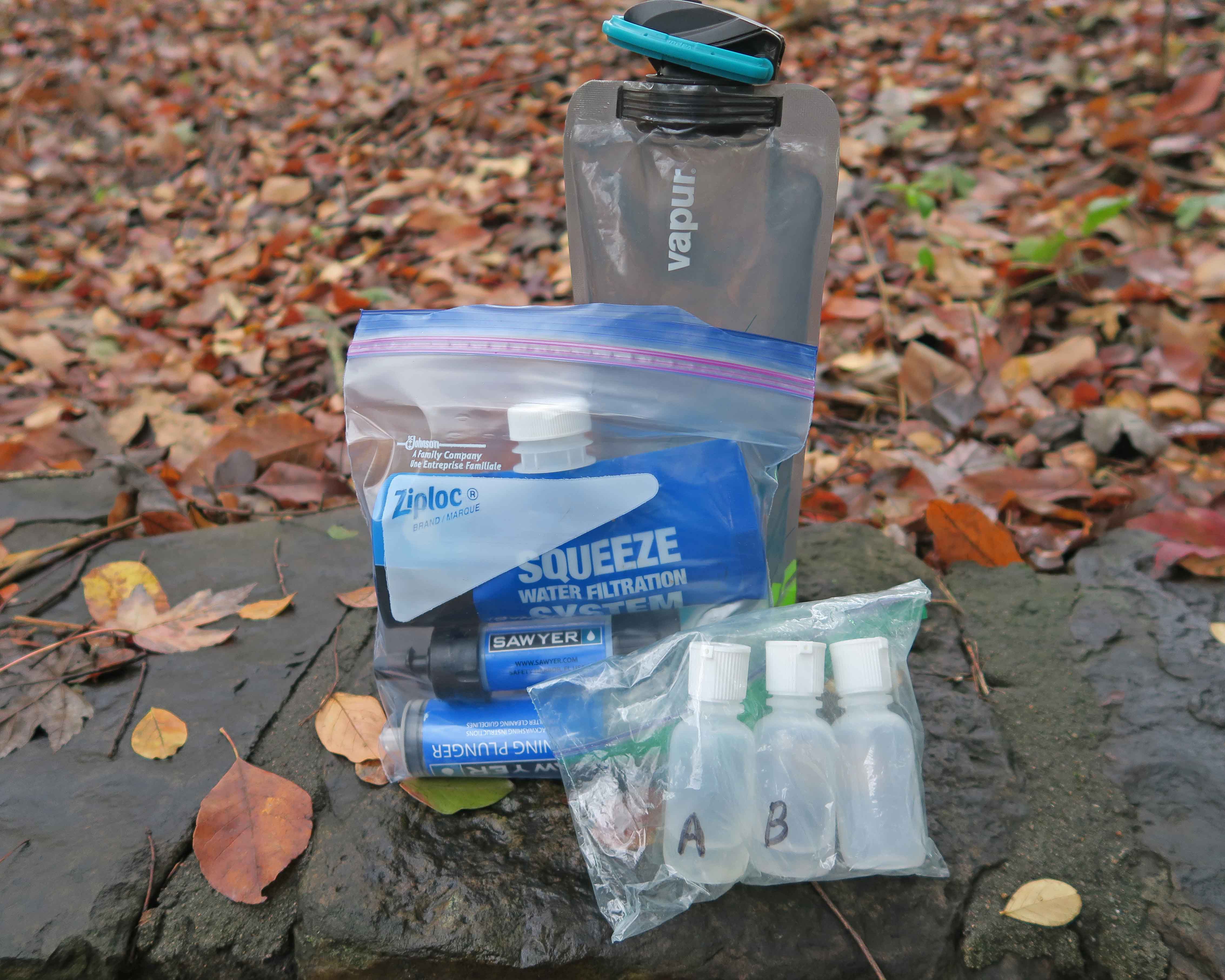
My preferred way of treating water is Aquamira drops. It’s widely available and easy to use. I rebottle it in small plastic bottles as shown and use the third bottle for my A+B mix.
As a backup, I sometimes carry a Sawyer filter. Be sure to pack the backwash “syringe” in case sediment slows the flow. I use the freezer bag to scoop water from creeks and then pour it into the Vapur folding water bottle before adding Aquamira drops. It’s also easy to pour from the freezer bag to the Sawyer squeeze bag when needed.
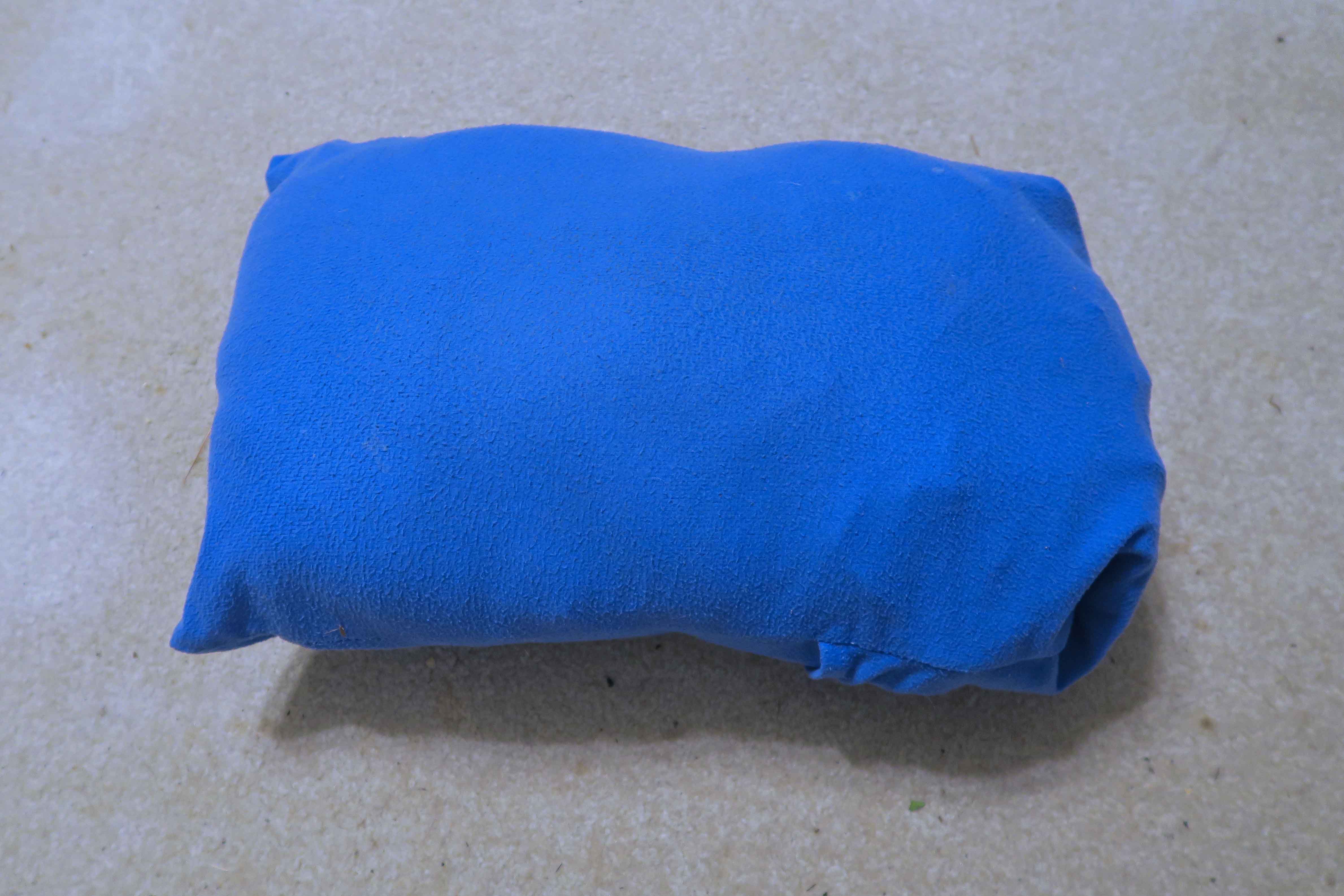
I carry a Platypus 70-oz. water “bottle” that doubles as the base of my pillow at night. I blow it up and put inside a fabric sleeve along with extra clothing. It’s very comfy! I rarely use the Platypus for water unless camp is far from the nearest source or I’m hiking in dry conditions.
Pillow before and after stuffing with extra clothing
That’s about all I have to say about water other than be sure you have a plan for finding it on the trail. Little blue lines on the map don’t guarantee H2O will be there. Hikers who live in the area you’re going to walk can often give you an idea about water levels. When in doubt, cache water at road crossings before your trip. Just be sure to pick up after yourself following your trip.
If you have water treatment tricks to share, please comment or email me. I’m always open to new approaches.
Part of the pleasure of having written Five Star Trails: The Ozarks is revisiting the trails to look for changes and needed updates. The book currently has a rating of 4.8 stars out of five!
Since there will eventually be a second edition, we visited Roaring River State Park for a couple of nights in the campground and some good day hiking. The fall colors were beginning to pop in this southern Missouri location.
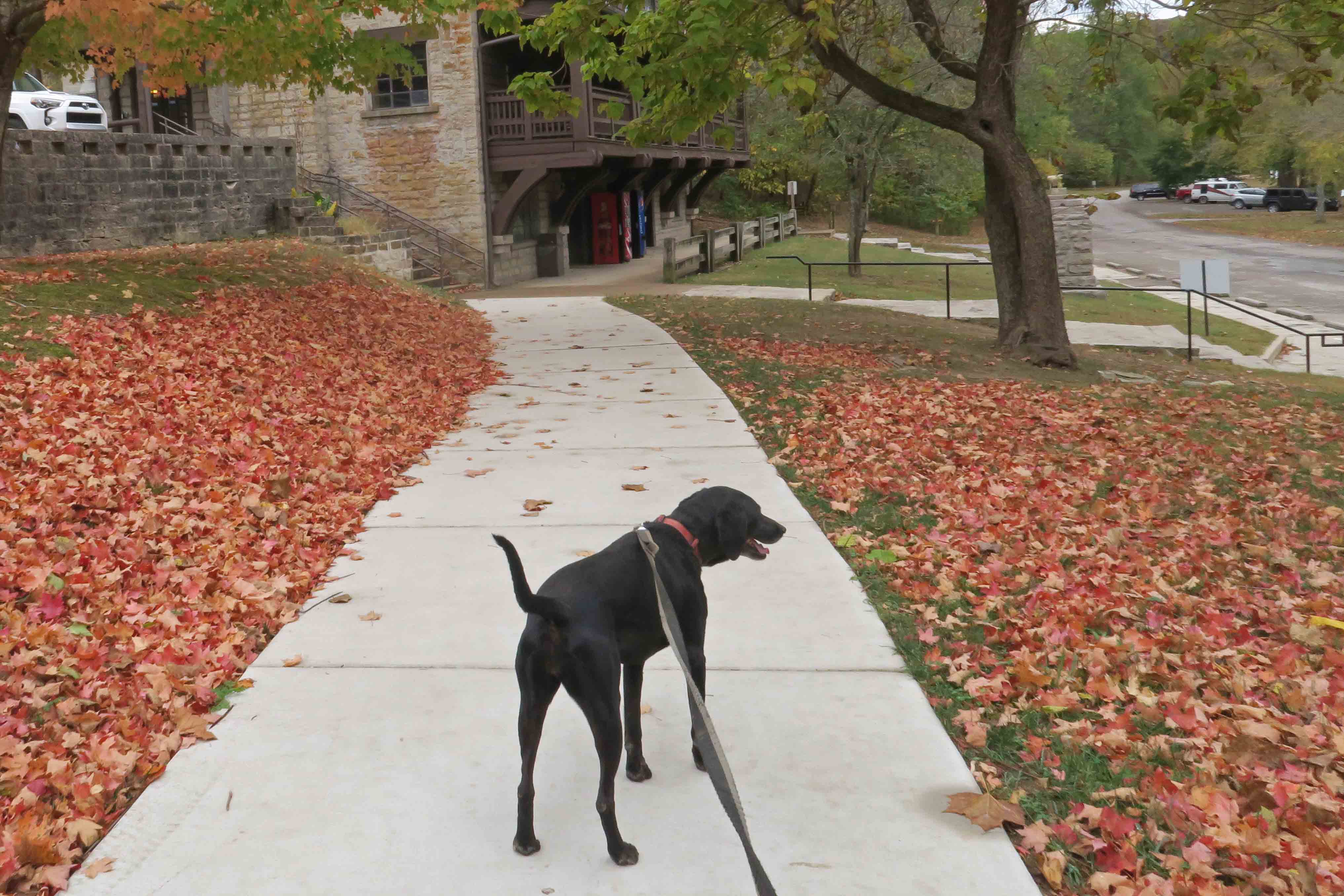
For these trails, Hiker-dog had to wear a leash, but she handled it beautifully as long as I gave her the chance to run off-trail before starting our “formal hiking.”
We walked the Tower Trail, Deer Leap, Devil’s Kitchen, and River Trails that combine to make an out-and-back figure-eight. We found it necessary to walk a different part of the Deer Leap Trail because of construction around the vent of the spring that feeds Roaring River. This was an easy adjustment and construction is a temporary thing, which was a relief.
View of fish hatchery, part of the area closed due to construction
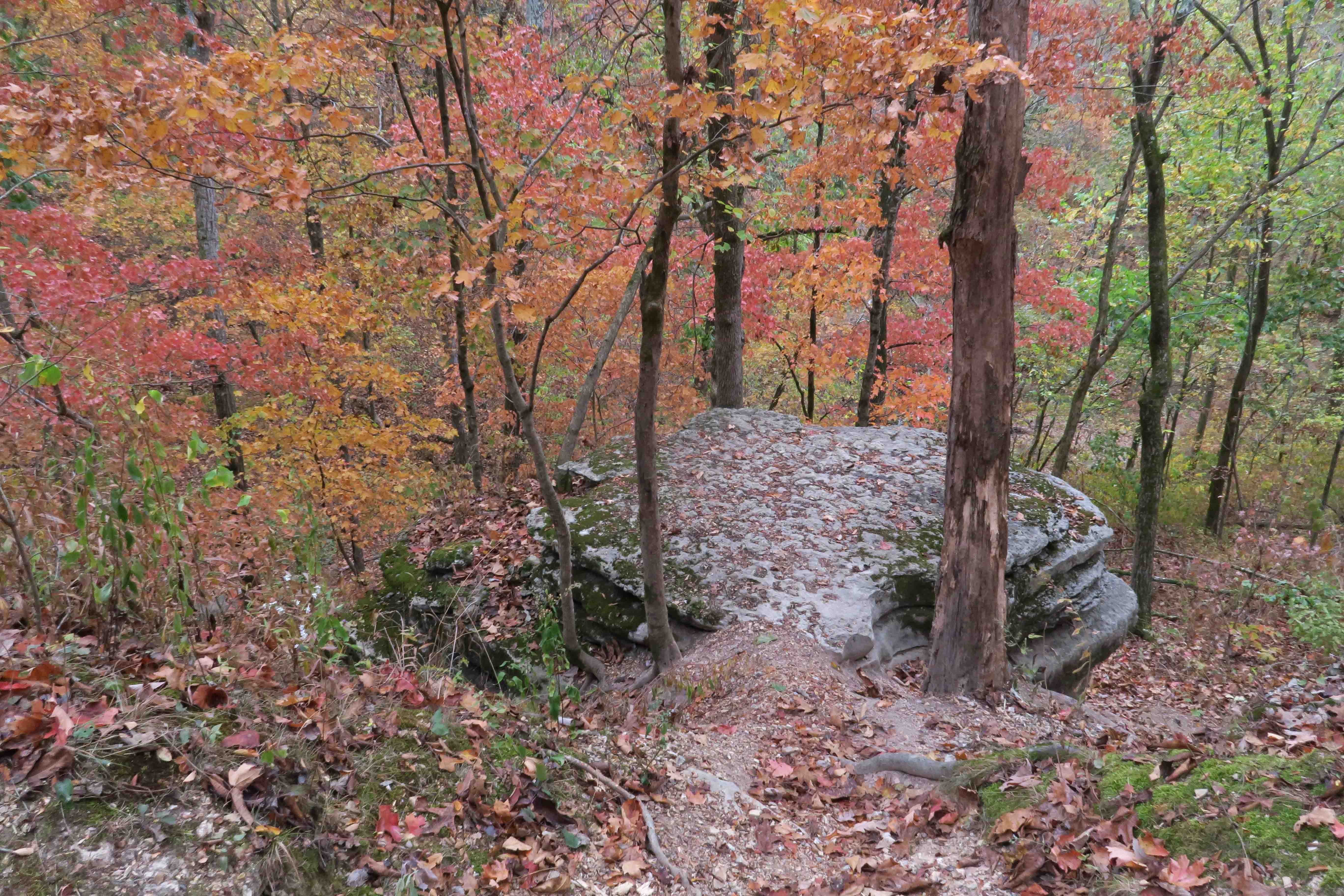
I was impressed all over again by these trails, and it was a treat to see them in early fall colors.
Small overlook on Deer Leap Trail
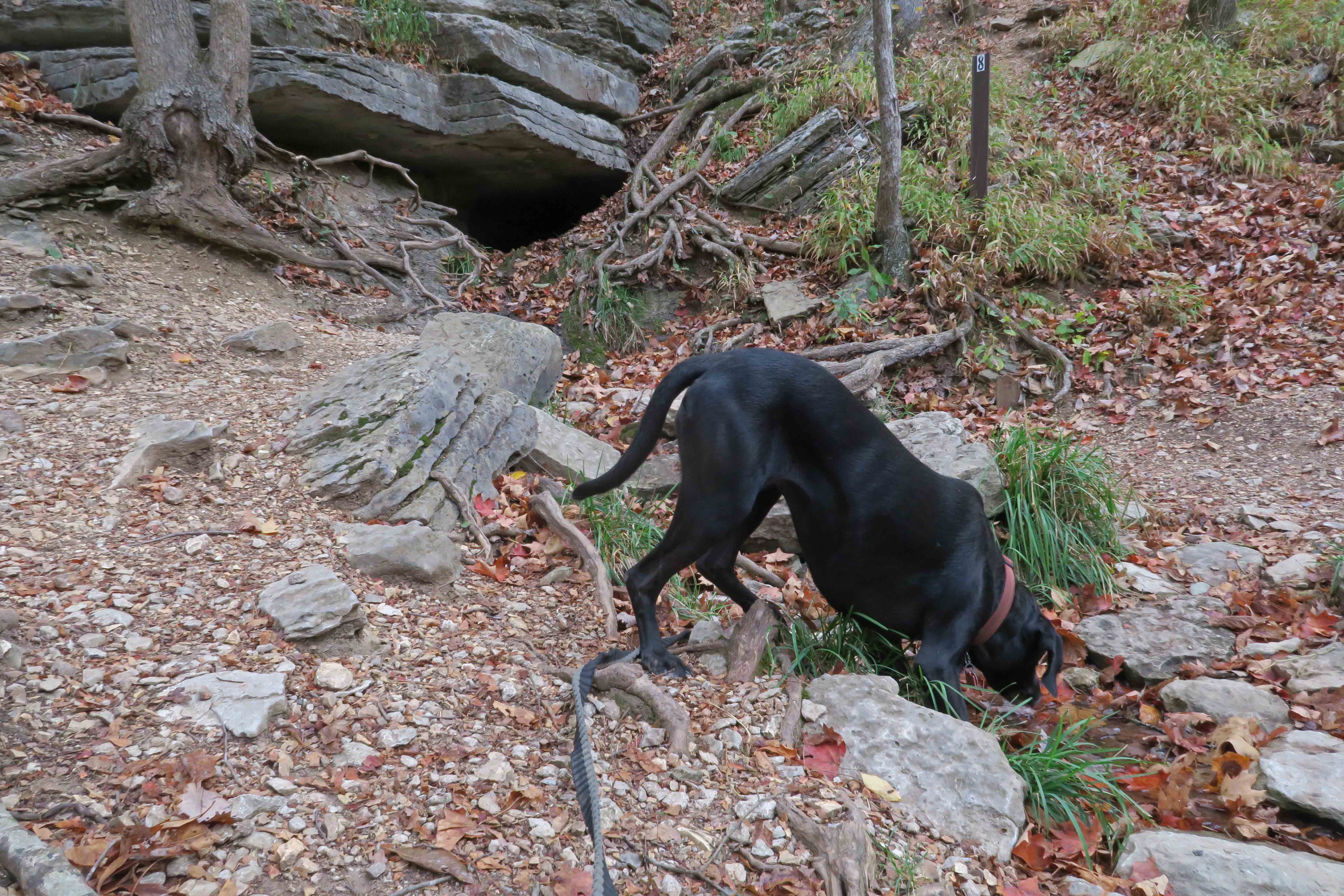
I poured out water for Hiker-dog on a couple of flat rocks as we walked. Though the trails surround Roaring River, drains were pretty dry. We were pleased to arrive at a small spring. The water seeps from under the rock ledge above and is crystal clear.
Hiker-dog quenching her thirst
The area labeled as Devil’s Kitchen is a gnarly bluff area.
Devil’s Kitchen
Our hike’s last stretch included the River Trail and a walk along a beautiful bluff before arriving back at the end of this trail at the Ozark Chinquapin Nature Center.
After making the guidebook trail, I investigated Eagle’s Nest Trail to see if it might make a bid for inclusion in the next edition of my guidebook. It was a nice hike but included more road walking than I would expect to see in what would qualify as a most scenic trail in Missouri.
Eagle’s Nest Trail Great location for a homesite
This trail’s destination is an old homesite location, but doesn’t include cabin footings or historic artifacts to explore. What I found was a beautiful location for a homesite. This is a great little trail just under three miles, but it won’t make the guidebook list. One of the hardest things about writing a guidebook to the Ozarks’ best trails is determining which trails make the cut.
While we hiked the trails, Becca enjoyed exploring along the Roaring River and reading.
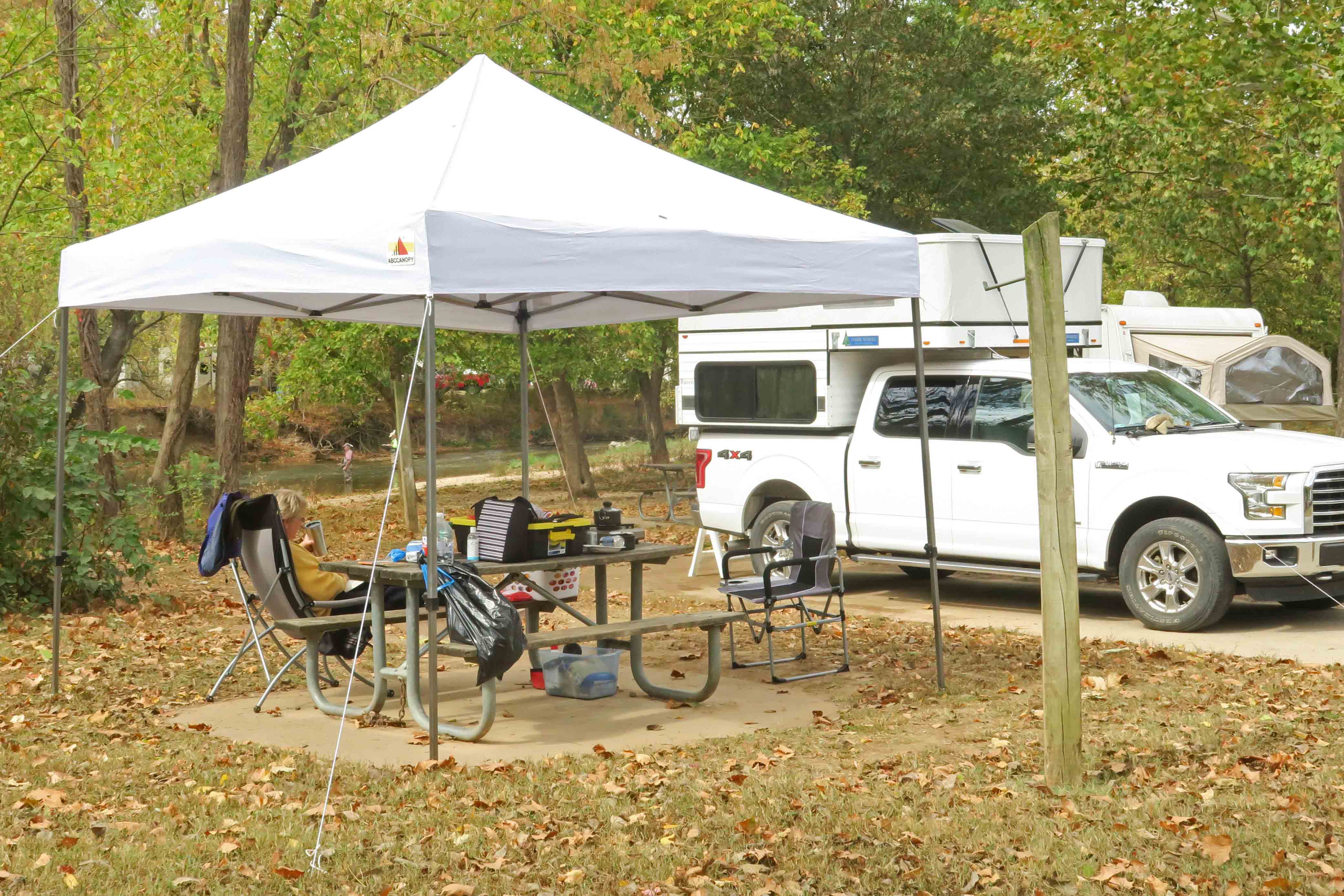
Becca was a truck camper pro on this trip, having prepared food without need for refrigeration. Our Four Wheel Popup Camper gave us flexibility on accommodations and a light load. Ours is a shell model that is light and simple. The awning is essential and gives us a protected outdoor space for meals, reading, and resting.
We enjoyed camping and found our neighbors to be friendly and welcoming. We wished for more space between sites and found the highway noise unfortunate for such a beautiful river location.
If you want to hike some beautiful trails and or do some trout fishing with like-minded folks, Roaring River State Park is the place!
If you want to pick up a copy of Five Star Trails: The Ozarks, you can get it from Amazon, but if it’s available at your favorite independent bookstore, get it there. Chapters on Main in Van Buren, Arkansas, and Bookish in Fort Smith, always keeps copies on hand. While you’re there, have a cup of coffee and browse.
Packed and ready to begin – Approximately 18 pounds with food and water
With cooler temperatures and my recent retirement, I decided to try backpacking the Ozark Highlands Trail (OHT) during the week. A buddy, Steve, was able to join me and Becca ran the shuttle for us, which saved time getting going on Monday morning.
The trail passes two historic fireplaces and Shepherd Spring. The fire bricks in these fireplaces came from Saint Louis, MO, in the early 1900s. I’ve not seen the spring completely dry, but the waterfall early in the trail only flows during wet seasons. If you have the opportunity, walk the five-mile Shepherd Spring Loop Trail after some strong rains. It’s a beautiful waterfall when it’s running.
Waterfall during wet season
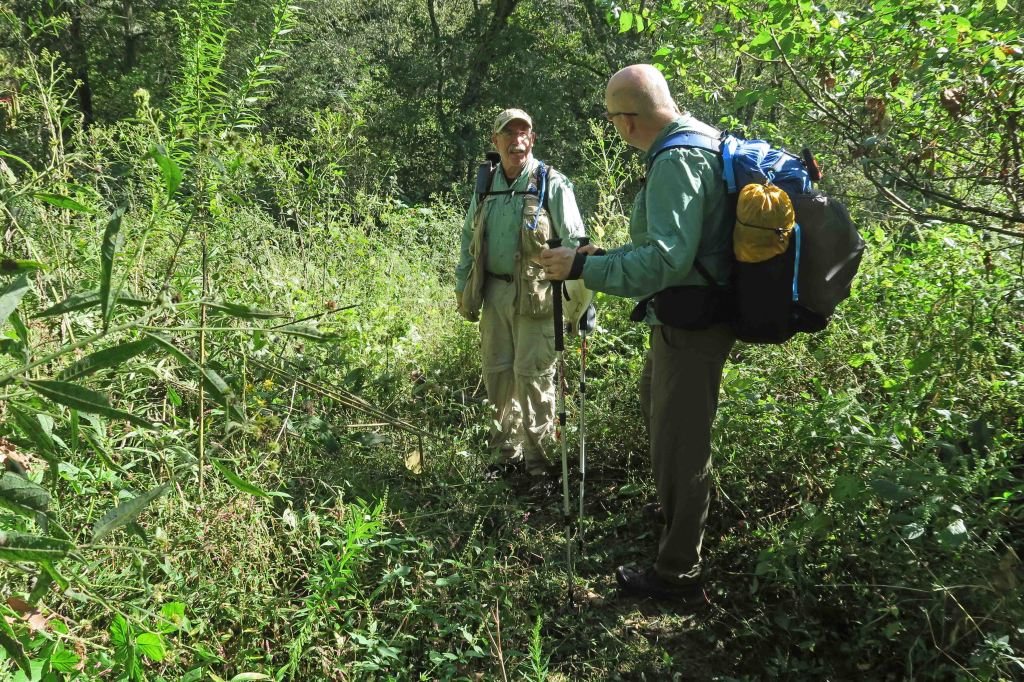
We noticed some recent trail maintenance and caught an Ozark Highlands Trail Association volunteer, Bill, doing some great work close to the Frog Bayou crossing.
Steve visiting with Bill
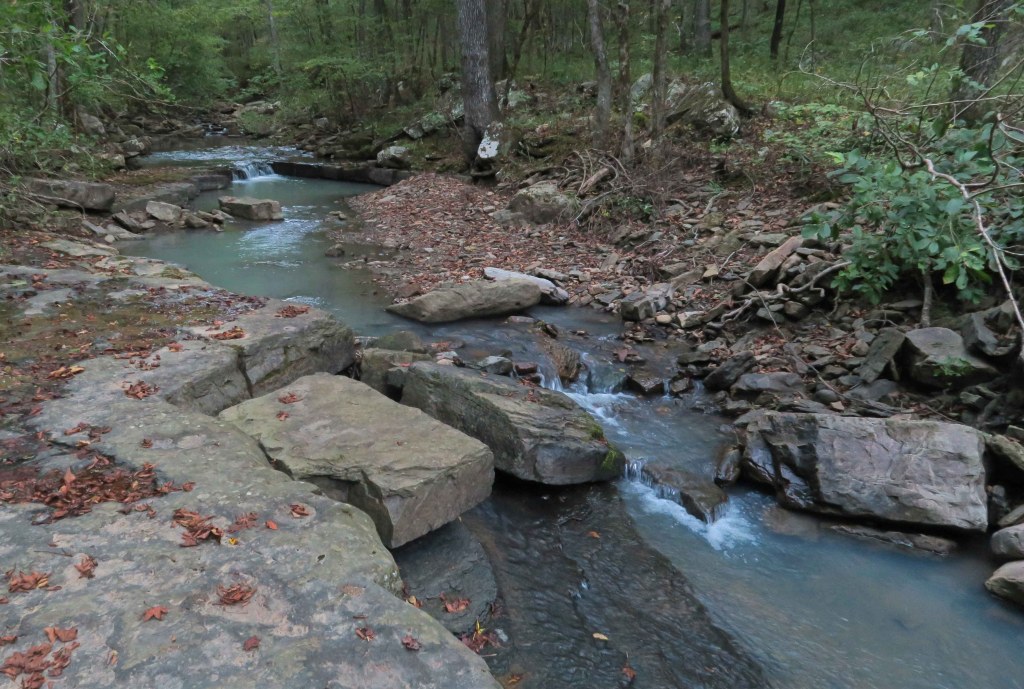
Hurricane Creek was our destination for the first night. Water was clear, and we easily found sites for our tarps.
Day 2 was sunny and cool. We walked about thirteen miles to Spirits Creek. During the approach toward Spirits Creek, I noticed some muscadines next to the trail. They were perfect. When I bit into one, I was transported to childhood sitting down to breakfast with some of my mother’s muscadine jelly.
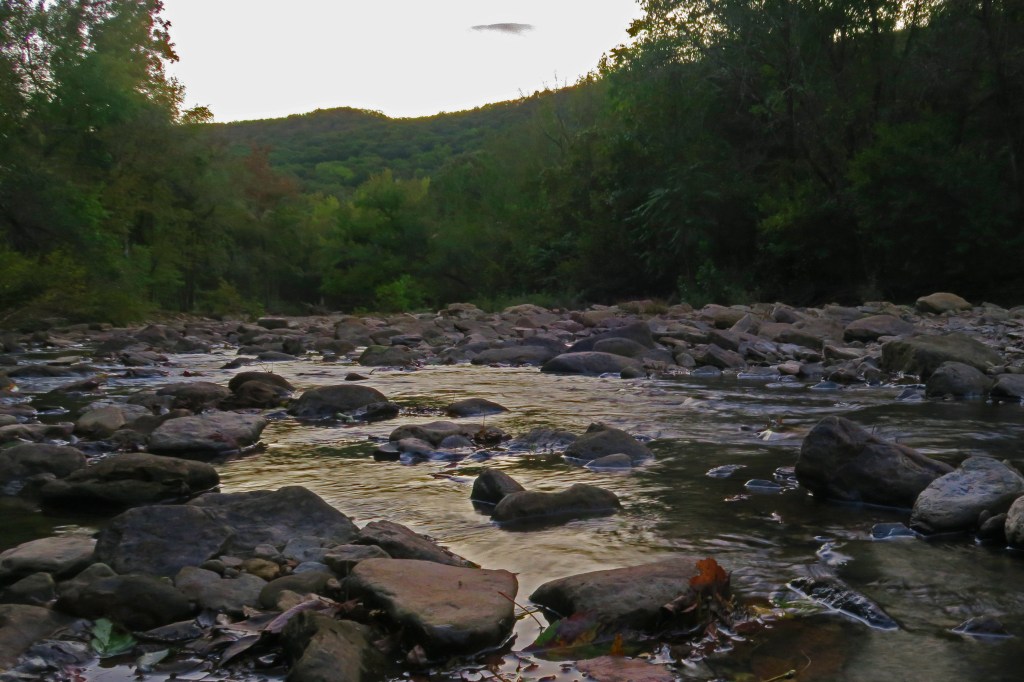
Spirits Creek never disappoints! Water was modest but just right for filtering and rock hopping. One of the great camping locations on the OHT! A couple of wild plums were close to a bluff, nowhere near any trees. The plum trees were high above, dropping fruit over the edge. I found one not too damaged and enjoyed it as we walked away from the creek.
Spirits Creek
Walking the historic narrow-gauge railroad route on day 3 was a treat.
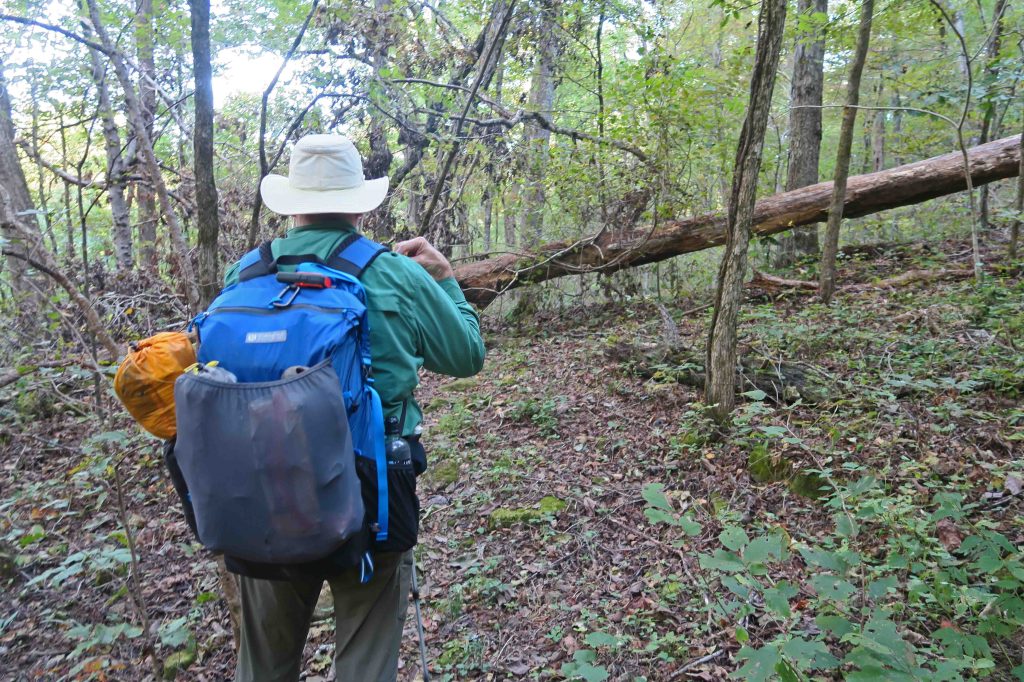
Steve recorded any downed trees so OHTA volunteers can return and cut these out in the future. None of the trees made the trail impassable but did slow our progress a little.
Steve recording gps for a tree across the trail.
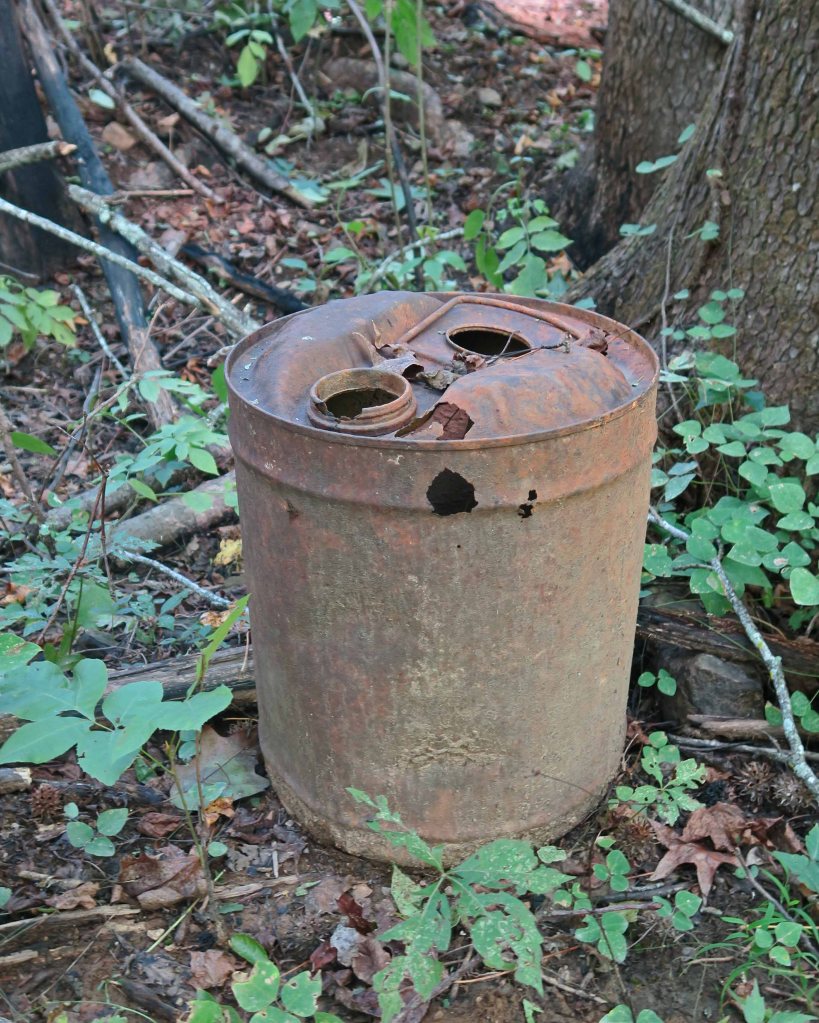
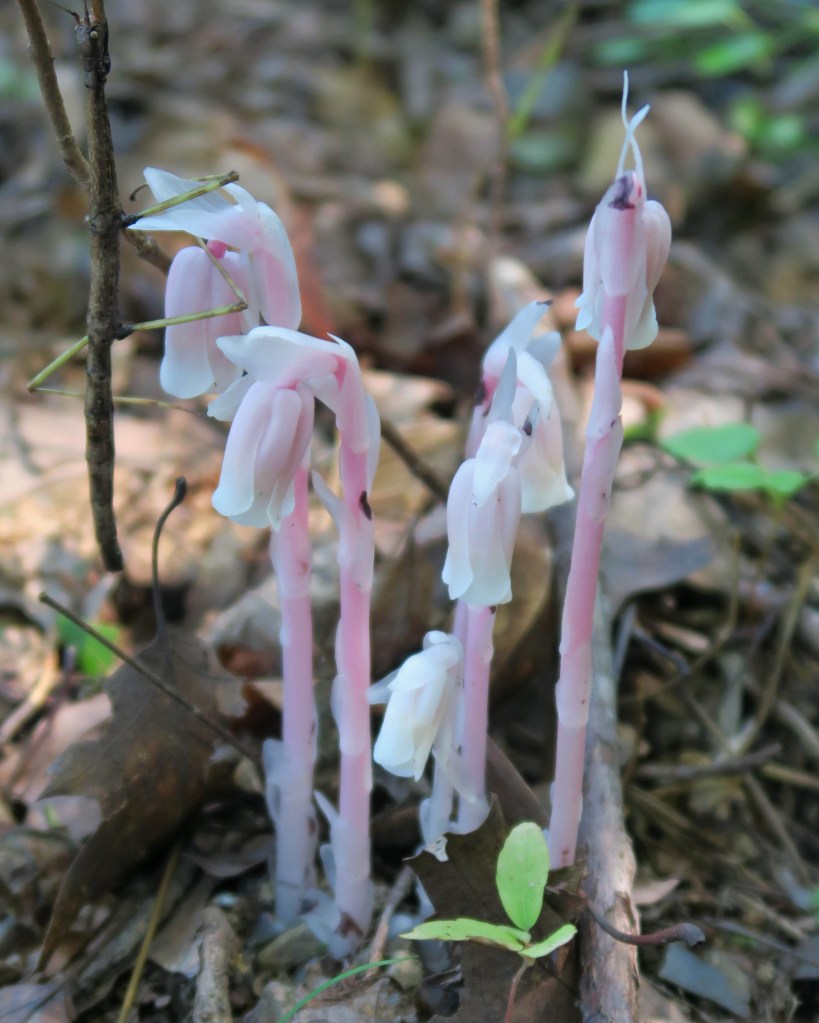
Rusty history and Indian Pipe flowers along the narrow gauge railroad
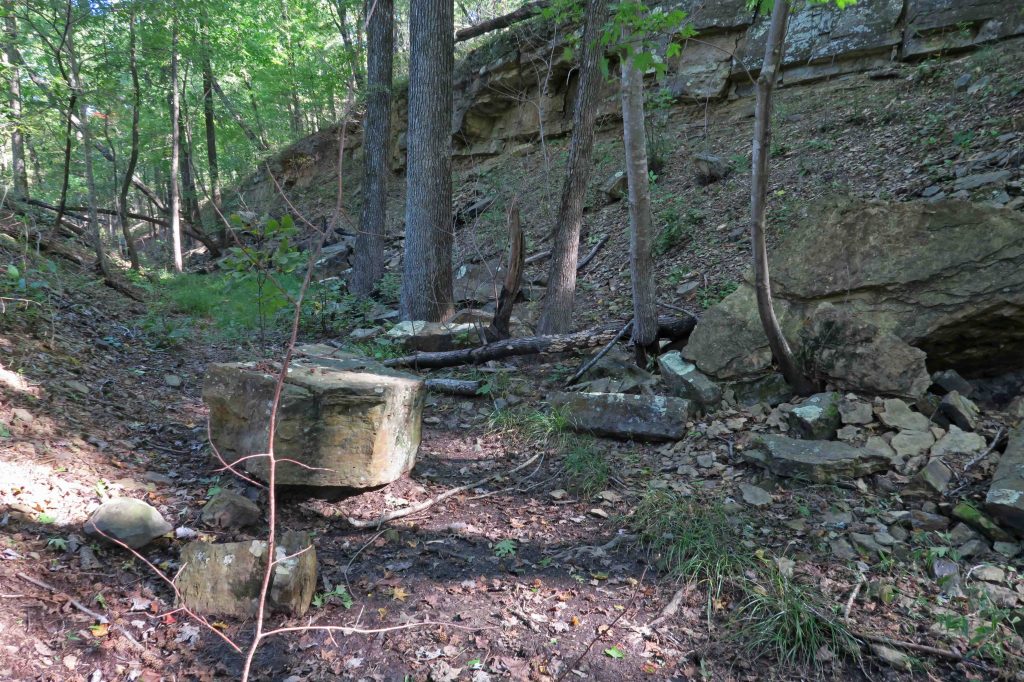
We saw several remnants from earlier days along this section of trail. Footings for former bridges can also be seen down below the trail tread. Logging operations used this narrow gauge railroad to harvest timber in the late 1800s.
Wildflowers provided color accents throughout our hike. I enjoyed learning about the Indian Pipe that has a soft pink color and no chlorophyll.
Fane Creek
Once we reached Fane Creek, we walked down the road to meet our shuttle and begin planning our next hike on the OHT.














 Ozarkmountainhiker