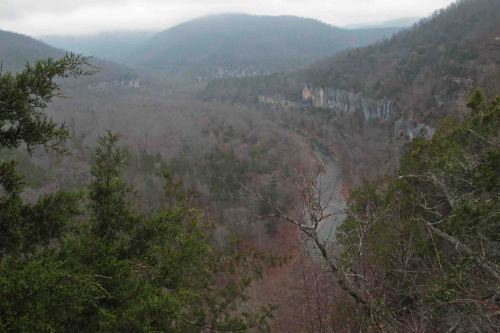
Black Fork Mountain

Kerry, Bob, and I wanted to hike Black Fork Mountain. It would not be our first time on this trail, but several years had passed since any of us had been up that trail. Our plan was to begin at Queen Wilhelmina State Park and hike down to where the trail crosses the Ouachita River. There we’d pick up extra water and hike to the Black Fork Shelter for a couple of nights.

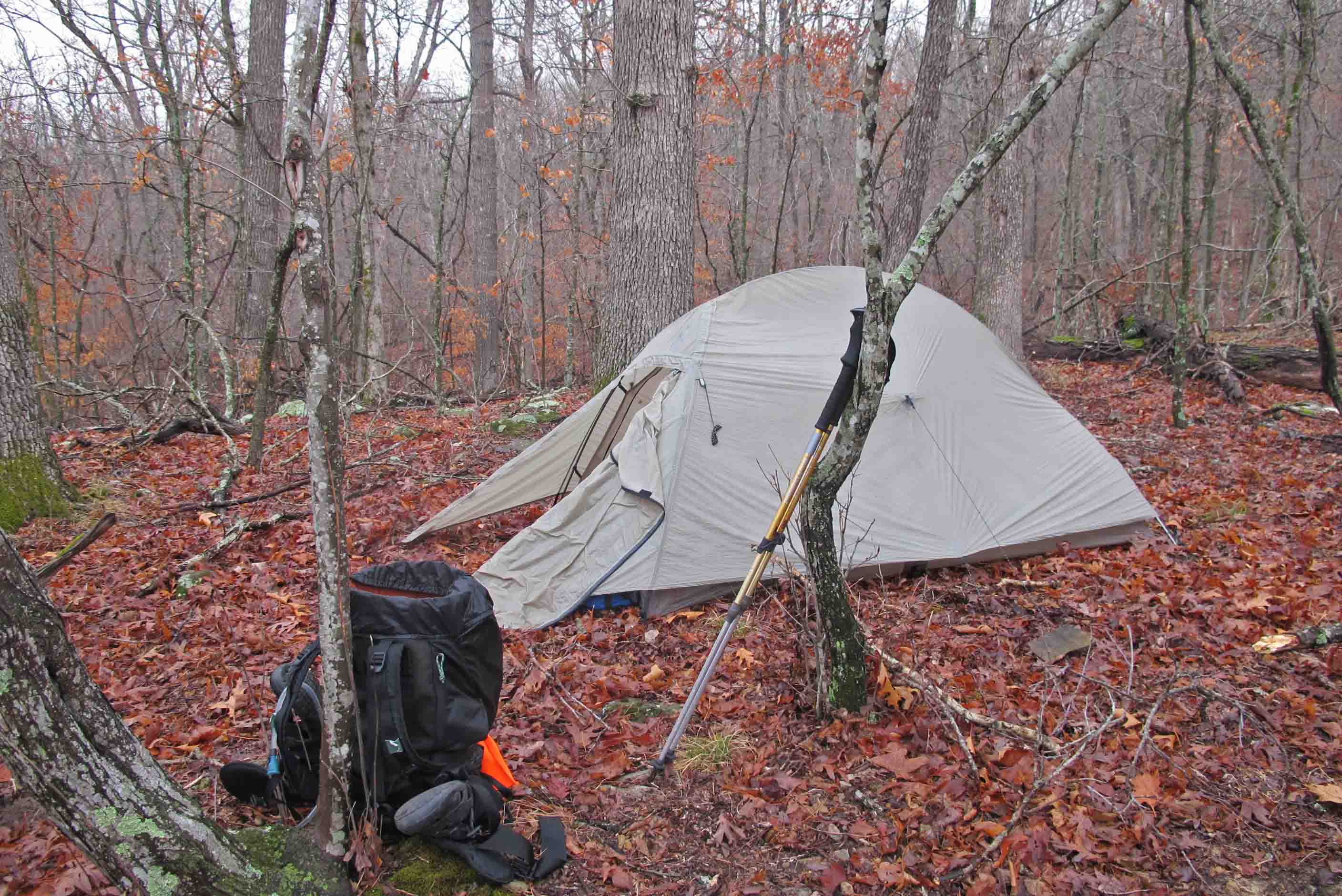
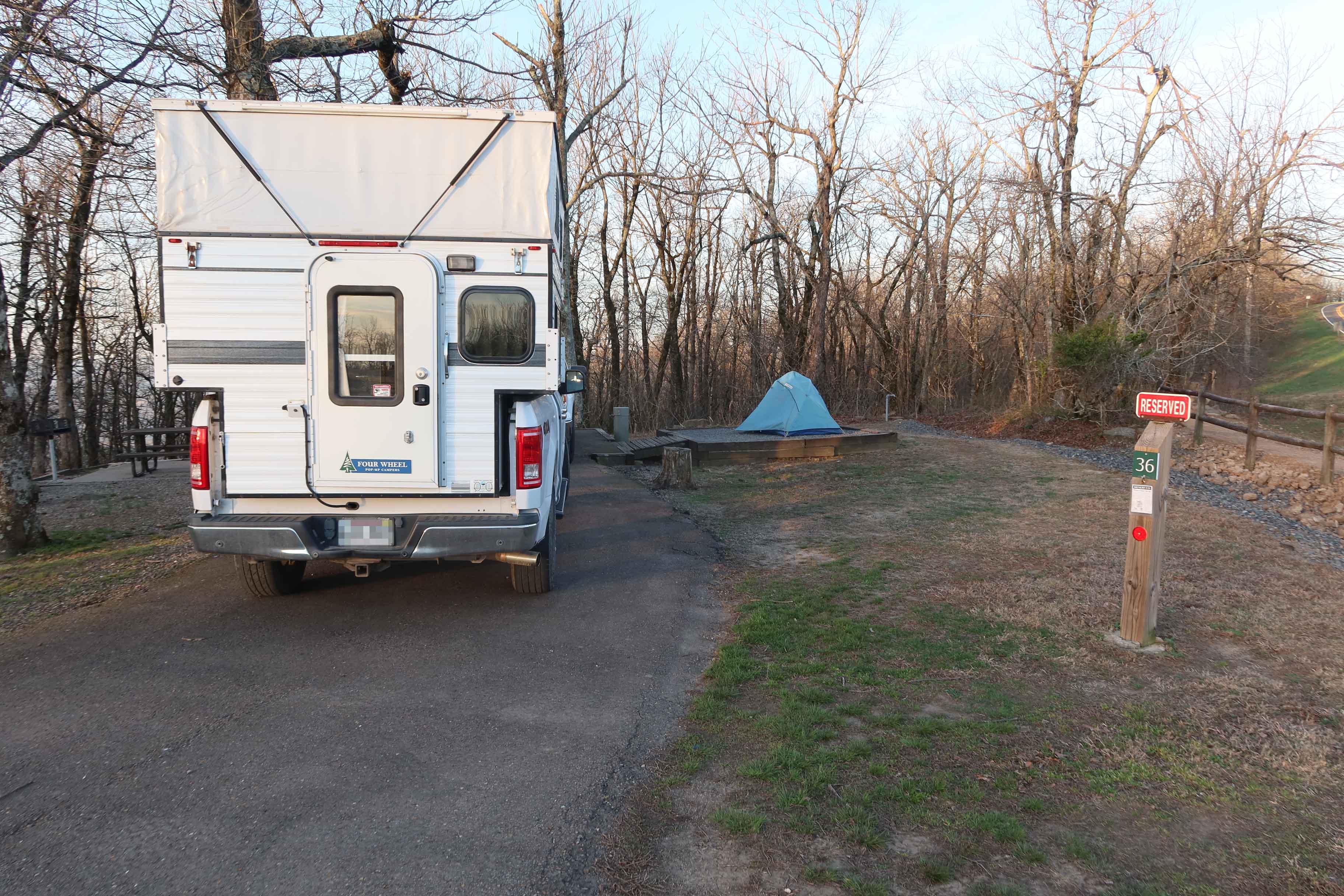
Our first night was at Queen Wilhelmina State Park. We were “Glamping” with nice campsites, access to restrooms, and a restaurant close by. I almost felt guilty in my truck camper while Bob and Kerry tent camped but both options gave a good night’s sleep. I look forward to using this campground and the nearby Winding Stairs Campground again. Rich Mountain and the Queen Wilhelmina area are great camping destinations.

As we walked, I thought back to a thru-hike on the Ouachita Trail in the winter of 2018. Back then, flakes of ice hung from the trees and littered the ground. Quite a different scene now as a warm sun beat down on this spring day.

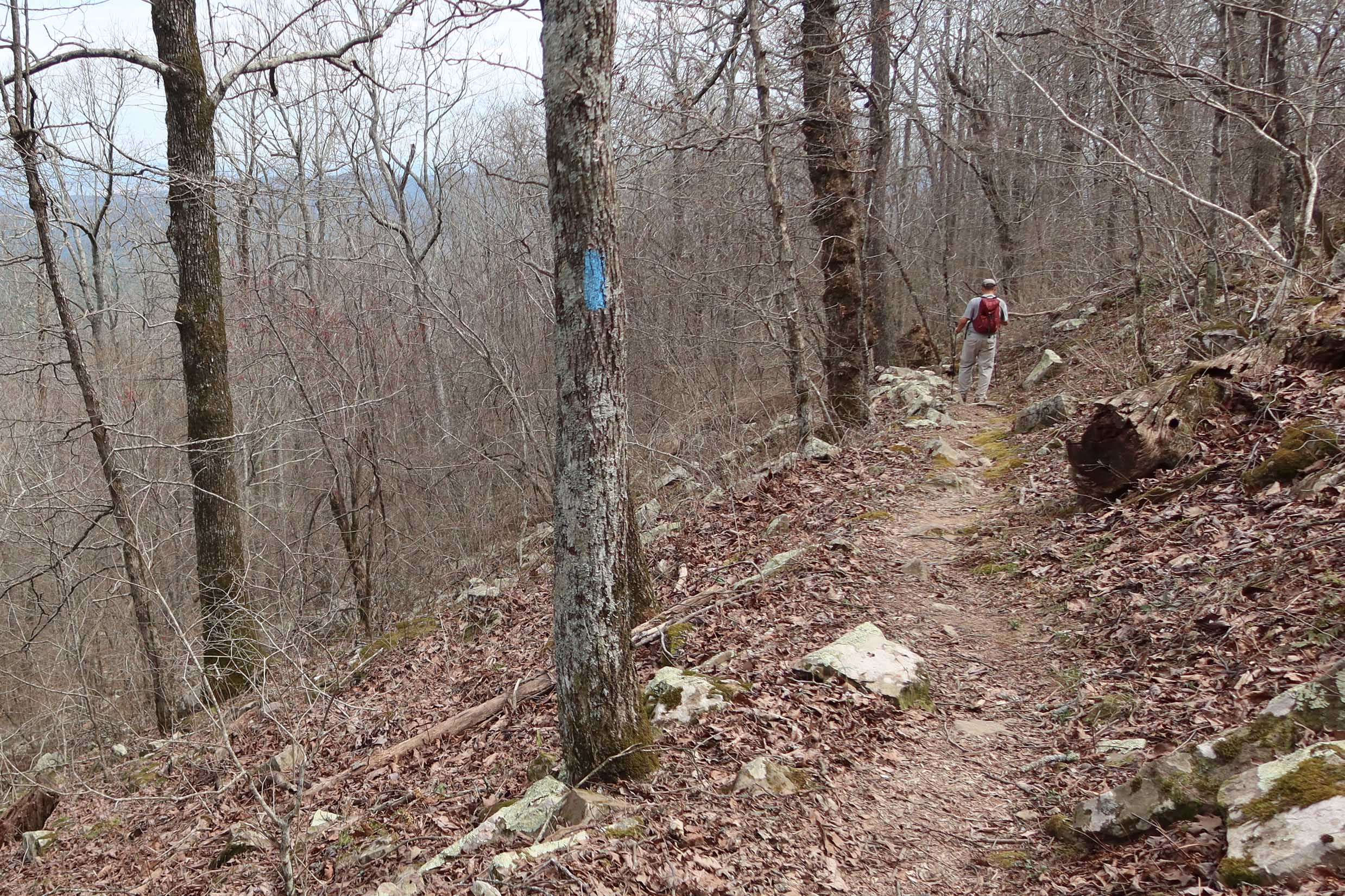
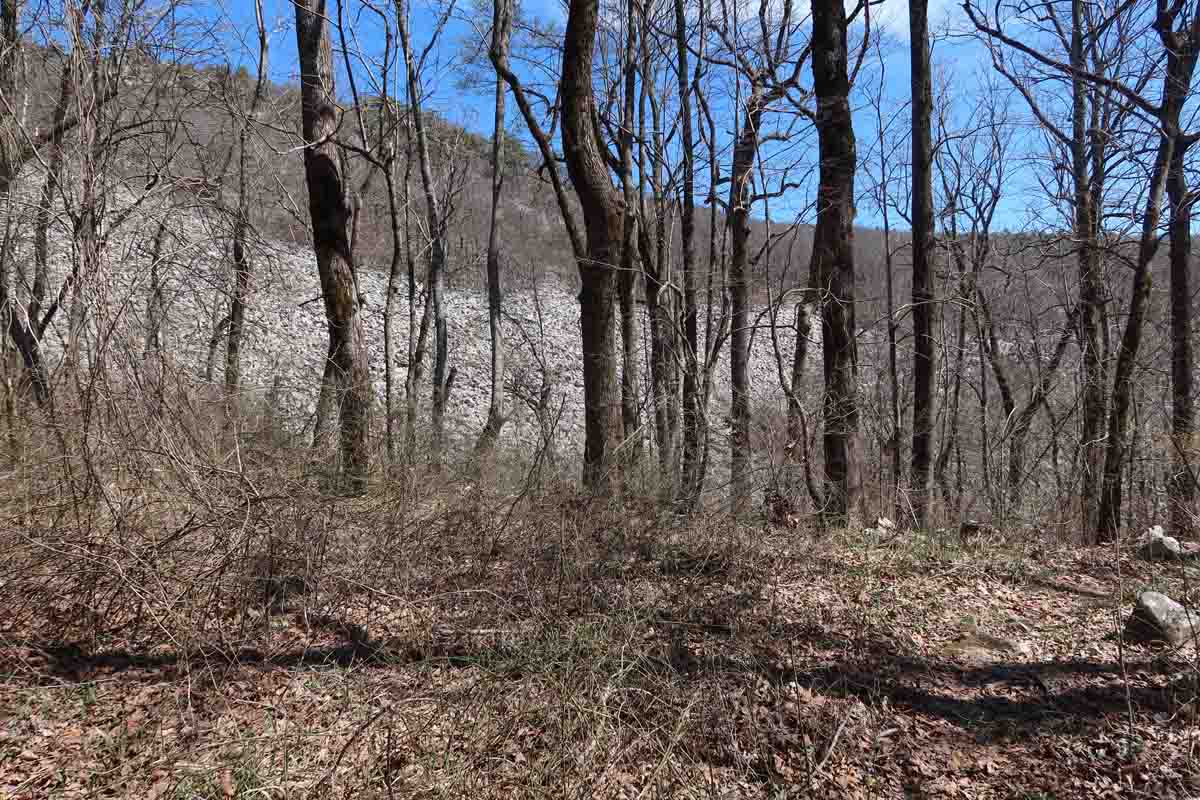
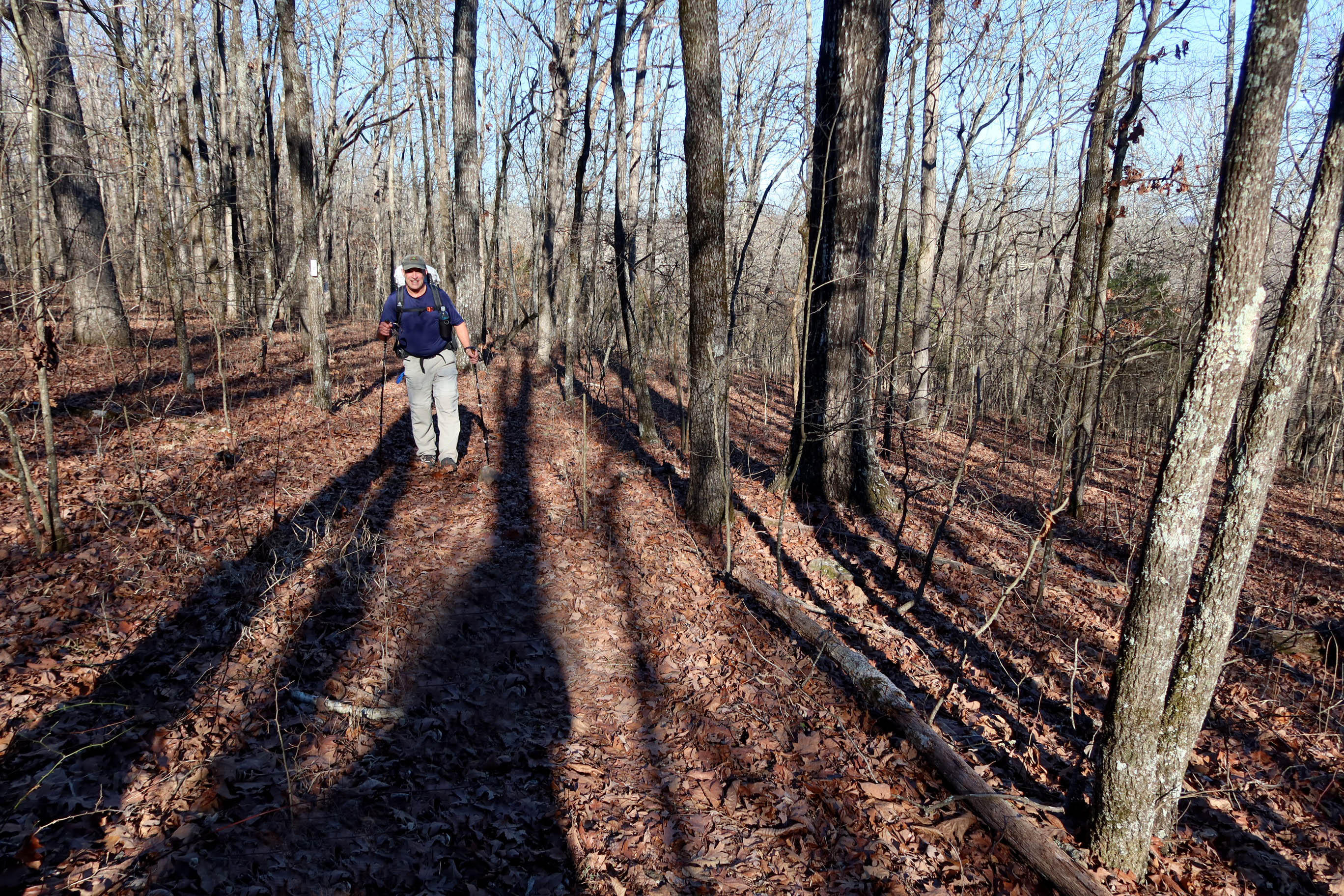
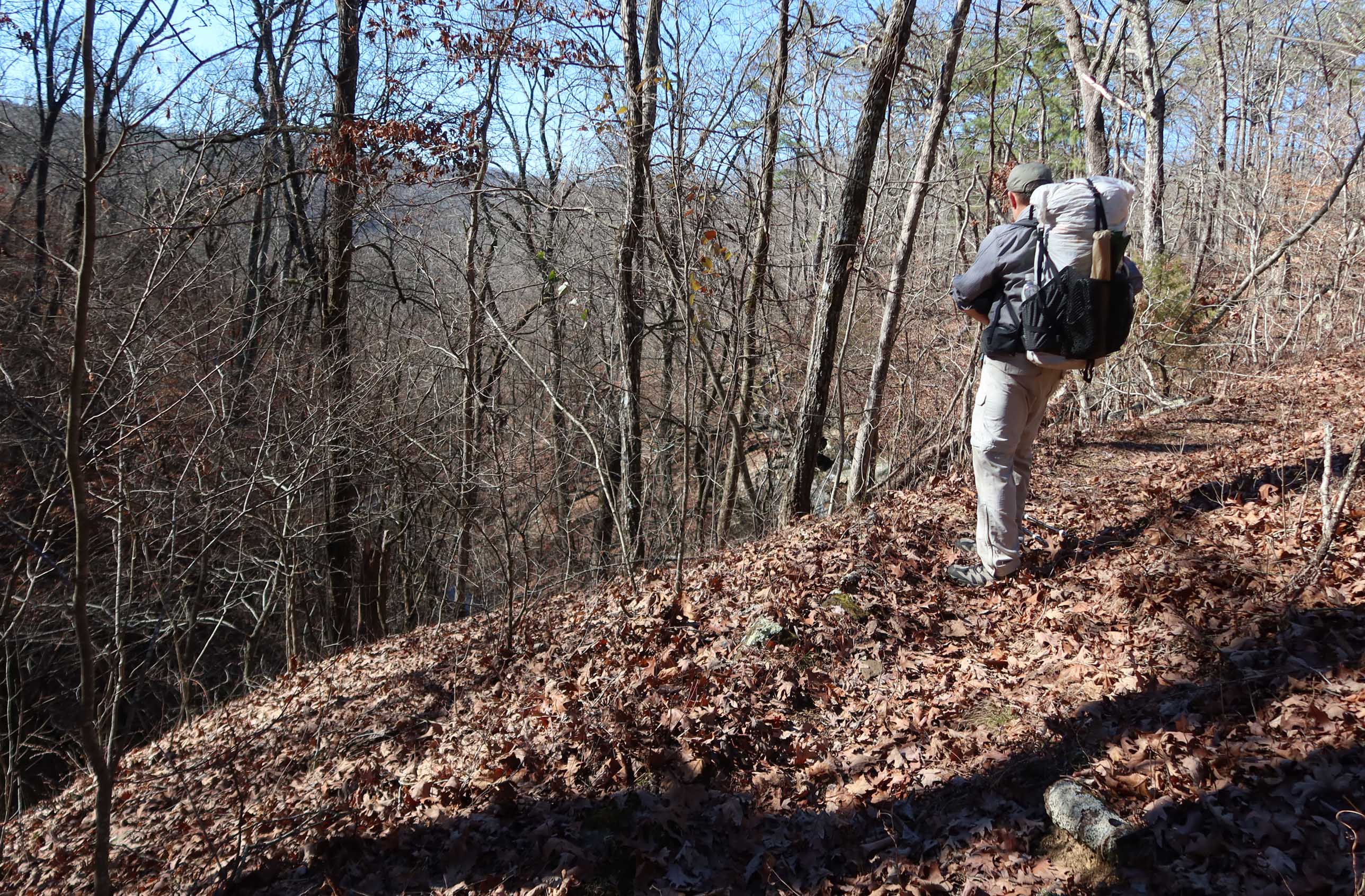
The next morning, we began working our way up Black Fork Mountain through alternating pine groves, hardwood forests, and scrub oaks along high ridges. The hardest part was following a reroute down below a rockslide. Every step down meant another uphill step later to regain the elevation lost.

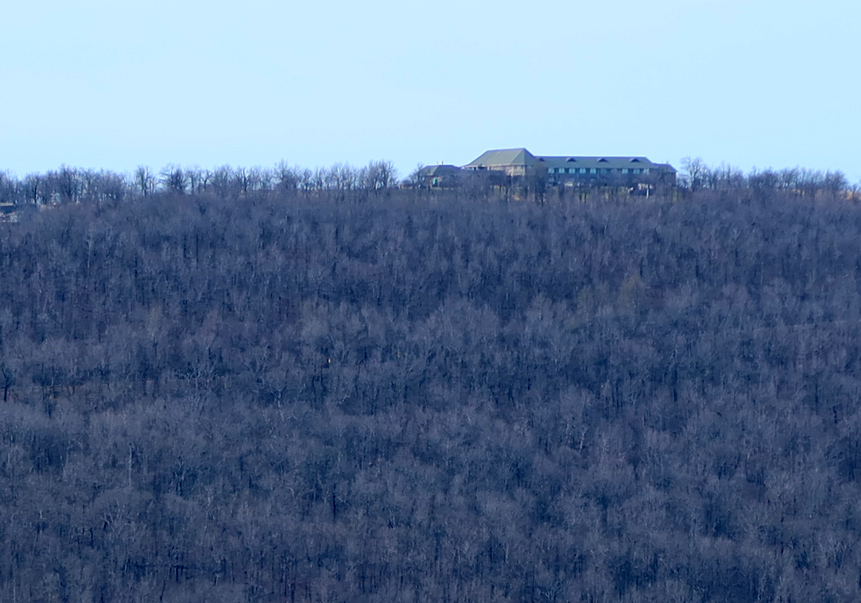
The views across the valley to Rich Mountain kept us engaged as we tried to identify roads, Queen Wilhelmina Lodge up top, and a little Country Store down below. 

Thanks to occasional survey tape we were able to follow the trail without difficulty. Greenbriers clawed at us on the high ridges and we agreed this was a “long pants trail.” 

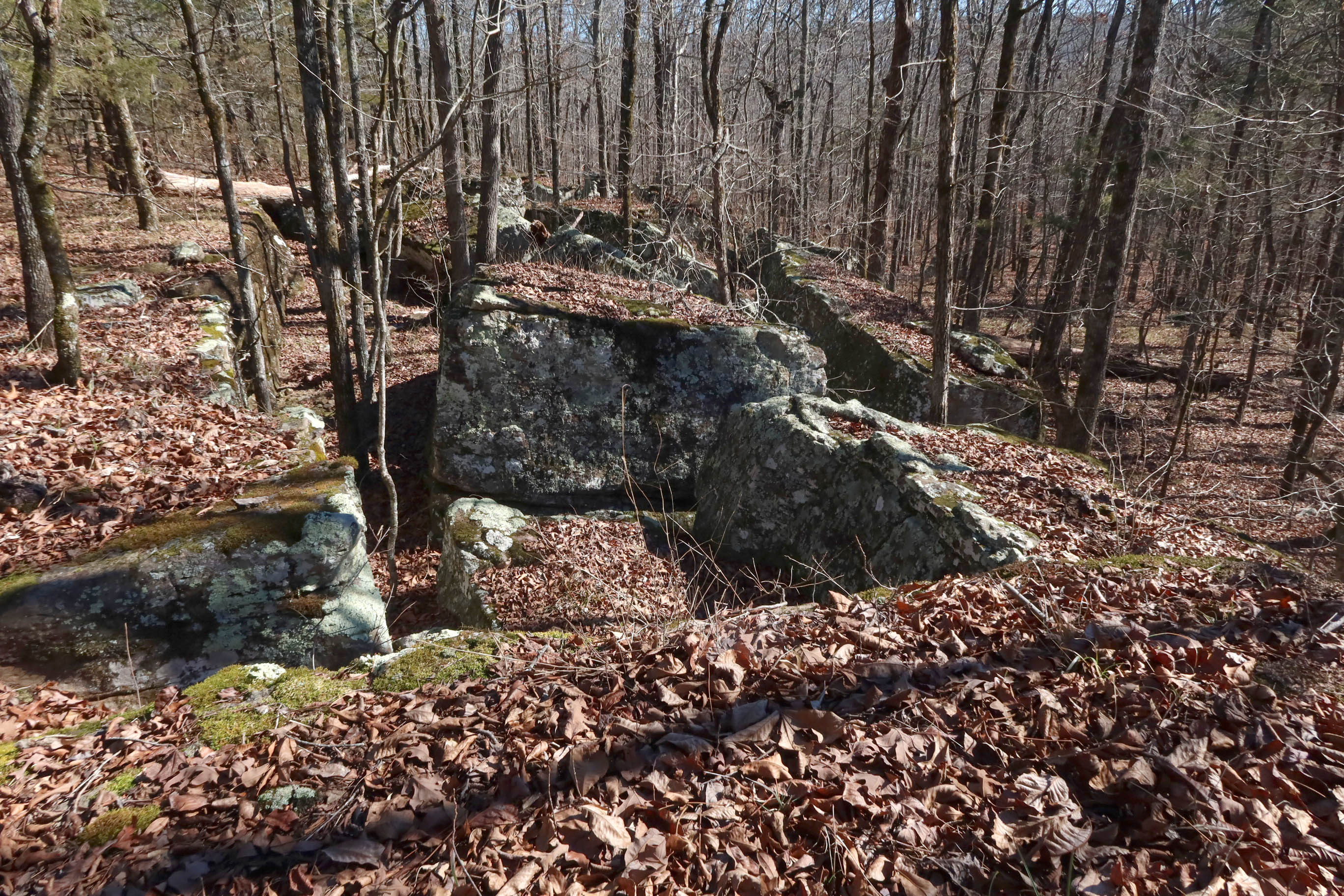
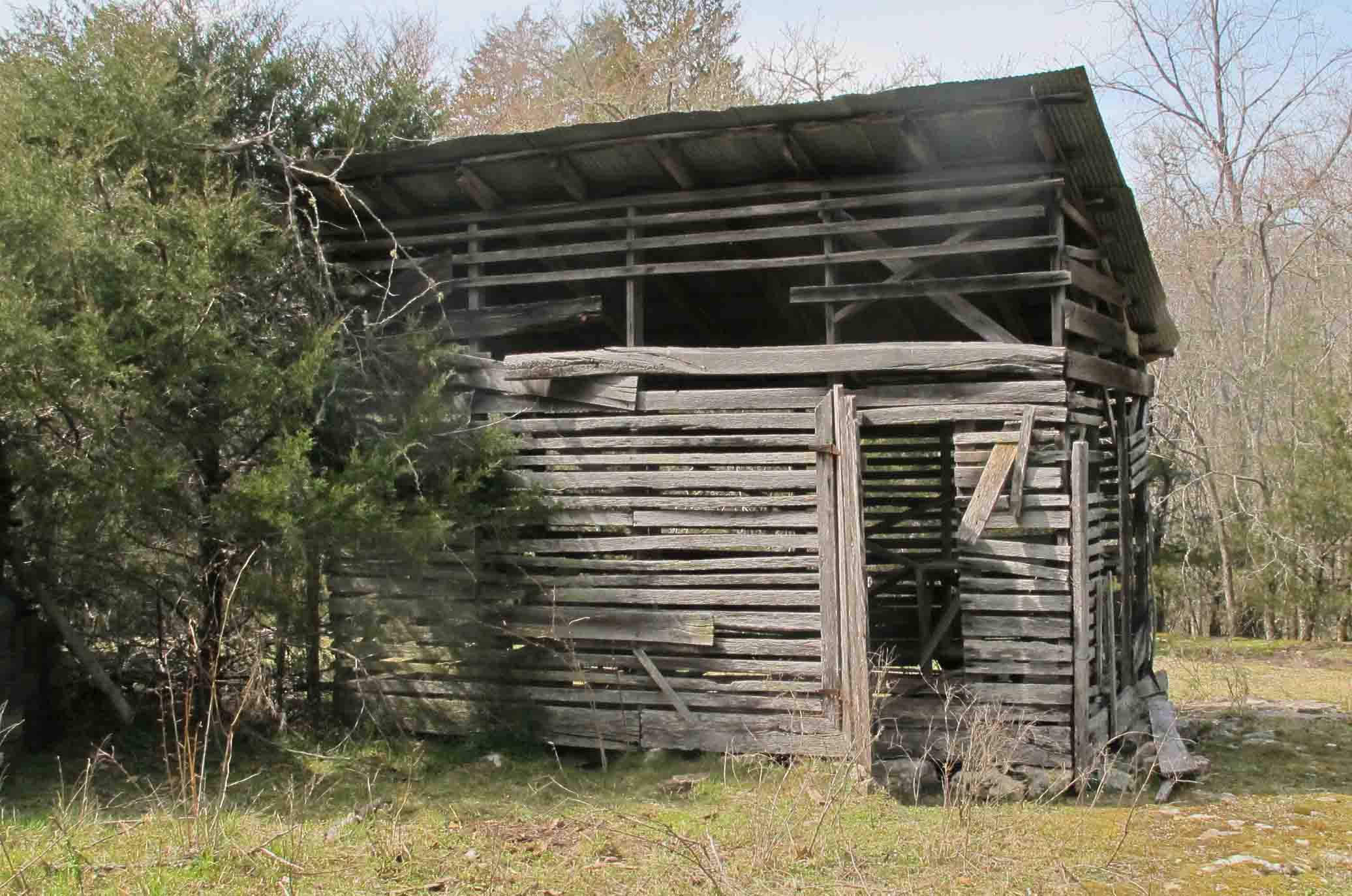
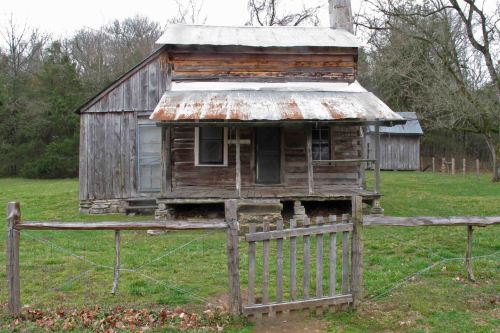
We were pleased to find an old chimney still in place along with a few rusty artifacts. I had a close look at the blade of what looked like a small hoe before returning it to where I found it. Bob found what looked like pieces of a horse or mule shoe. All items were left as we found them.

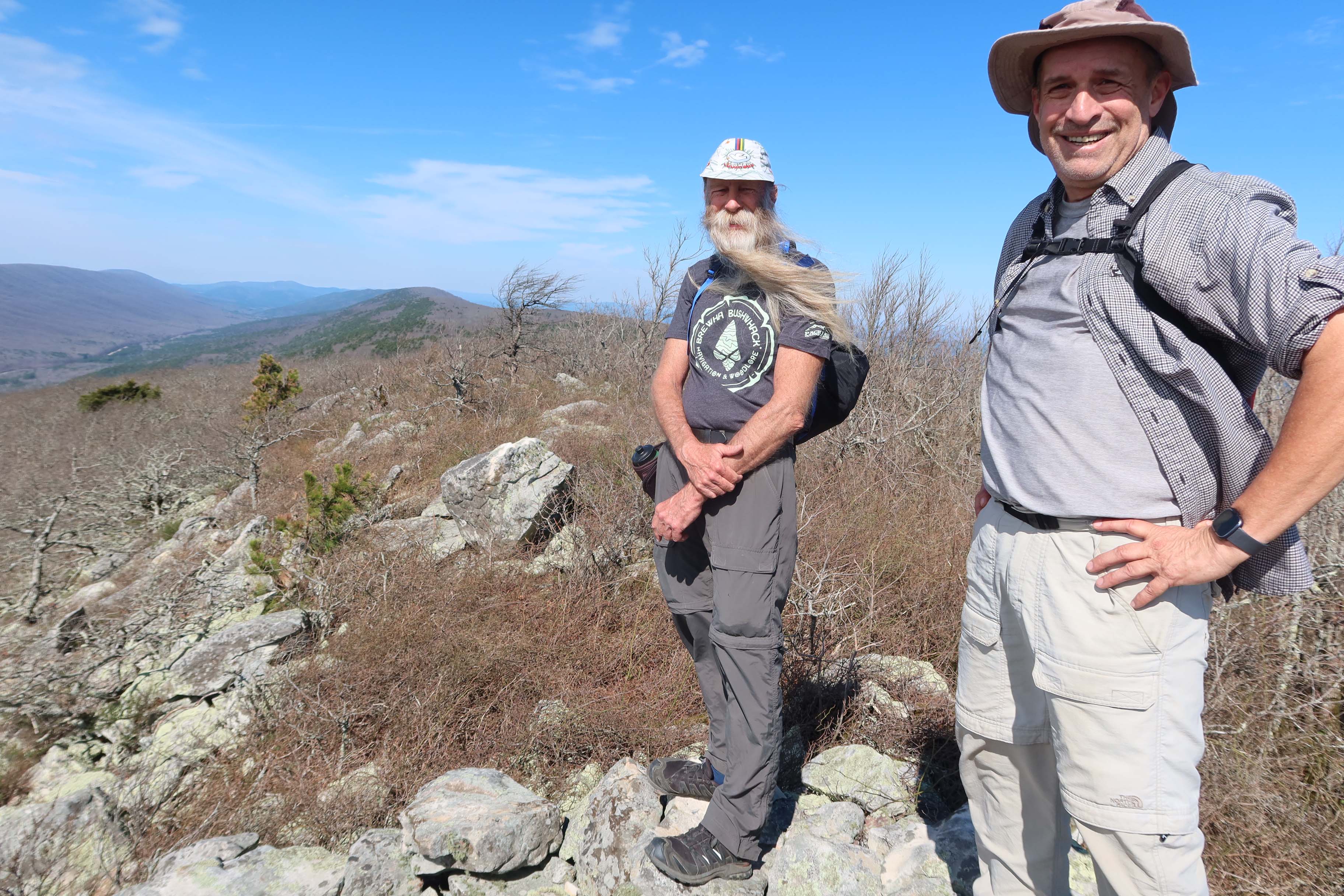
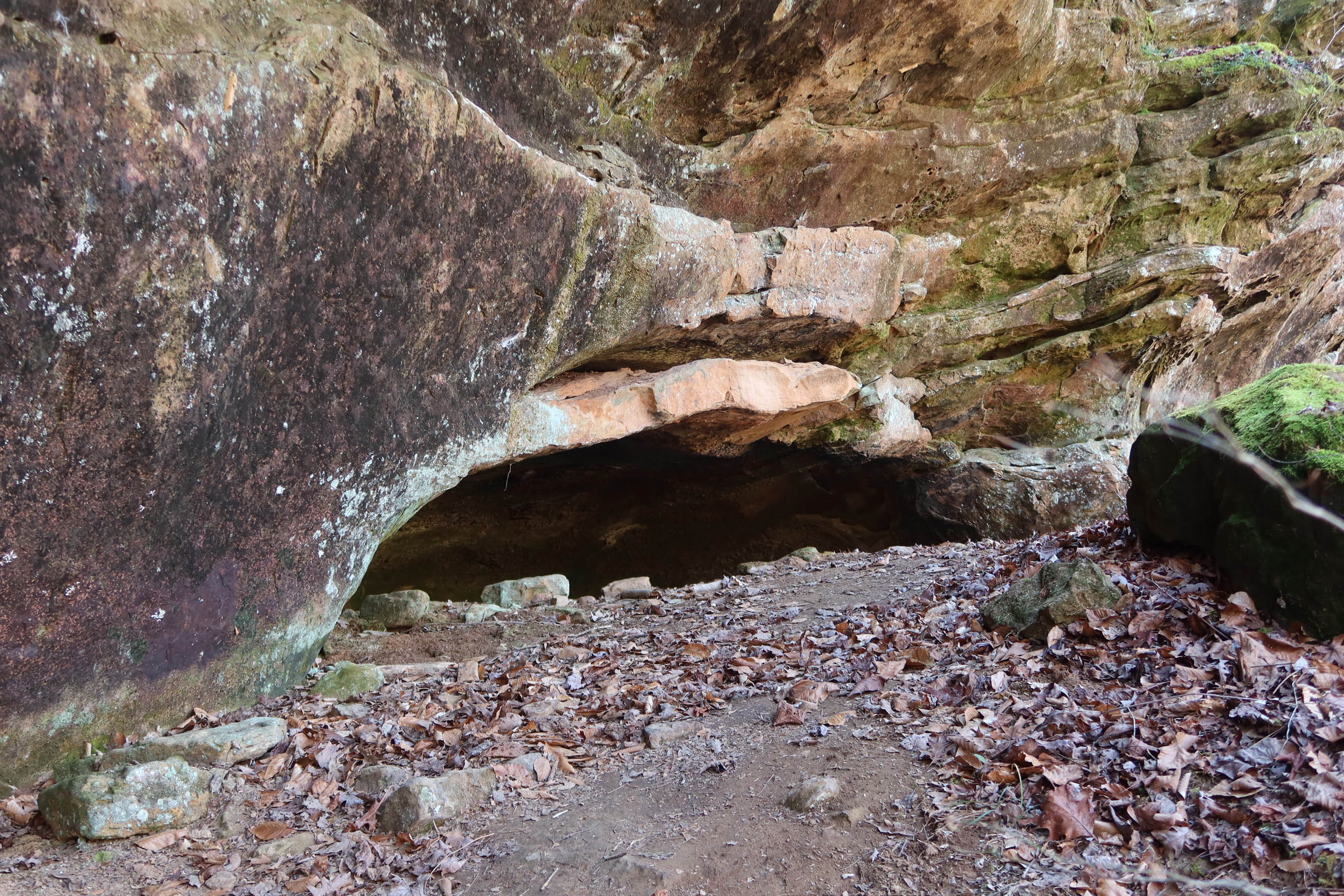
We were pleased to finally arrive at the rock outcrop that marks the top of Black Fork Mountain.

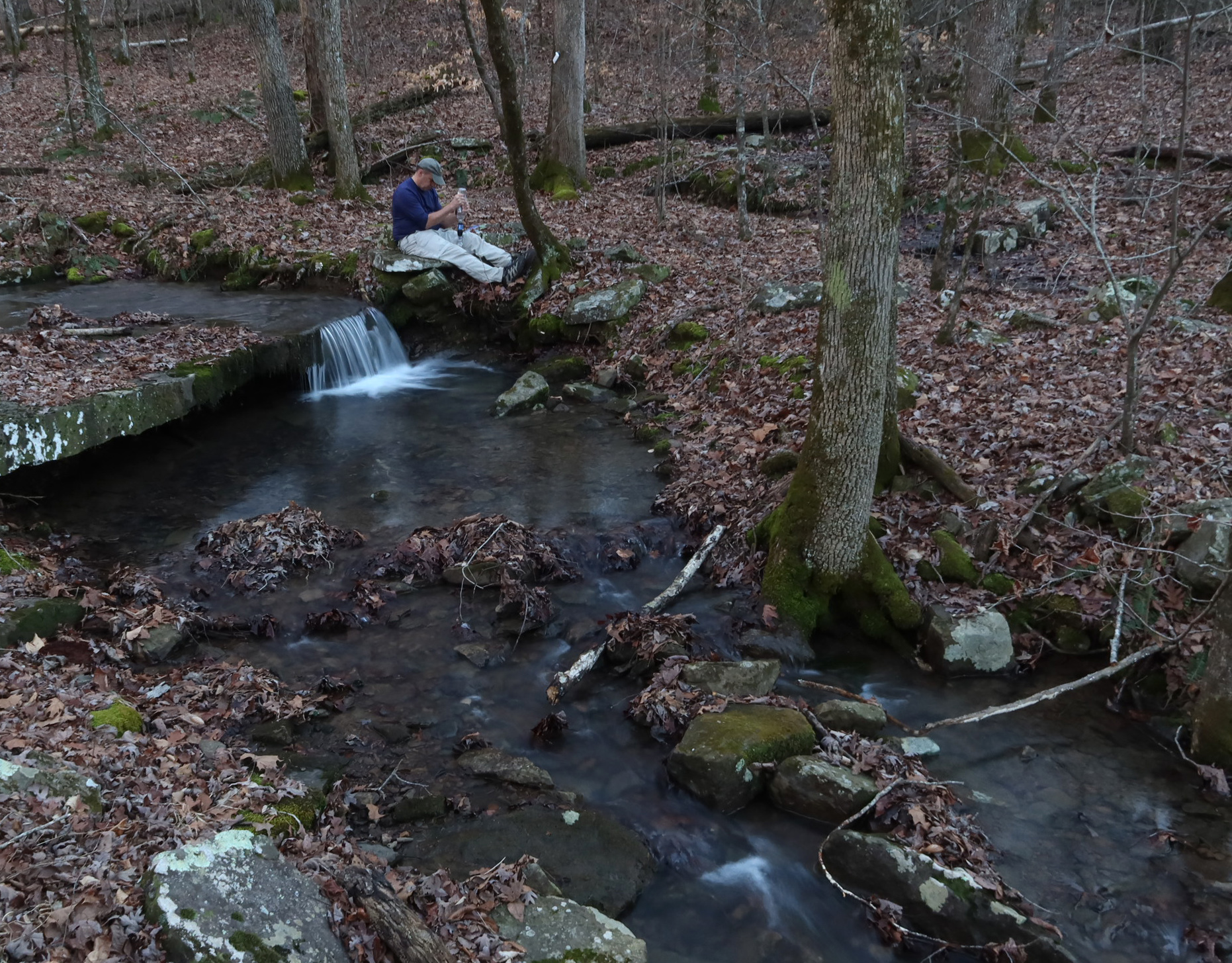
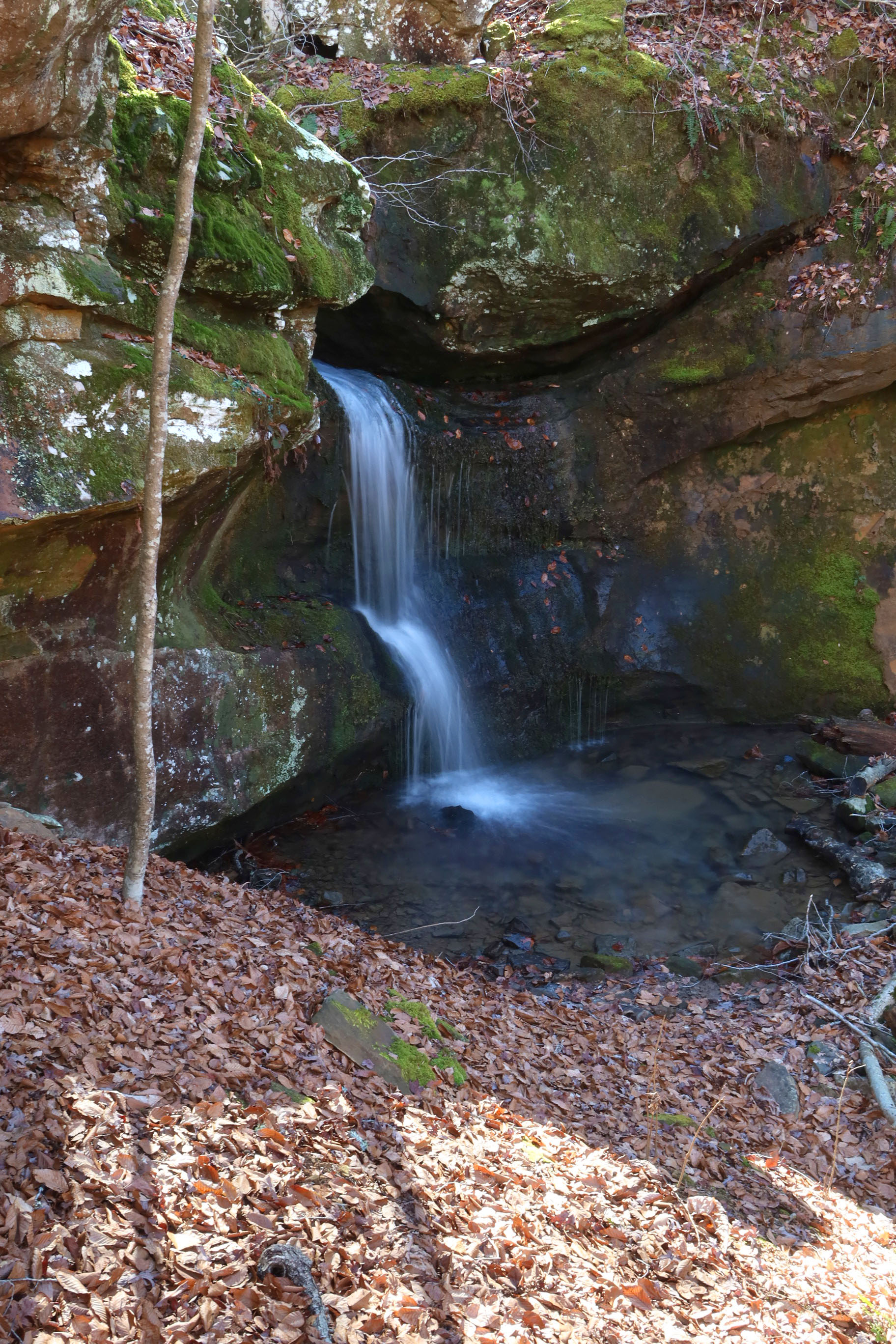
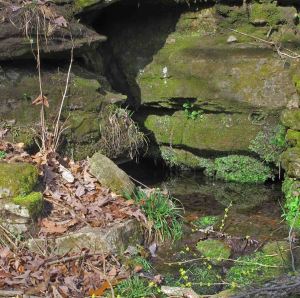
I filled my water bottle at a small murky pond less than a mile from the Black Fork Shelter. I ran that water through my Sawyer filter when we returned to the shelter and it was good! Water options up on Black Fork Mountain are limited unless there’s been recent rain so the pond is a treasured little resource.

The hike back down the mountain included that long uphill from the reroute around an old rock slide. We were thankful for every little cool breeze that came our way as we worked our way back down to Black Fork Shelter for the night. Everyone had a good appetite after their Black Fork workout.

Ozarks Camping and Trails on the Cheap

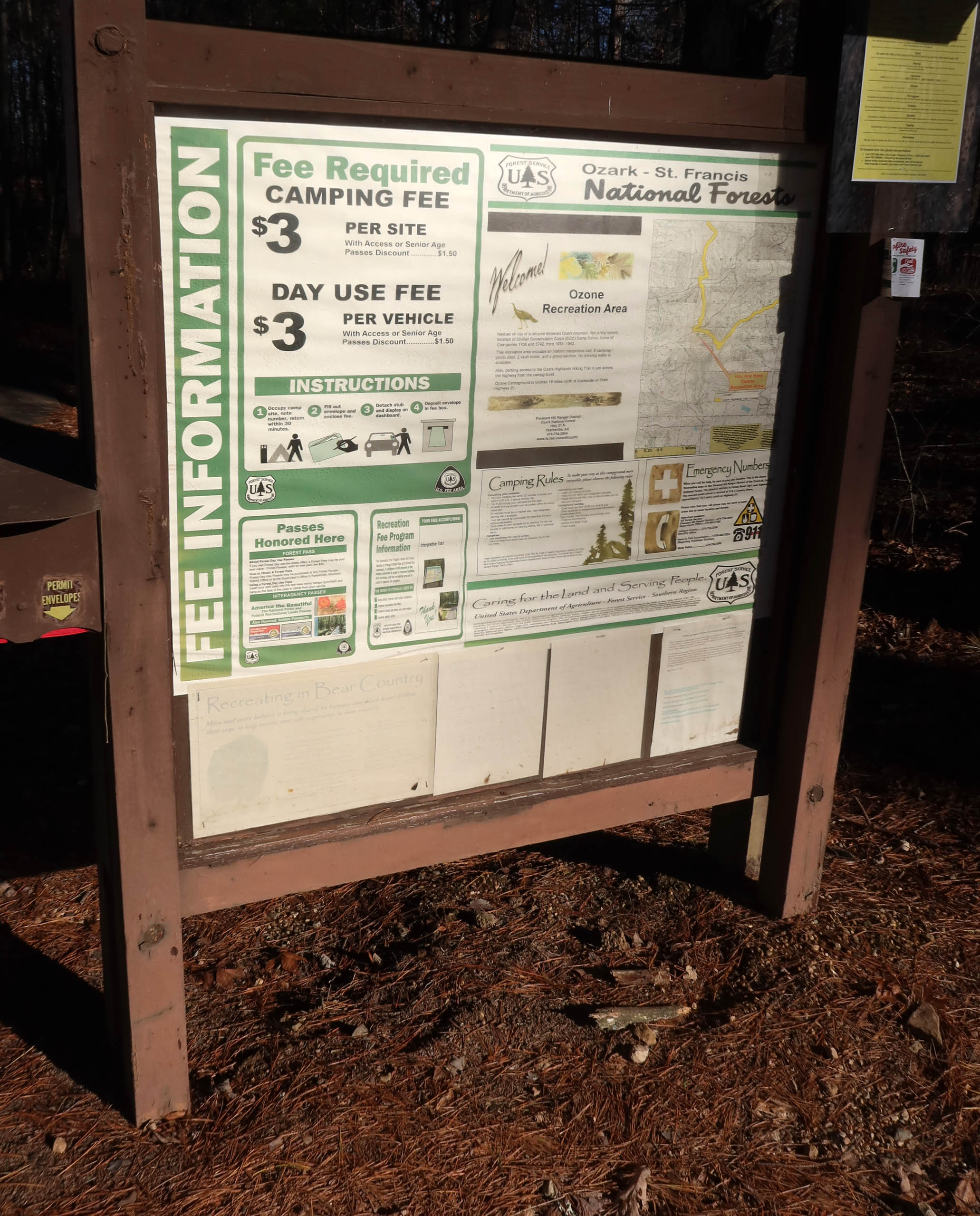
If you’re looking for a quiet campground in the Ozarks, the Ozone Campground is a little jewel of a location. It’s less than three miles north of the community of Ozone on Hwy 21 north of Clarksville, AR.

The water faucet at the pavilion worked in January when I visited. No guarantees but when I visited, the outlets on the pavilion were on and available to charge your electronics. The pit toilets are convenient, functional, and filled with that refreshing outhouse aroma that says you’re roughing it. 

The Ozone Campground is located right on the Ozark Highlands Trail (OHT). From campsite #5, it’s a short walk downhill to the trail register. From there either direction promises a beautiful hike. You can make it as strenuous as you like by customizing the length and your pace. The OHT is open to foot traffic only.

 After taking a close look at Camp Ozone, named for the CCC Camp that once stood here, I decided the next trip would include camping. Where else can you get a campsite like this in a beautiful location for $3 a night ($1.50 with a senior pass).

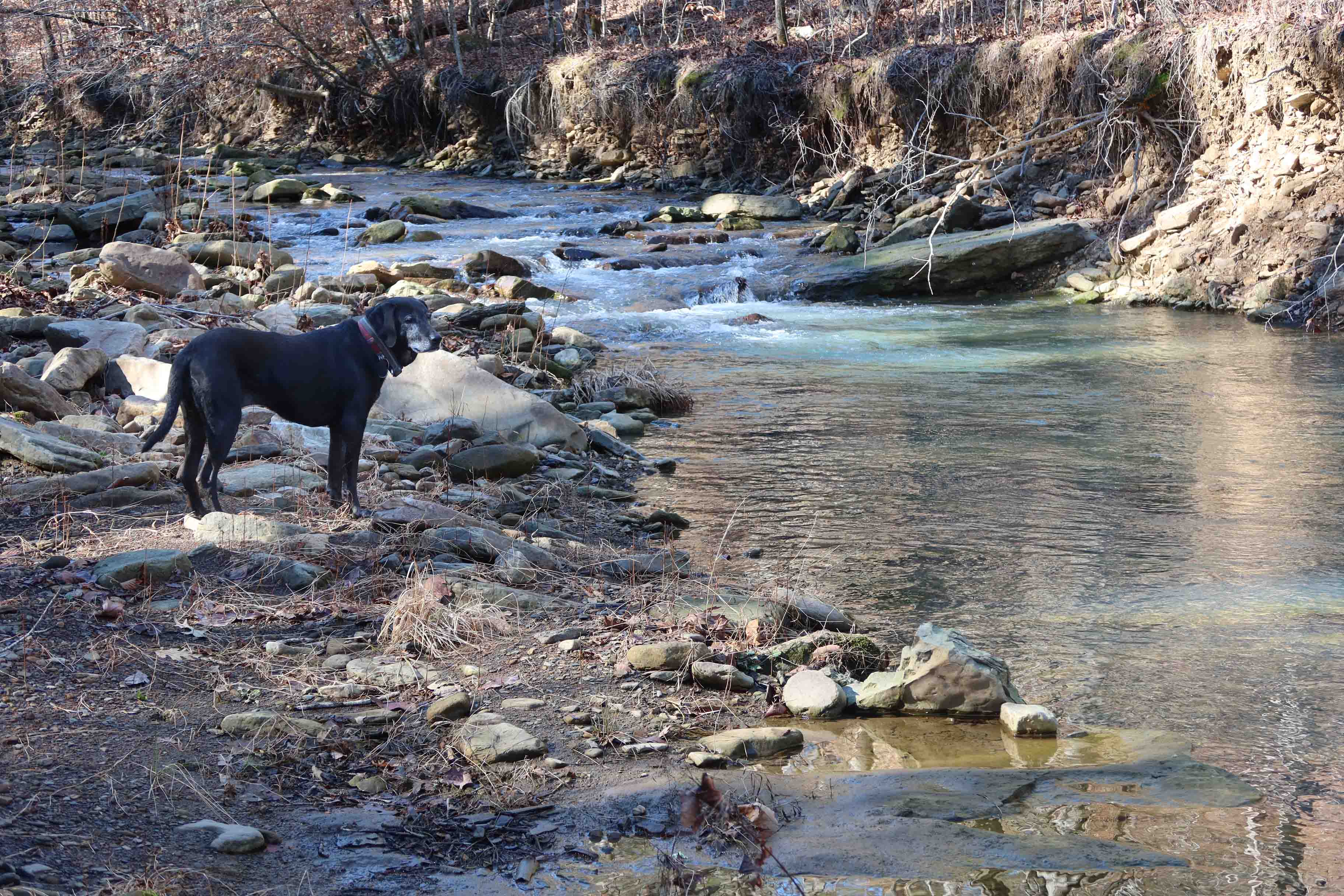
Hiker-dog and I did an out-and-back on the OHT down alongside Little Piney Creek for 3.5 miles which gave us a 7 mile hike with a good workout on the climb back up to the campground.


Had a great meal at the Burger Barn a couple of miles south on Hwy 21 in the community of Ozone. A couple was just finishing when I stopped there and another couple was ordering about the time my catfish plate was ready. That seems pretty busy for a small town in the Ozarks of Arkansas.

The Ozark Highlands Trail from Arbaugh to Morgan Fields (27-miles)

Wolf Ridge overlook

Sometimes life gets complicated and backpacking moves to the back burner. There’s plenty to fill the space with trail maintenance, day hiking, finding new trails, playing music, and family obligations. All of these things are important and worthy of attention, but for me to be my best self for others, it’s essential to get out there for a few nights on the trails when possible. 

A couple of longtime friends and I planned a trip but temperatures for the week we had in mind were going to be into the single digits so we decided that might not be a good plan for our first backpacking trip of the winter. Our good friend, Bob, had a scheduling conflict by the time temperatures returned to normal, so it was just Kerry and me for this one.

I spent the night before at Redding Campground, so I’d have a short drive up Morgan Mt. Road on Tuesday when we started out. There was only one other camper there on the other side of the campground, so it felt like I had the place to myself. This is a great little campground without any hookups. There’s a connecting trail to Redding Loop and Spy Rock Spur. 

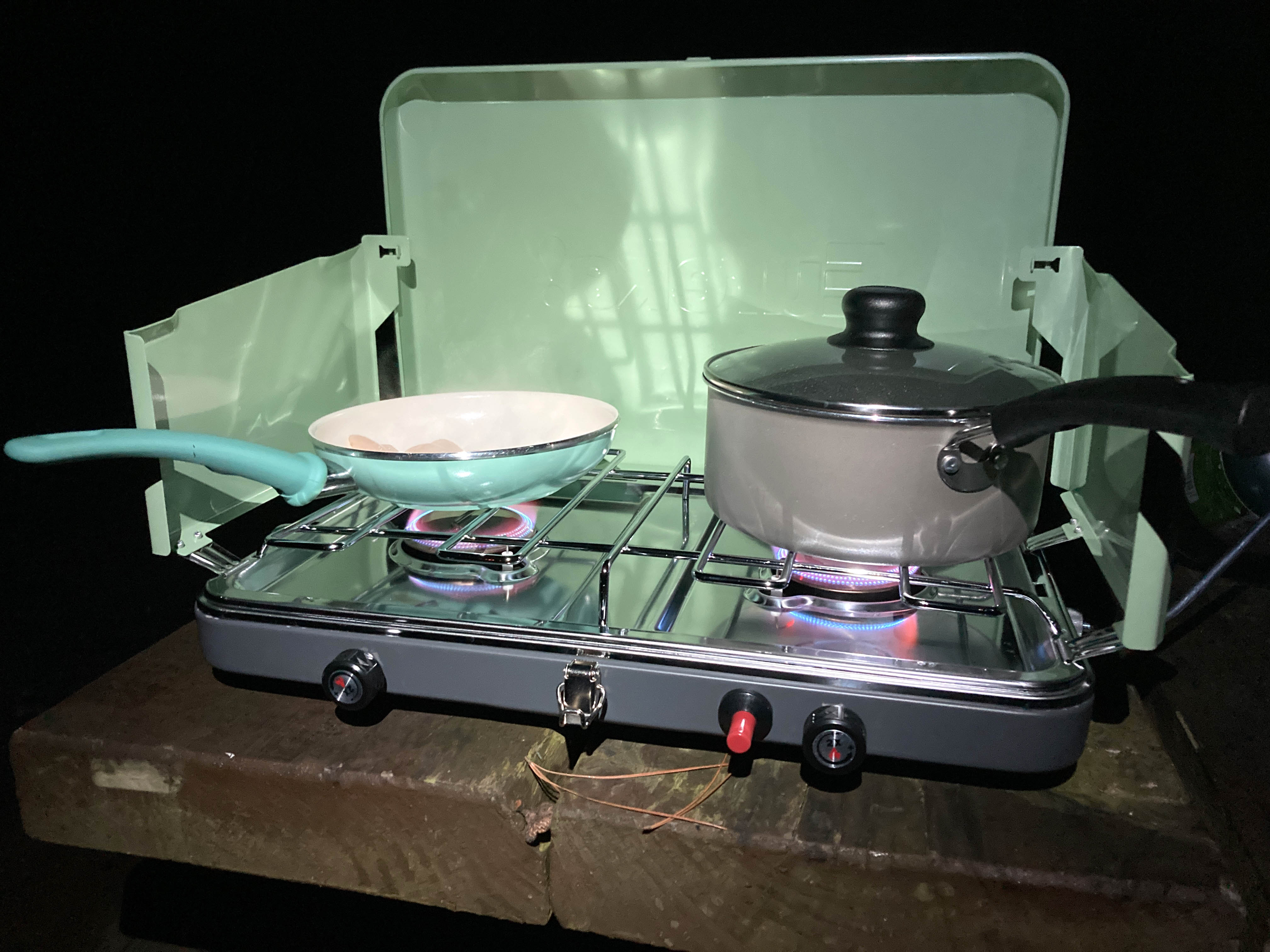
stove

I fixed a REAL breakfast Tuesday morning with a new stove. I like this stove! It’s like being in a kitchen when compared to my backpacking Esbit Cube stove. 

Esbit stove
Esbit stove and wind shield

We looked at several options. We settled on Arbaugh Trailhead north of Oark hiking west to Morgan Fields for a total of 27 miles. The first 3 miles are Kerry’s adopted section of the Ozark Highlands Trail. Since he had family obligations in the fall, a group of his friends gave his section some attention. I wanted him to see the good work we’d done. Kerry has hiked that section 48 times or more over the years between leading hikes and maintaining. But we both agree, it never gets old. 

Kerry looking down into Lynn Hollow and enjoying a well maintained trail.

The trail descends past a new low impact campsite and then to Lynn Hollow crossing. This whole area is beautiful, especially when water is flowing as it was when we walked through. If you ever need a short over-nighter or shakedown trip, camping here and exploring the Lynn Hollow area would be a good option. 

Lunch spot close to MM66

We hiked 11 miles to the west and camped at MM59, Wolf Ridge. This is a popular spot with plenty of tent sites, a well-established fire ring and great view. 

Filtering water at Wolf Ridge

The small stream close by has never been dry, even during the driest of falls. 

Wednesday, we hiked 9 miles and camped at Indian Creek. While passing through the Marinoni Scenic Area, we met the only other backpacker we’d see over our three-days on the trail. 

On Thursday, we hiked seven miles. We were feeling the climbs, even slight, but the open woods and running streams were a pleasure every step of the way.

Our three-days on the trail ended at Morgan Fields Trailhead. We were tired but already looking forward to our next walk on the Ozark Highlands Trail. 

Buffalo River Trail from Boxley to Pruitt in “Typical” Arkansas Weather

Buffalo River from the trail.

Buffalo River from the trail.

Heat, cold, rain, fog, and sometimes sunny skies: Arkansas dished up its typical buffet of weather for our four-day hike on the Buffalo River Trail.

We were originally scheduled to be a group of five hikers, but  between chest colds, recent knee surgeries, family plans, and concerns about the weather, our numbers declined to two.  When I planned the trip, I’d decided that I would gladly do this one solo if necessary so it was a go no matter what.  Bob, who’d hiked this area extensively, and I were anxious to hit the trail.

We used the Buffalo Outdoor Center shuttle service in Ponca, which gets you out on the trail quicker.  They would drive my Jeep to the Pruitt Trailhead (Hwy 7) prior to our arrival at the end of our four days.  We piled into Bob’s vehicle for the short drive to the Boxley Trailhead (Hwy 21).

I was excited about doing the whole 37-mile Buffalo River Trail in one outing, having only done sections in the past.  The plan was to camp three nights avoiding the river campgrounds.

Day 1 (March 16)

We got started around 9:30 a.m. with weather that was sunny and cool.  As the day progressed, it warmed up and presented some challenges since this was our first warm weather hiking of the season.  We passed a small spring that was just beautiful.  It was one of those rare spots where you would feel confident to dip your cup into the cool water and take a swig without worrying about dangerous microorganisms.  Better to be safe than sorry and the filter doesn’t add anything to the water.

Later, we passed Pearly Springs which was another special place to explore.  Pictures were difficult due to the bright sun but the view from the top of the Pearly Springs Waterfall was a treat.   A smokehouse and storage building were located close to the spring.  According to Ken Smith’s Buffalo River Handbook, Pearl Vilines lived up the hill from the spring in the early 1900s and could drop a bucked into the spring from her front porch.
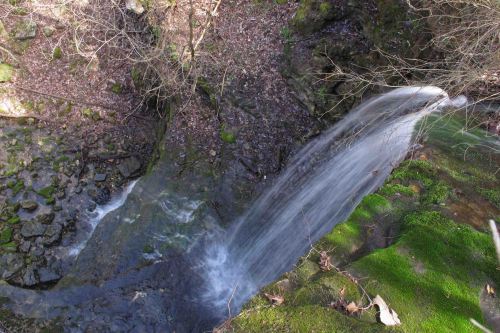
Pearly Springs Waterfall
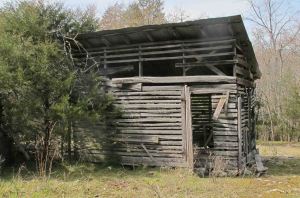
Pearly Springs Waterfall

Pearly Spring Smokehouse

Pearly Spring Smokehouse

We camped on a ridge close to Big Hollow.  A small creek drainage had some nice cool water.  I dropped my melted Snickers bar into the creek so it would be ready for desert.

Snickers bar cooling in a small stream.

Snickers bar cooling in a small stream.

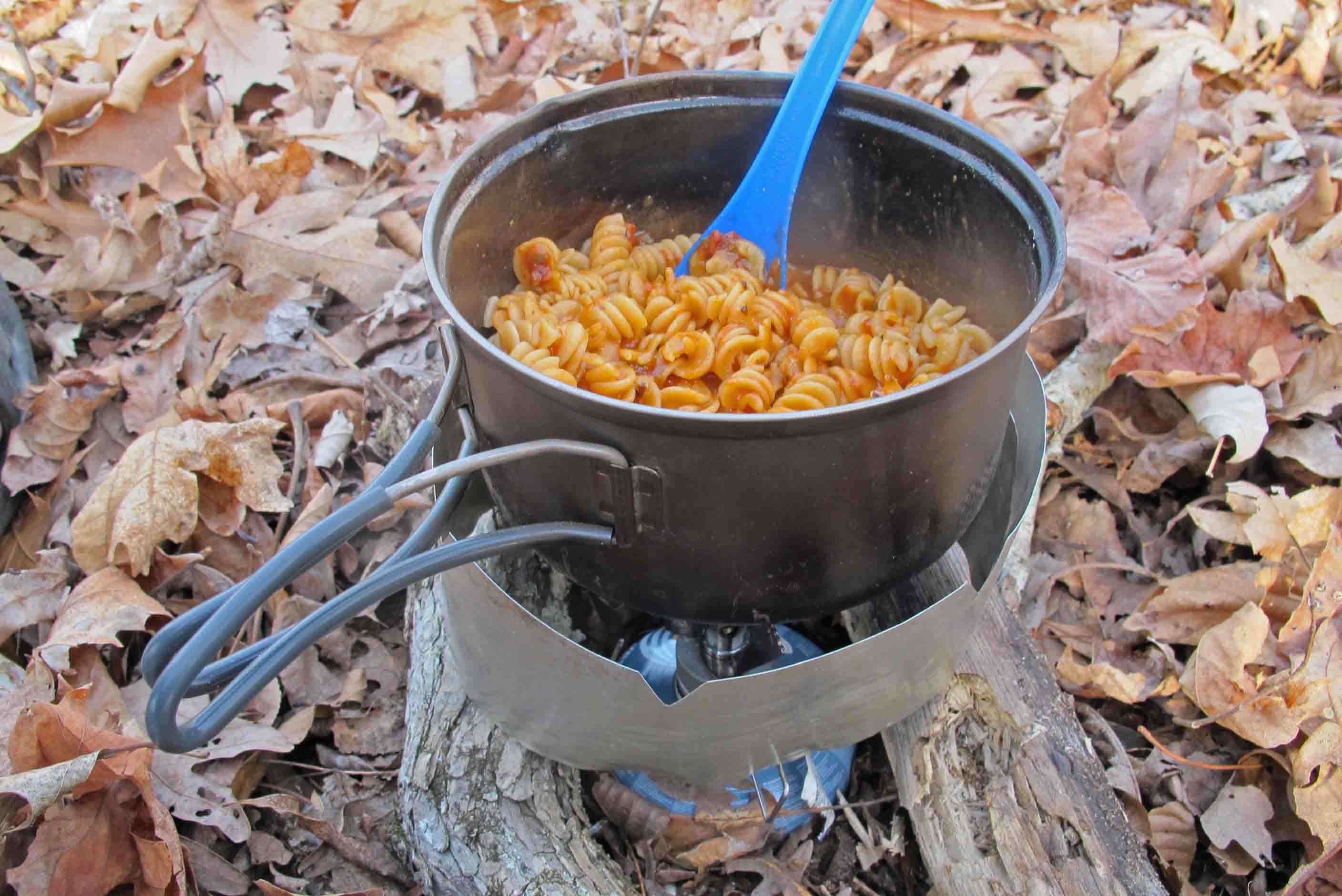
Supper was boiled potatoes followed by pasta and sauce that I’d dehydrated, but not used, for a trip in December.  Tasted great even after three months of storage.

Dehydrated rotini and marinara sauce

Dehydrated rotini and marinara sauce

Enjoyed some reading as the sun slowly descended, revealing a bright moon and stars.  This was a no-rain-fly night for sure.   As I woke the next morning I felt a light mist of icy crystals.  A fog had enveloped the ridge.  I hopped up and prepared my first cup of coffee.  A freshly ground cup never tasted as good as that Taster’s Choice instant made with water from an Ozark stream!  After oatmeal and another cup of coffee, we were back on the trail.

Day 2

We found that Indian Creek and Bear Creek were both dry.  I thought they would have water with recent rains but the thirsty ground must have soaked it up.  We made a detour to Kyles Landing to get water from the campground or river. The water was on so we filled up and hiked past Bear Creek, climbing to a nice ridge where we camped. This was a good workout at the end of a long day because we each carried 5-7 extra pounds of water at this point.

Supper was boiled potatoes followed by broccoli-cheese soup.  Bob said my trail name should be Tater since I always throw a few red or gold potatoes into the pack.    Several worse trail names come to mind so Tater it is.  Those potatoes are easy to pack, prepare, and they taste great at the end of a long day’s hike.

Home next to the Buffalo River.

Home next to the Buffalo River.

It was a cool and foggy evening so we turned in around 6:00 p.m.  After a little reading I dozed off, waking briefly at 10:30 p.m.  I then continued with a good night’s sleep until 7:00 the next morning.  When have I ever slept for twelve hours?  Coffee that morning was not the best due to the park service treated water.  I was looking forward to better coffee the next morning when we were once again treating our own stream water without the chorine taste.

Day 3

Walking along the ridges watching occasional canoes pass, we contemplated how different this area might have been if not for Neil Compton and many other advocates for the Buffalo National River.  It might well have been just another lake among many in Arkansas.

View of the river through cracked bluffs along the trail.
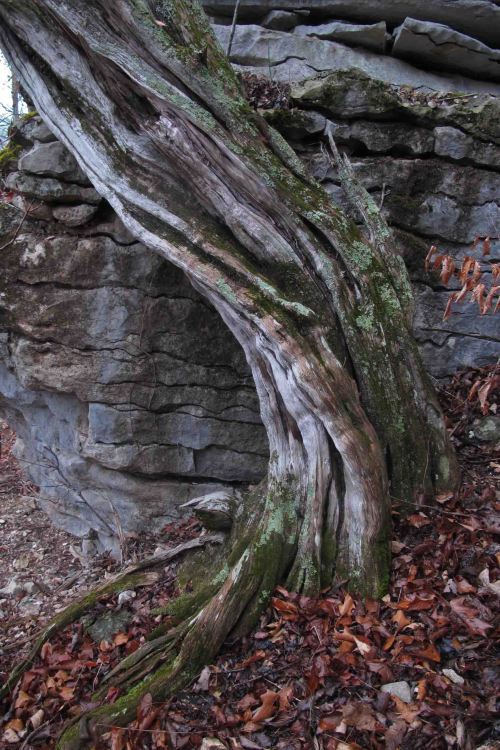
View of the river through cracked bluffs along the trail.

One of the visual gems so easily missed along the BRT

One of the visual gems so easily missed along the BRT

Approaching the Parker-Hickman site.
Approaching the Parker-Hickman site.

Parker-Hickman cabin

Parker-Hickman cabin

The trail passes the oldest known structure along the Buffalo River.  Built by Alvin and Greenberry Parker between 1847 and 1849, the structure is now known as the Parker-Hickman cabin because it was occupied by the Hickman family from 1912 to 1978.

Newspapers and magazines were used to cover the inner walls and some print can still be read.   Mud and wood pieces were used to fill between some of the large timbers.  The cabin was skillfully built with precisely cut half-dovetailed log corner joints (Buffalo River Handbook by Ken Smith).

Detail of an inner wall of the Parker-Hickman cabin

Detail of an inner wall of the Parker-Hickman cabin

Detail of an inner wall of the Parker-Hickman cabin showing an excerpt from Home Life Magazine

Detail of an inner wall of the Parker-Hickman cabin showing an excerpt from Home Life Magazine

We camped a couple of miles past Cedar Grove Picnic Area next to a little oxbow off of the river. Nice water and a small flat spot for tents.  Several horse riders passed by that evening heading toward the Ozark Campground a couple of miles away.  The sounds of owls hooting, coyotes howling, deer feeding, and turkeys gobbling filled the night but did not disturb sleep.

Day 4

We had frost on the rainflies and some ice in water bottles when we woke the next morning.  It was to be a cool and sunny hike out.   A highlight on that last day was the spring-fed pond between Ozark CG and Pruitt TH.  I remembered the pond from a few years ago but did not remember how beautiful the spring was.  There were dark green watercress growing close by.  We found ourselves wondering about the people who built the small pond just below this spring and what their lives might have been like.
Small clear spring with watercress

Small clear spring with watercress

On the last mile of the trail while noticing wildflowers beginning to peek out from under the leaves, I found myself thinking about the next season I would target for a Buffalo River hike.  I’ve only seen a fraction of its beauty.

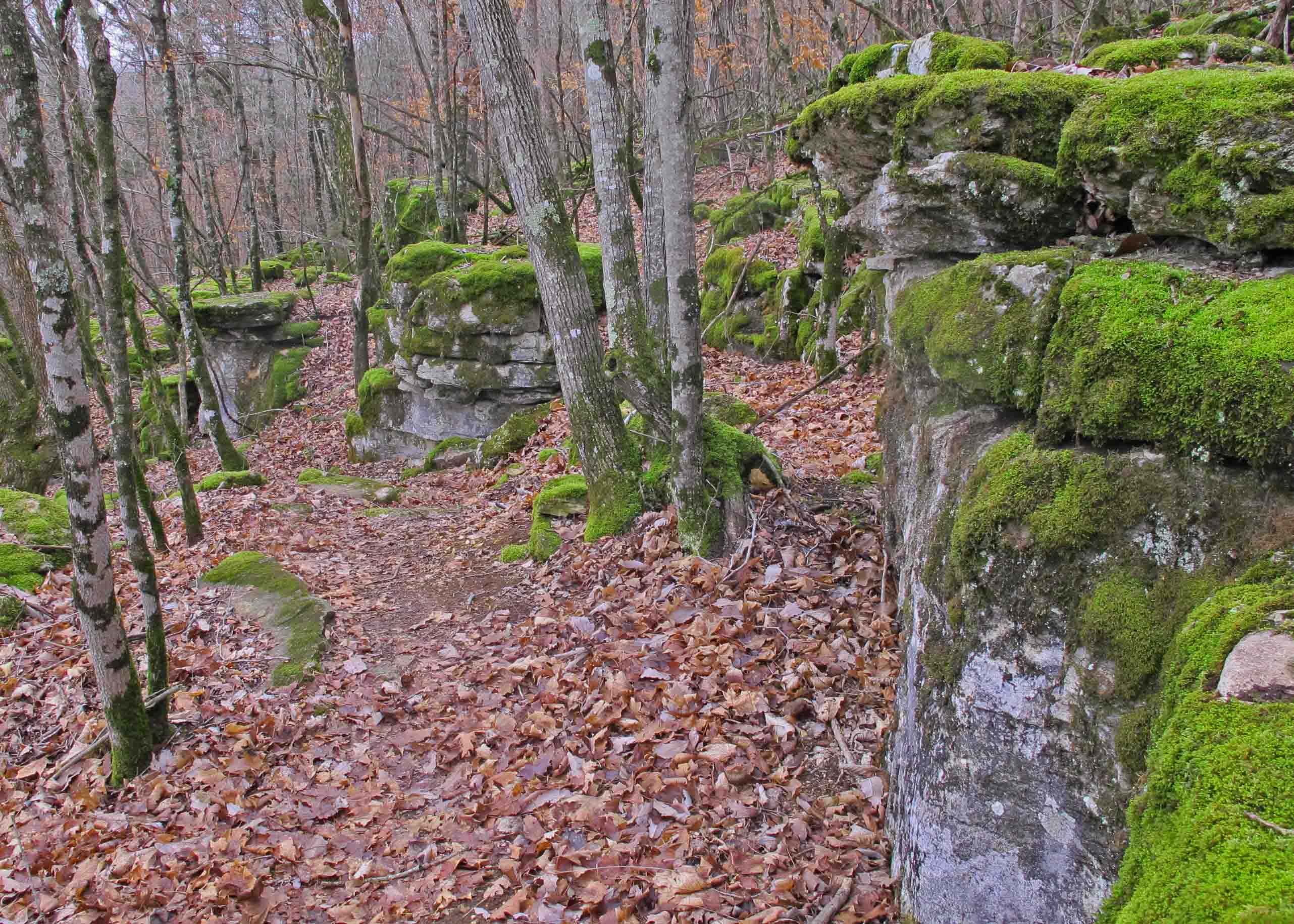
Moss-covered limestone maze similar to many that surround portions of the Buffalo River Trail.

Moss-covered limestone maze similar to many that surround portions of the Buffalo River Trail.

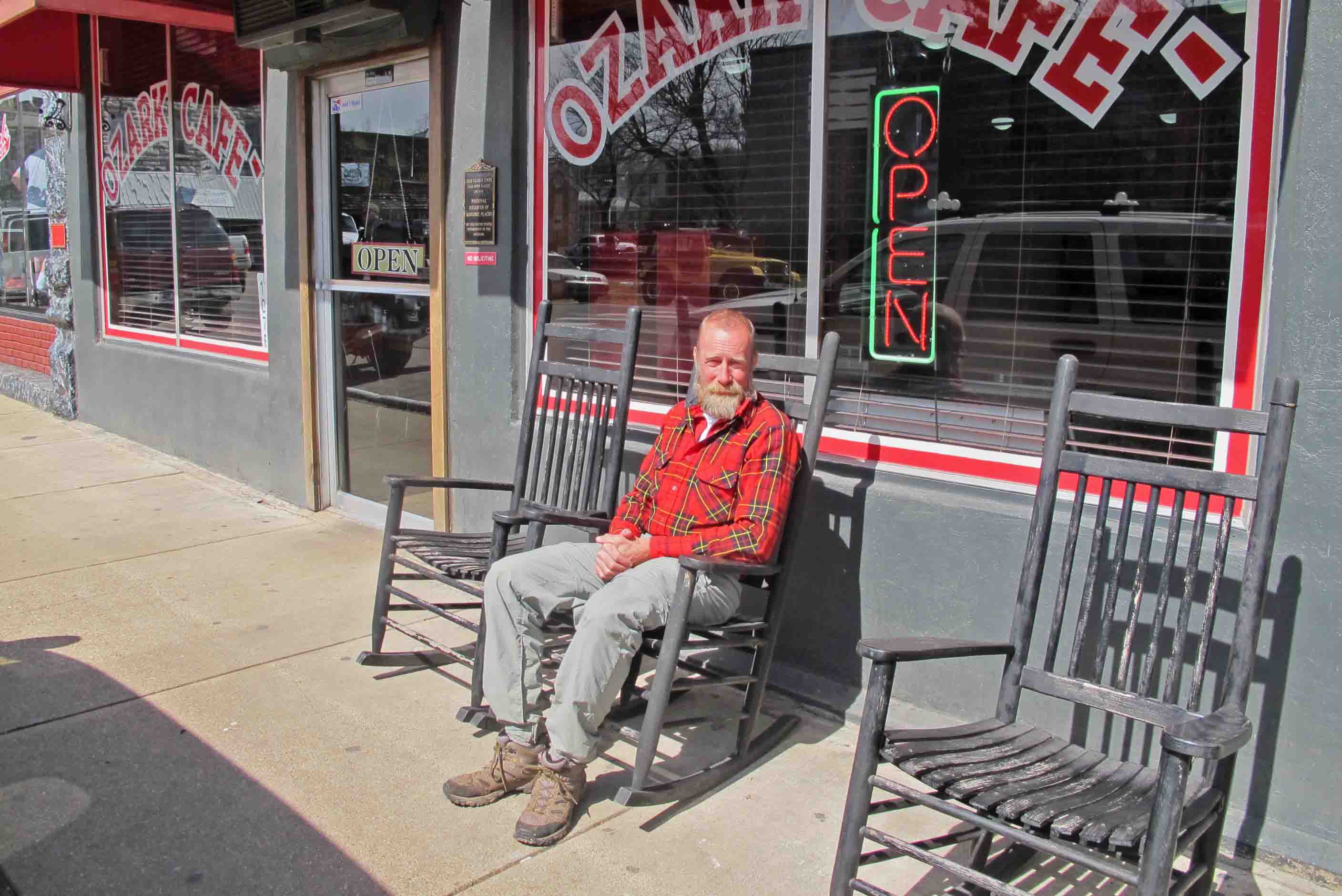
The perfect ending for our four-day trek was a meal at the Ozark Cafe in Jasper.  The food is good and they’re used to serving grungy hikers and floaters coming out of the Buffalo River area.

Bob at the Ozark Cafe in Jasper

Bob at the Ozark Cafe in Jasper

Travel Theme: Mountains

White Rock Mountain, in the Ozark Mountains of Arkansas

White Rock Mountain, in the Ozark Mountains of Arkansas

White Rock Mountain is one of my favorite mountains because it is beautiful in every season and especially friendly during winter.  The Ozark Highlands Trail passes across White Rock at about mile 18.  I like traveling to White Rock because the trailhead is only 45-minutes from home which means more time on the trail and less time in the Jeep.

Campsite with a view on White Rock Mountain

Campsite with a view on White Rock Mountain

Camping on White Rock is a treat.

White Rock camping 2

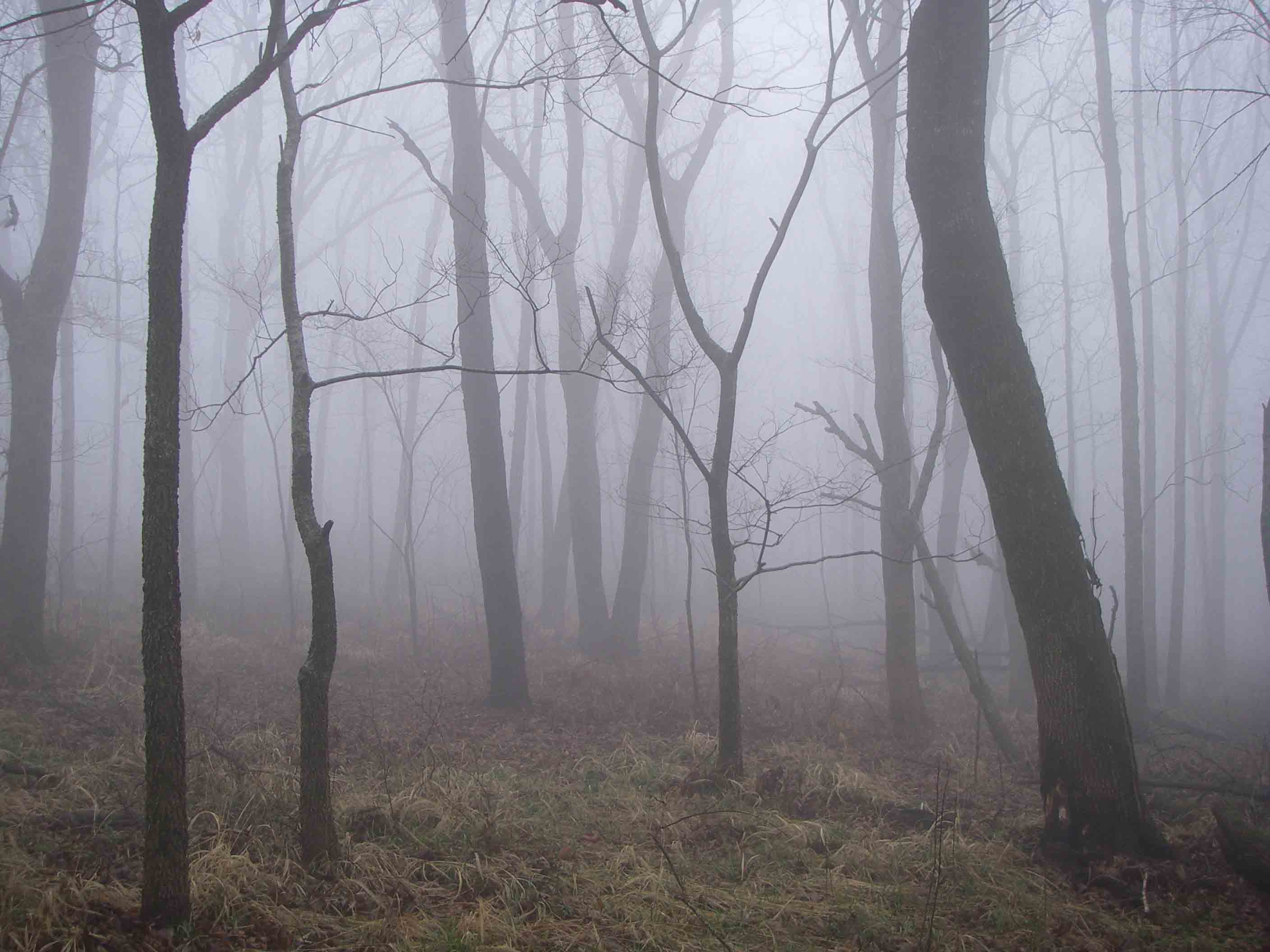
This picture of the morning after the previous picture demonstrates just how quickly conditions can change on this relatively low elevation mountain (2,320 feet).

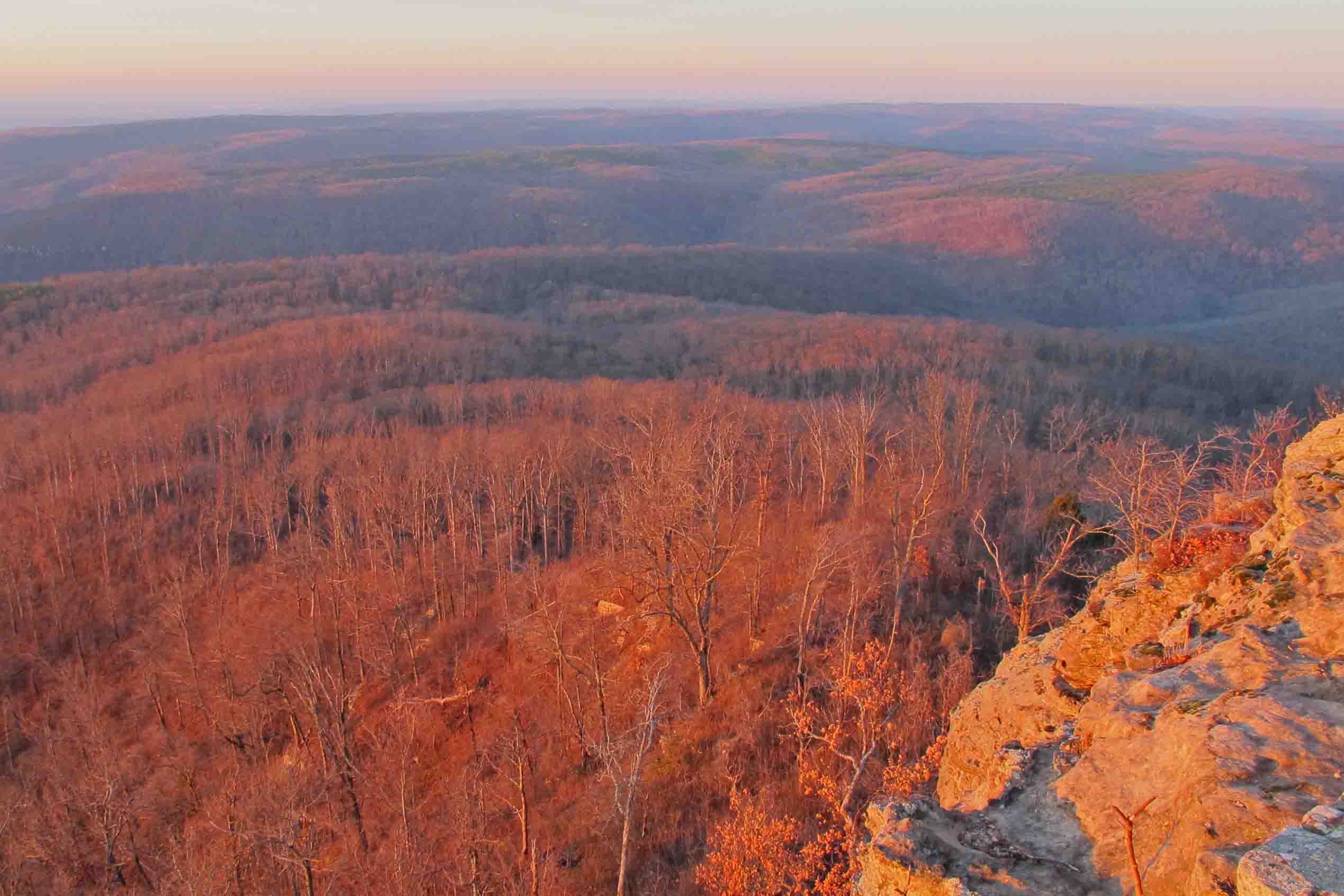
There are overlooks for viewing sunset and sunrise on a 2-mile loop trail on top of White Rock Mountain.

Sunrise from White Rock Mountain

Sunrise from White Rock Mountain


On the Ozark Highlands Trail just east of the spur to the top of White Rock

On the Ozark Highlands Trail just east of the spur to the top of White Rock


Visit http://wheresmybackpack.com to get more travel themes and possible locations for your own travels.

White Rock Creek along side the Shores Lake White Rock Loop Trail.

White Rock Creek along side the Shores Lake White Rock Loop Trail.