Long Distance Hiking Partner – Thank You Dad


My father and mother at Petit Jean State Park

My father and mother at Petit Jean State Park (photo by cousin Sue Warnock, late 1970s?)

I heard a yell from down in the valley and immediately realize my error.  The voice was my father’s, and it wasn’t a happy sound.  I had paused to pick up rocks and throw them into woods down a steep embankment.  It was fun to watch them bounce their way down through the trees.   I didn’t realize my father had hiked down below, and evidently one of the rocks hit him on the shoulder.  When he got up to the piece of trail I was on, he emphasized that I shouldn’t do that again.  It was a good lesson to learn at twelve years old.  Now while hiking I occasionally stop younger hikers from throwing rocks down hillsides and this always reminds me of my father.

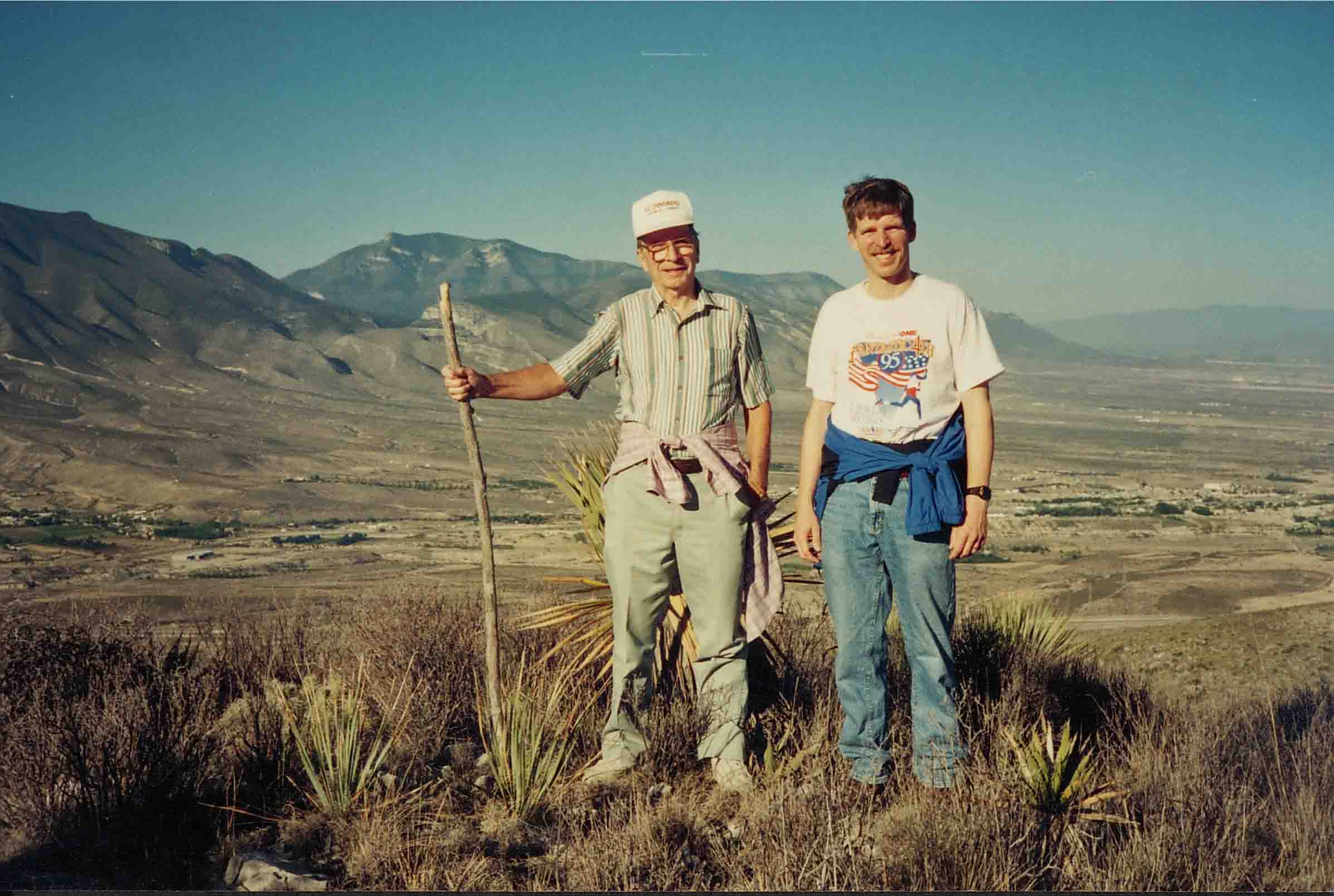
While visiting my Uncle Reese in Arteaga, Mexico, years later in the 1990s, I did a little desert hiking with my dad.  I stared at Arteaga Mountain through my uncle’s second floor window and thought it looked like an easy climb with little in the way of vegetation or challenge.  My dad, sister, and her son were up for it.  We consulted with one of Reese’s neighbors who had a topographic map of the area, determined a route, and drove to the foot of this “smooth little mountain.”

R001-070r

Daddy and me toward the high point of our hike. Daddy used a century plant stalk for a hiking stick (photo by Martha Warnock, approx. 1996).

We were surprised at the steepness of the climbs and the thickness of prickly vegetation.  Cactus plants were everywhere and had a way of reaching out and touching you.

Another surprise was the deceptiveness of the climb.  After reaching one rise, there would be a dip before rising even higher.  We hiked up, then down and then up even more.   This pattern repeated over and over.  We finally reached the peak and enjoyed the view  back down on Arteaga.  Rather than return by the up and down route, we chose a drainage to scramble down and walked back to the car.  A souvenir from that hike was a century plant stalk that my father found and used as a hiking stick.  It was light and strong and still works today.

A few years ago my father and I visited Petit Jean State Park where we’d spent many family vacations when I was a child.  We got in late and set up camp in the dark.  Early the next morning we hiked down the Cedar Falls Trail.  Robins were everywhere, and water flowed in small drainages along the trail.  A flood of  memories came over me as I thought of the many times I’d walked that trail as a child.  The house-sized boulders in front of me sat exactly as they did when I was a child. Although there had been gradual changes over centuries from water, ice, and wind, the changes were imperceptible to me.

We were both growing older in a world that seemed to change a breakneck speed.  The world we worked in had seen tremendous changes in technology and professional practices, yet here along these rocky trails, time seemed frozen.  There was something comforting about the stability of these scenes remembered from childhood.  The little drainages still flowed across familiar rock piles.  Cedar Falls still roared with power.  Deep green moss still clung to the tops of vine-covered rocks.  Bright orange and yellow lichen still caught my eye as we descended the trail.

As I watched my father hike down the trail, I thought about his years of commitment to my mother and our family.  He’d worked hard to provide for us and make it possible for us to explore the beauty of the world and learn new things.  He always had an eye for the beauty of nature, and I was pleased to think I received that tendency as a gift from him.  He took pride in his children and grandchildren, but I knew that he had made sacrifices to provide for us and make our needs more important than his own.

The few hikes I had with my father became special memories.  He is the true long-distance hiking partner, having traveled with me for more than fifty years.  I’m thankful for his many lessons, some verbal but most taught in silence through example.  He showed me how to walk a path with integrity.  Out of respect for my father and his example, I hope to walk as he walked.

Photo taken by my father on his Zeiss Contessa on a visit to Hodges Gardens.

Photo taken by my father on his Zeiss Contessa on a visit to Hodges Gardens.

Photo taken on his Ziess Contessa while serving in the Korean War (early 1950s).

Photo taken on his Ziess Contessa while serving in the Korean War (early 1950s).

Dad taking pictures at Mirror Lake, Blanchard Springs

Dad taking pictures at Mirror Lake, Blanchard Springs

Hiker’s Guide to Leave No Trace – By guest blogger, Hiker

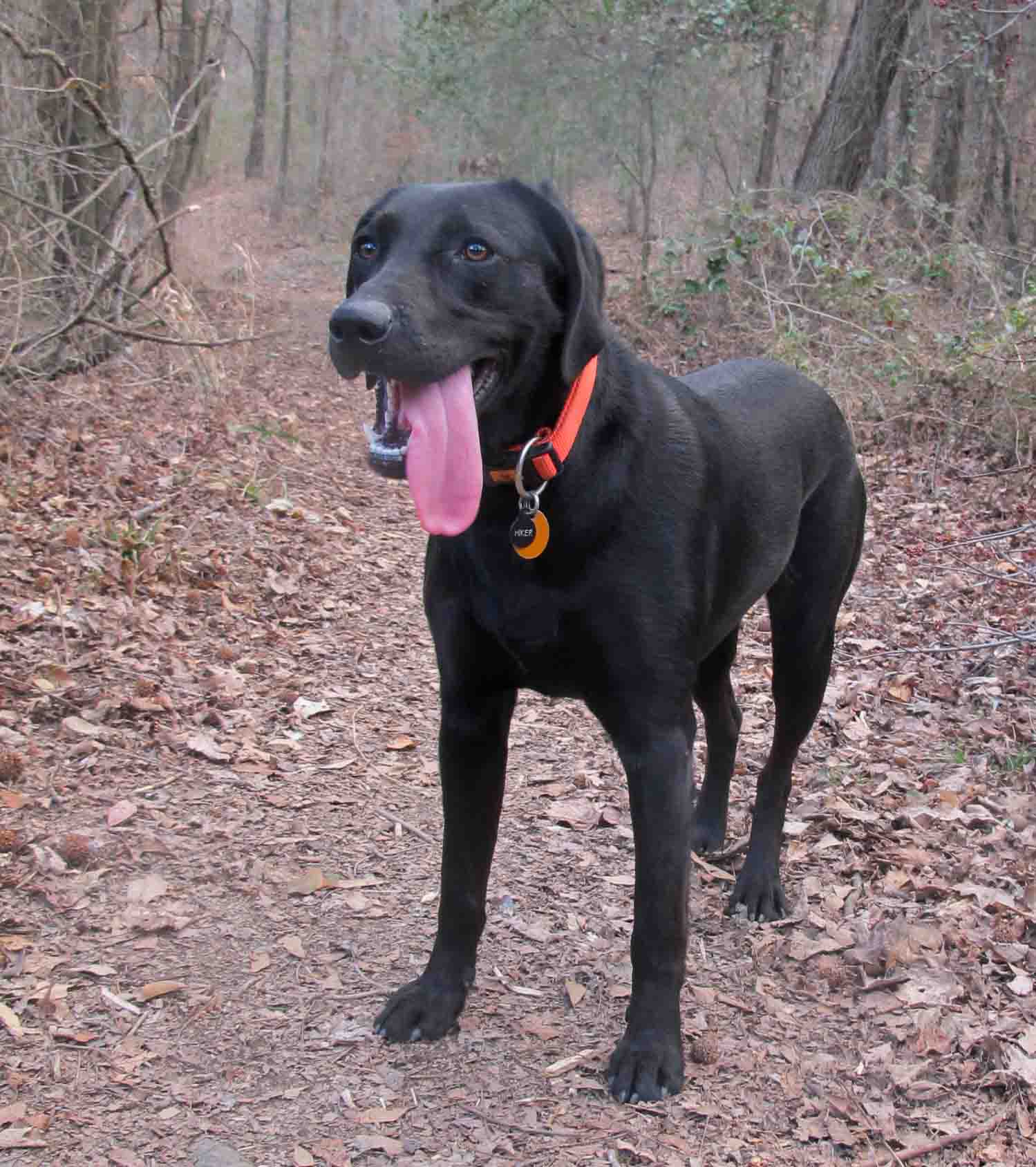
Hiker, promoter of "leave no trace" travel.

Hiker, promoter of “leave no trace” travel.

As a regular hiker I’ve noticed my human friends’ nasty habit of leaving their trash on the trail, along waterways, and generally making a mess of the woods.  I really don’t understand this since I’m a “leave no trace” hiker myself.  I always take care of my personal business off the trail in a discrete location. I never carry my chew toys into the woods because it would be easy to leave them there by accident.  I always finish every last bit of my food.  “Leave nothing but footprints,” that’s my motto!

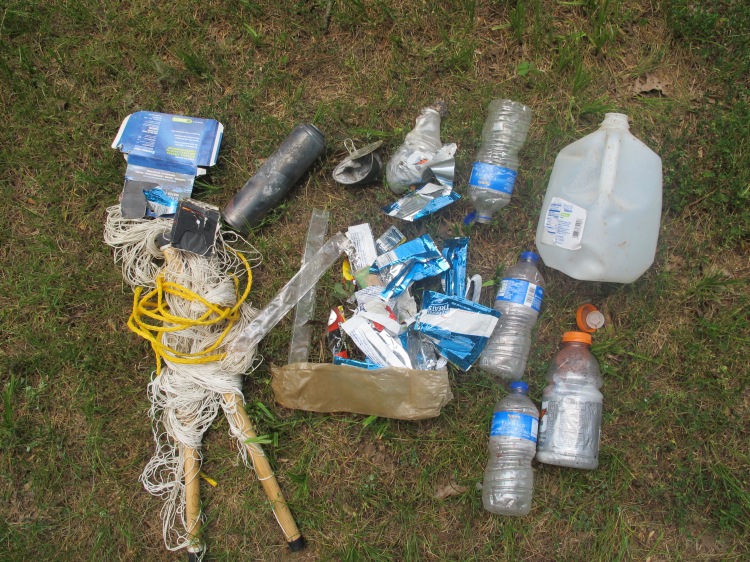
Trash picked up on the OHT.

Trash picked up on the OHT.

The motto for human folks seems to be, “Prove you were here by leaving lots of trash or building structures for no reason!”  They carry plastic bottles or aluminum cans filled with water, soda pops, beer, and all sorts of concoctions.  Don’t get me wrong, there’s nothing wrong with a nice cold beverage, but some humans leave their empties right where they had their last sip.  They don’t mind carrying a full bottle into the woods but an empty bottle is too heavy for their pitiful, exhausted human selves to carry out.  They deserve an ankle bit for that!

Useless structure built along the OHT.

Useless structure built along the OHT. Photo was distributed to others by the builder of this structure.

Sometimes they build huge fire rings when a small one would work much better.  They stack rocks behind waterfalls as if they’re going to make a shelter there.  They cut trees and stack limbs, living out some type of pioneer fantasy.  They carve their initials in trees or bridges as if others are going to want to see this.   Humans have developed better ways to share information than carving on trees and rock, yet some persist in doing this.

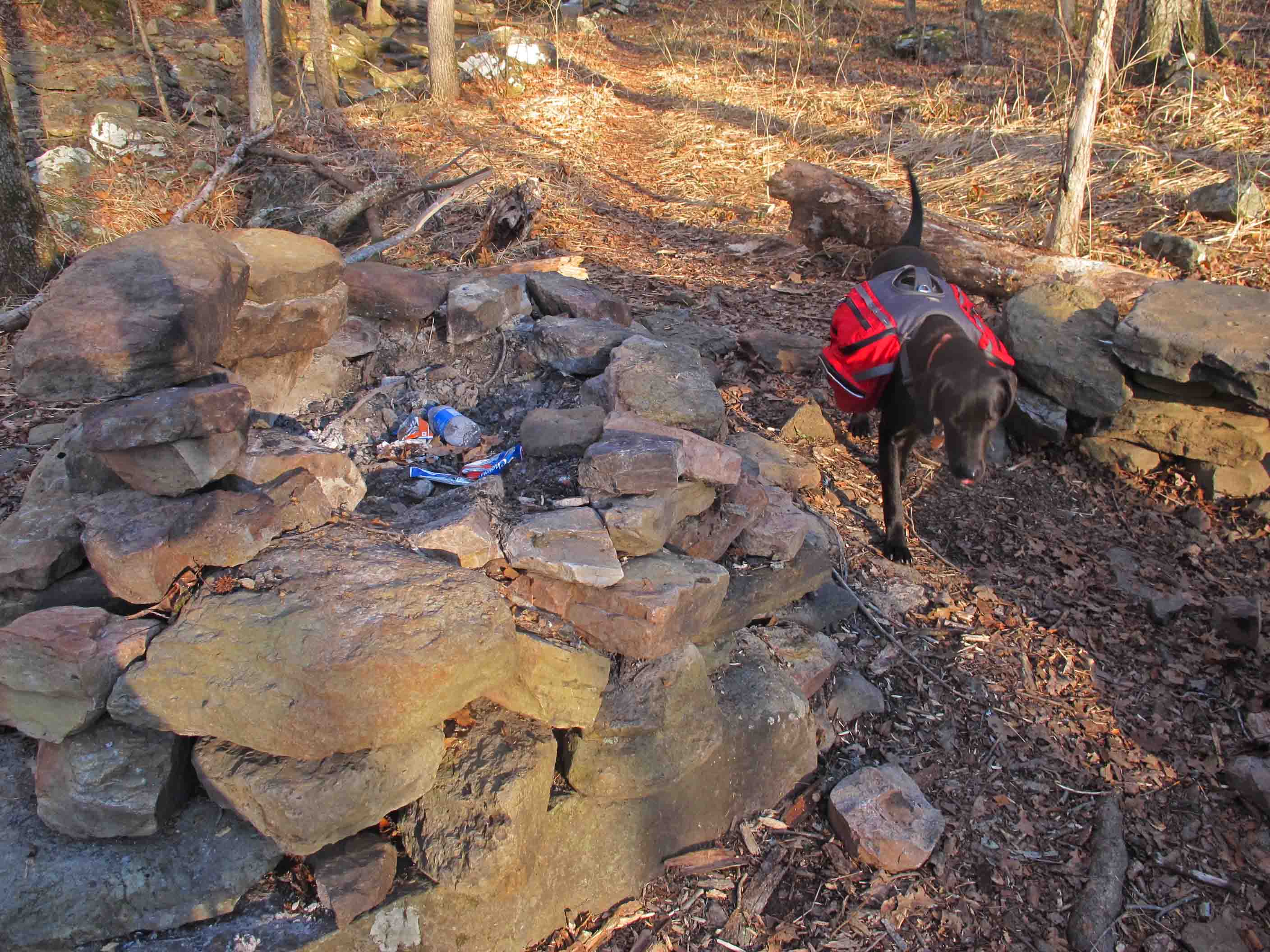
Trash in this fire ring was irritated me.  My master packed it out since we were close to the end of our over-nighter.

Trash in this fire ring irritated me. My master packed it out. This fire ring is way too tall for this dog to warm up beside. Sometimes smaller is better.

Sometimes they leave half-eaten food and trash in their half-burnt fire rings.  Oh, that’s a beautiful sight for the next campers who come along.  Just the other day I was walking along a trail and found sliced potatoes buried right beside a fire ring.  My master was none-too-happy with me and it took a lot of encouragement on his part to get me moving down the trail again.  Those potatoes smelled really good, especially cooked in all that butter.

Some humans want to put up big ugly signs saying, “Don’t bury food…Don’t throw trash on the trail…Don’t chop on healthy trees….Don’t build a house here….Don’t take a crap on the trail or by the water…don’t, don’t, don’t.”  Only problem is that many humans who can read don’t and, those most likely to leave a mess think signs don’t apply to them.

One pack of humans got together and called themselves, Leave No Trace Center for Outdoor Ethics.  They have some tips for leaving the woods in good shape.  Of course, I can’t resist a few clarifying barks, too.

1. Plan ahead and prepare.  “This is my weak area.  I’m mostly thinking about my next meal but humans should plan so they don’t damage things.” – Hiker

2. Travel and camp on safe, durable surfaces.

3. Dispose of waste properly.  “Please!” – Hiker

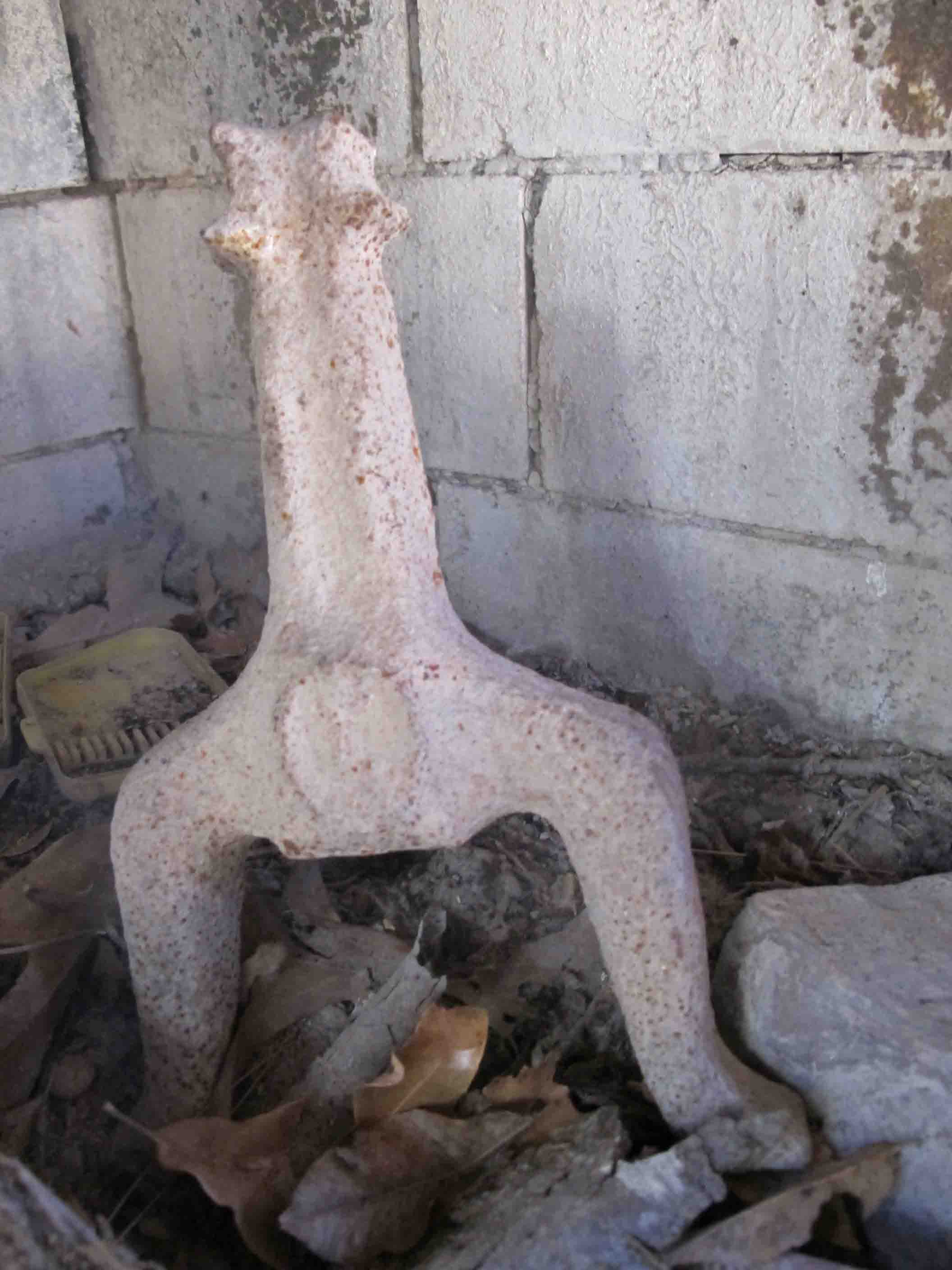
4. Leave what you find.  “My master likes to look at old stuff in the woods so if it’s rusty, leave it.  He’s wondering about the history behind the artifact.  I don’t concern myself with such things.  I just want to know when we eat.” – Hiker

5. Minimize campfire impact.

6. Respect wildlife.  “Especially dogs.”  – Hiker

8. Be considerate of other visitors.  “This includes controlling pets which applies to me.  Master tries to keep me on a leash when others are on the trail but if I get away from him and come running up, my only goal is to lick you all over and find a new friend.  I mean no harm but do apologize for wetting you down.” – Hiker

Hiker looking for someone to lick.

Hiker looking for someone to lick.

Trash along the trail.

Trash along the trail.

Walk, Eat, Sleep, Repeat, Continued – Fairview to Tyler Bend and a New Hiking Partner

We did not want to lose momentum and conditioning from our first two outings and were anxious to get back on the trail. We selected January 16-20 to finish our third leg of the trail to complete the whole 180 miles of the Ozark Highlands Trail.   To read about our eleven days of hiking the first 125 miles go to Walk, Eat Sleep, Repeat.

Packing was much easier for this outing because my third supply bag was still together and ready to go.  My gear arrangements from the previous two legs of the hike were still fresh on my mind.  One new addition was a zero-degree sleeping bag.  I would find that this bag worked well as a blanket until temperatures got down into the mid-twenties.  Then it was time to crawl in and zip up!

We were anticipating some of the best hiking weather yet and wouldn’t be disappointed.  We had temperatures from the mid twenties to the 60s.  The following layers and a dry bag with base layers have kept me comfortable and safe in any conditions I’ve faced here in Arkansas.
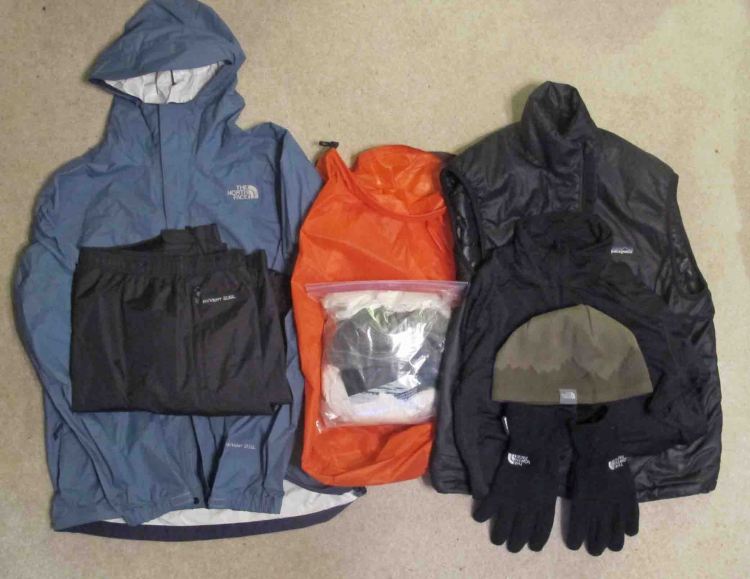
Warm layers
Warm layers

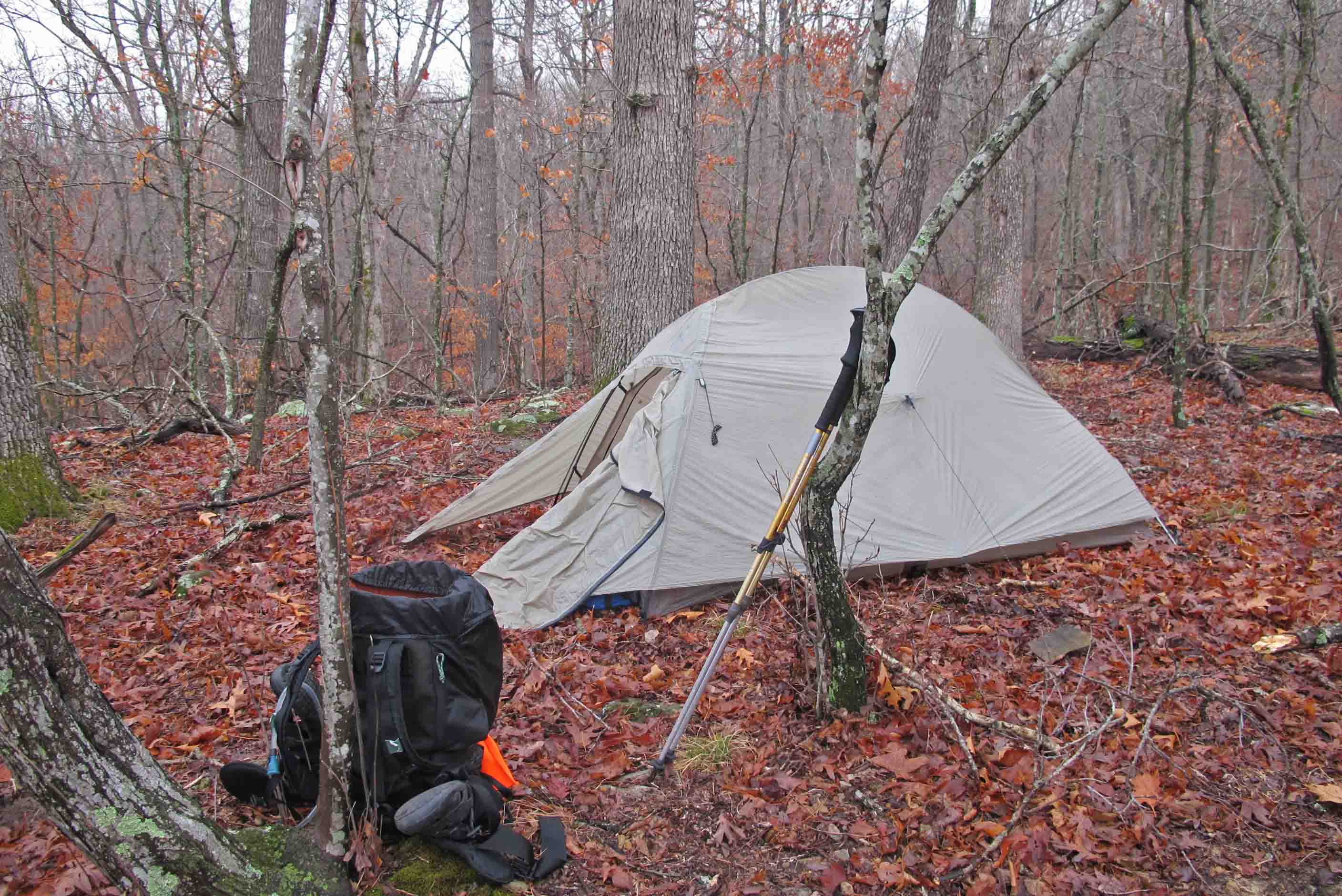
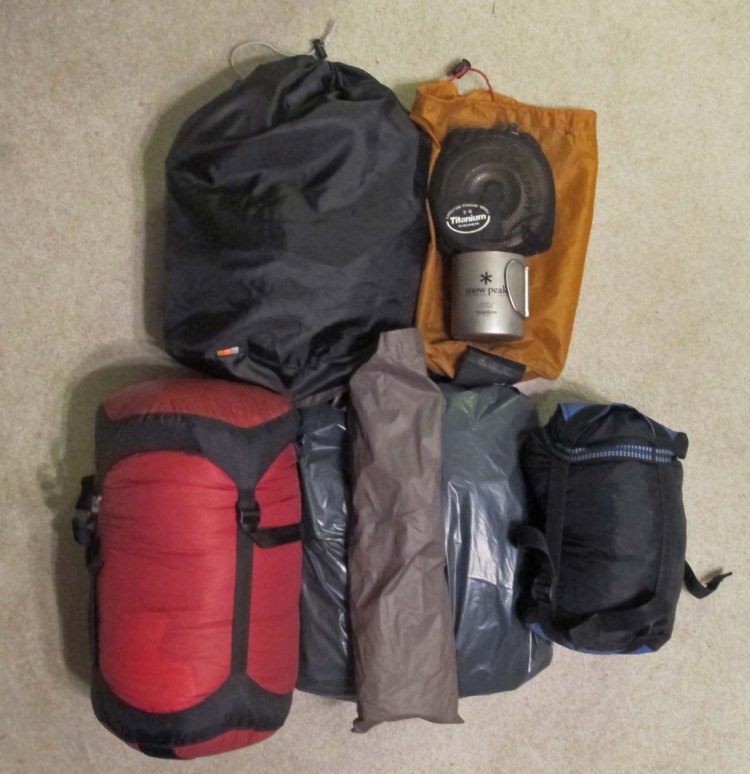
L to R top: Food bag, cook pot, Esbit stove, cup L to R bottom: sleeping bag, mattress, tent poles and tent.

L to R top: Food bag, cook pot, Esbit stove, cup
L to R bottom: sleeping bag, mattress, tent poles and tent.

We arranged a shuttle with Mark at Haggarsville Grocery and planned to come off of the trail between 2:00 and 3:00 p.m. on Monday, January 20th.
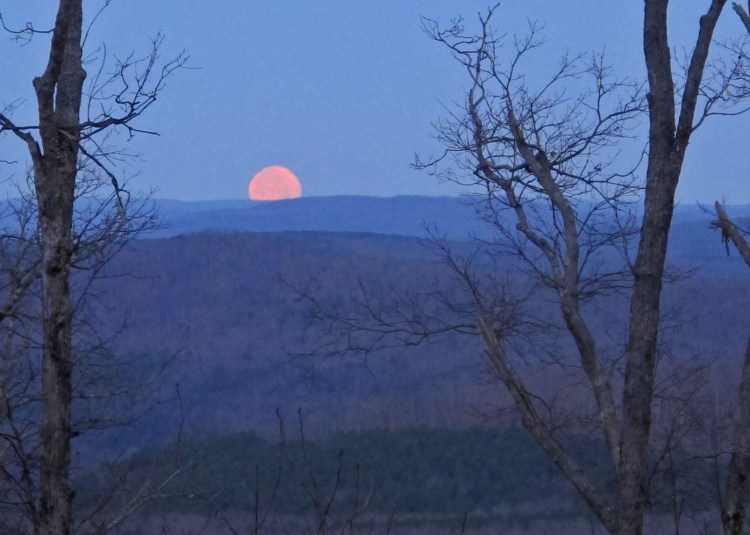
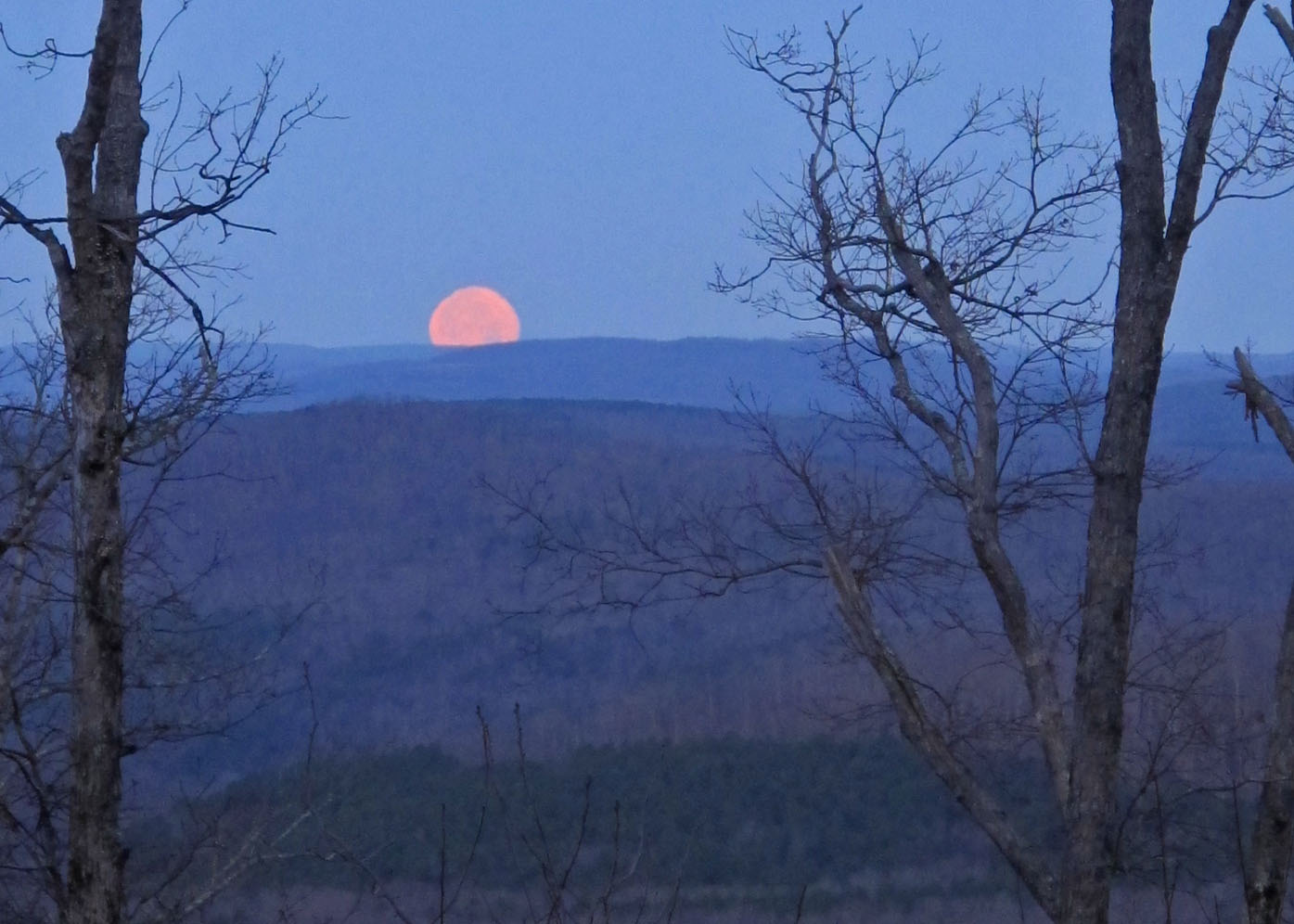
Moonset from Fairview Campground.

Moonset from Fairview Campground.

We camped at Fairview Campground so we could get an early start the next morning.  This moonset seemed to promise good travels.  I slept in the back of my Jeep in my 20-degree bag so my backpack would be undisturbed and organized for the trip.  It felt good to cross Highway 7 the next morning heading east.  This would be the last paved road we crossed for the next fifty miles.

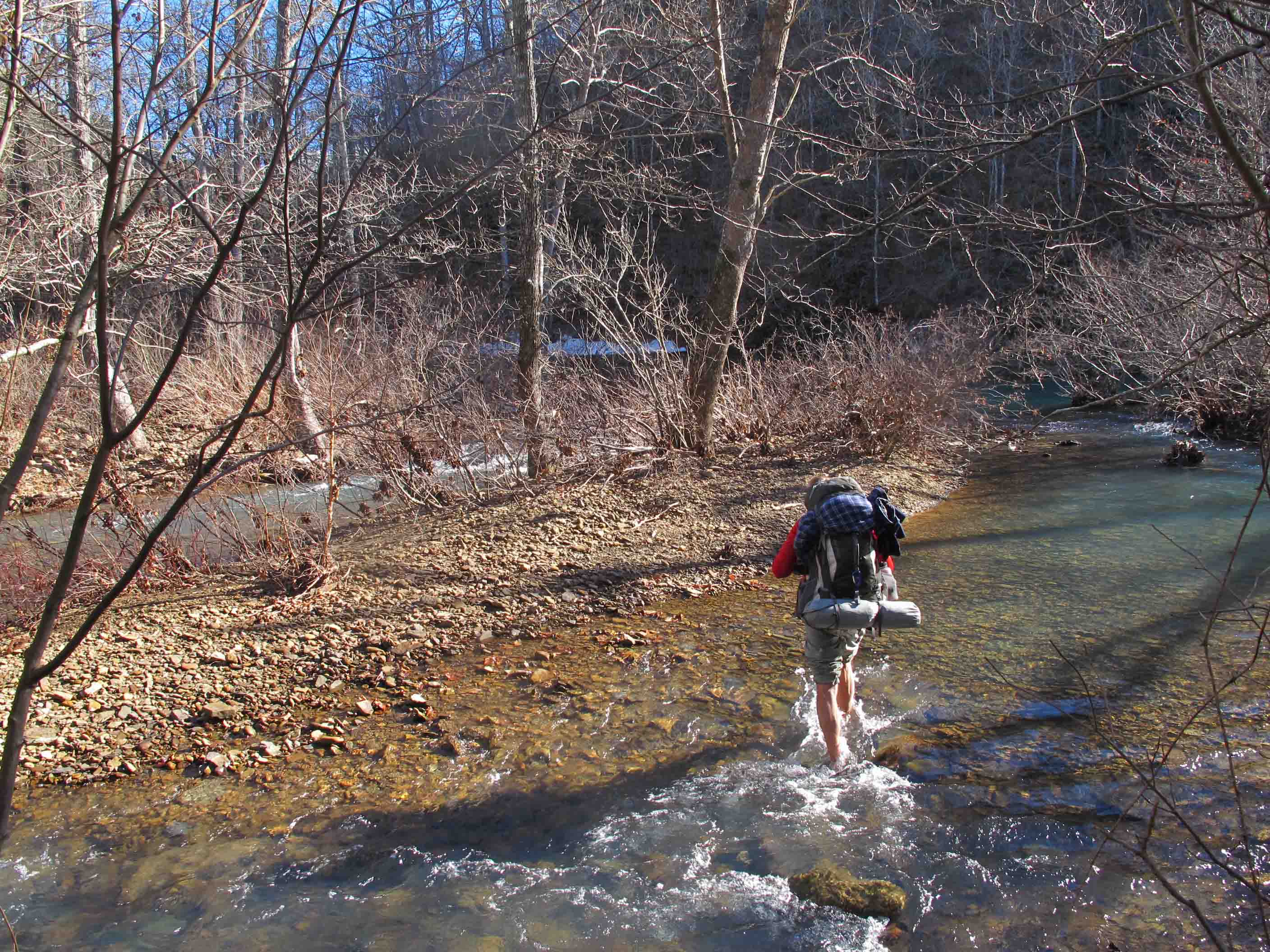
Crossing Richland Creek at the CCC Camp

Crossing Richland Creek at the CCC Camp

Richland Creek drainage next to the CCC Campground.

Richland Creek drainage next to the CCC Campground.

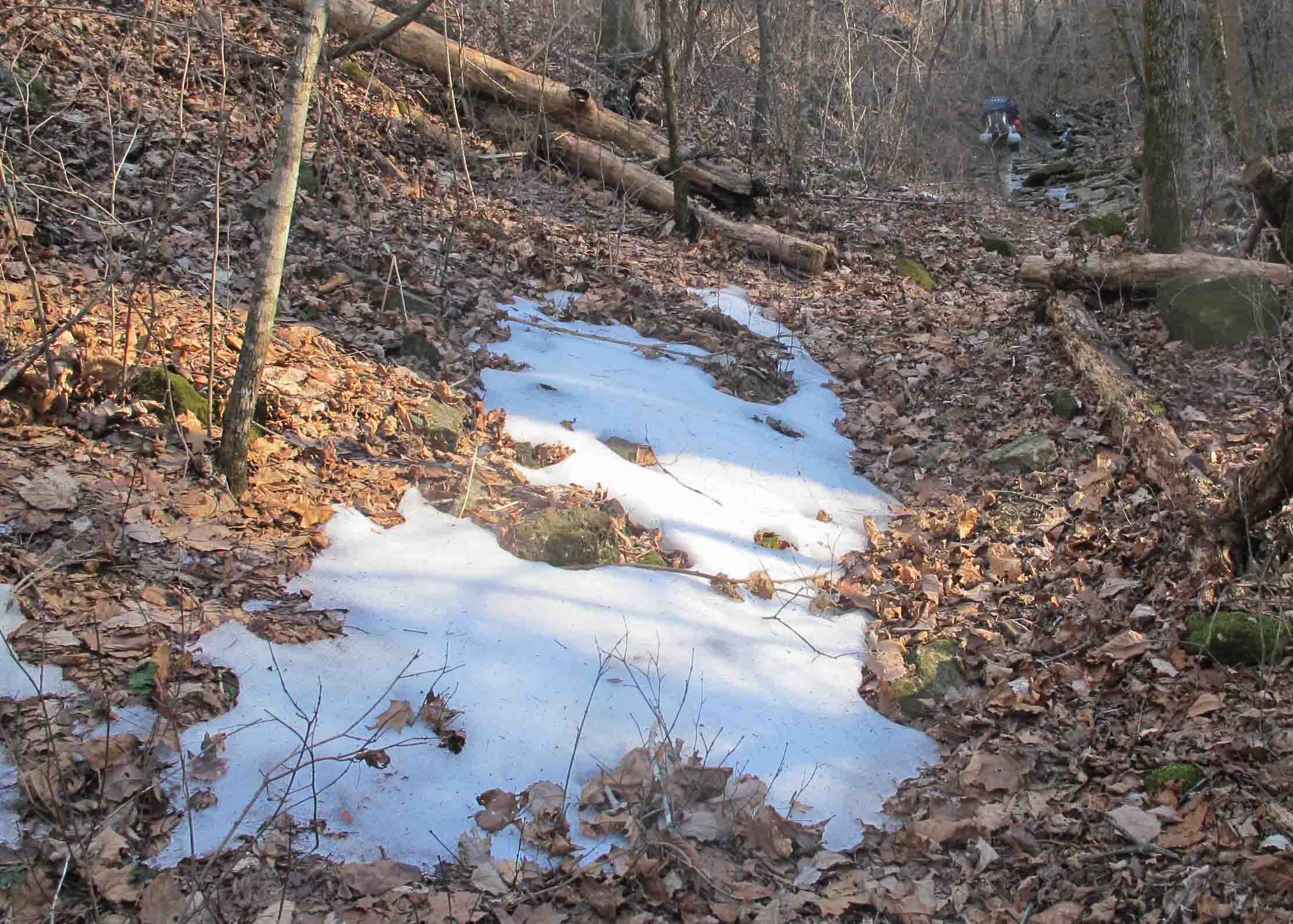
Creek crossings were easy but looking at remnants of earlier snow while standing in a cold mountain creek will numb your feet within seconds.
IMG_5041rr

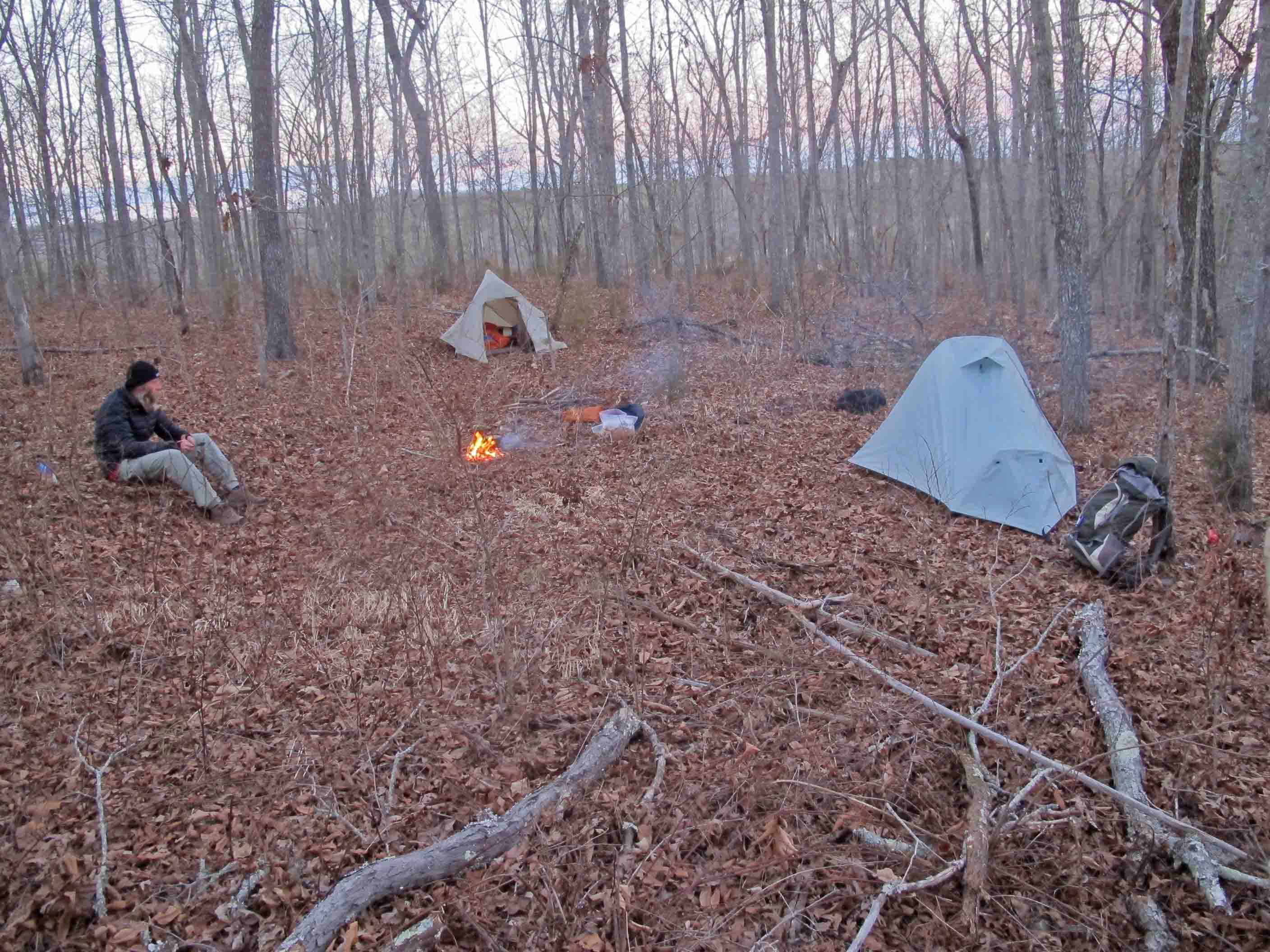
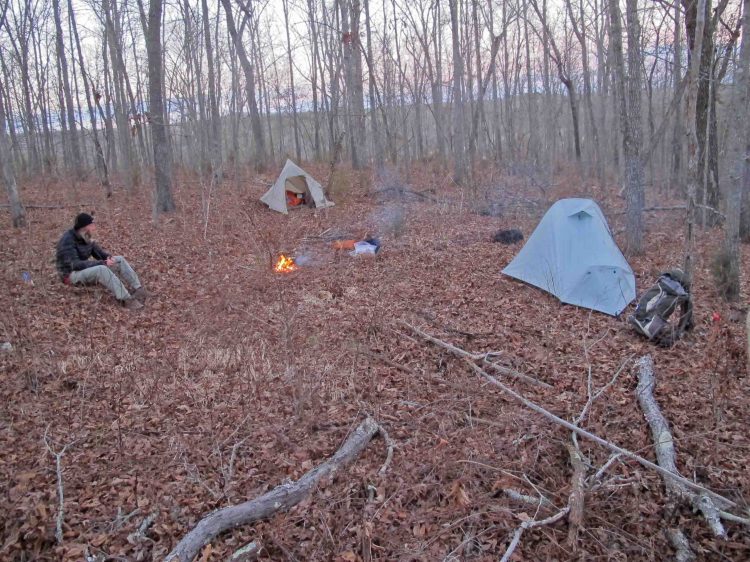
We were beginning to fear that water and a campsite would not appear on our second night but this spot didn’t disappoint.  We enjoyed a nice view and one of our coldest nights of the trip.  I found that by slipping my water pouches under the edge of my tent floor I could avoid having frozen water the next morning.

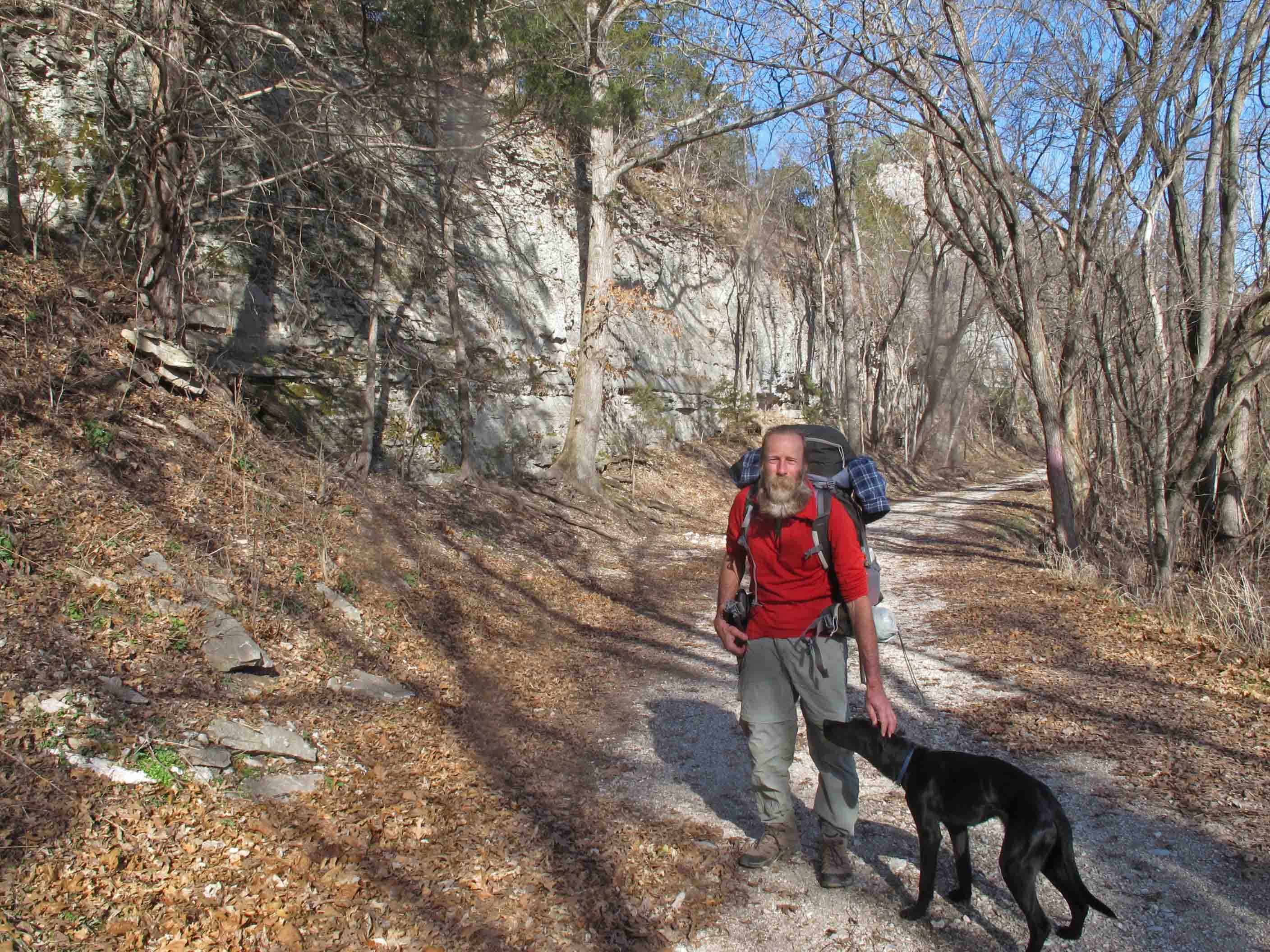
New Hiking Partner:  A third hiking partner joined us on our first night out.  We were setting up camp at mile 138 when an emaciated black lab appeared.  We ignored her in hopes that she would reunite with her owners but the next day she quietly followed us for fourteen miles.  At the end of that day we gave in and shared some of our beef and turkey jerky.  These were limited rations because neither of us packed much extra food. Bob said, “If we’d known we’d have a dog, we would have packed some Alpo.”

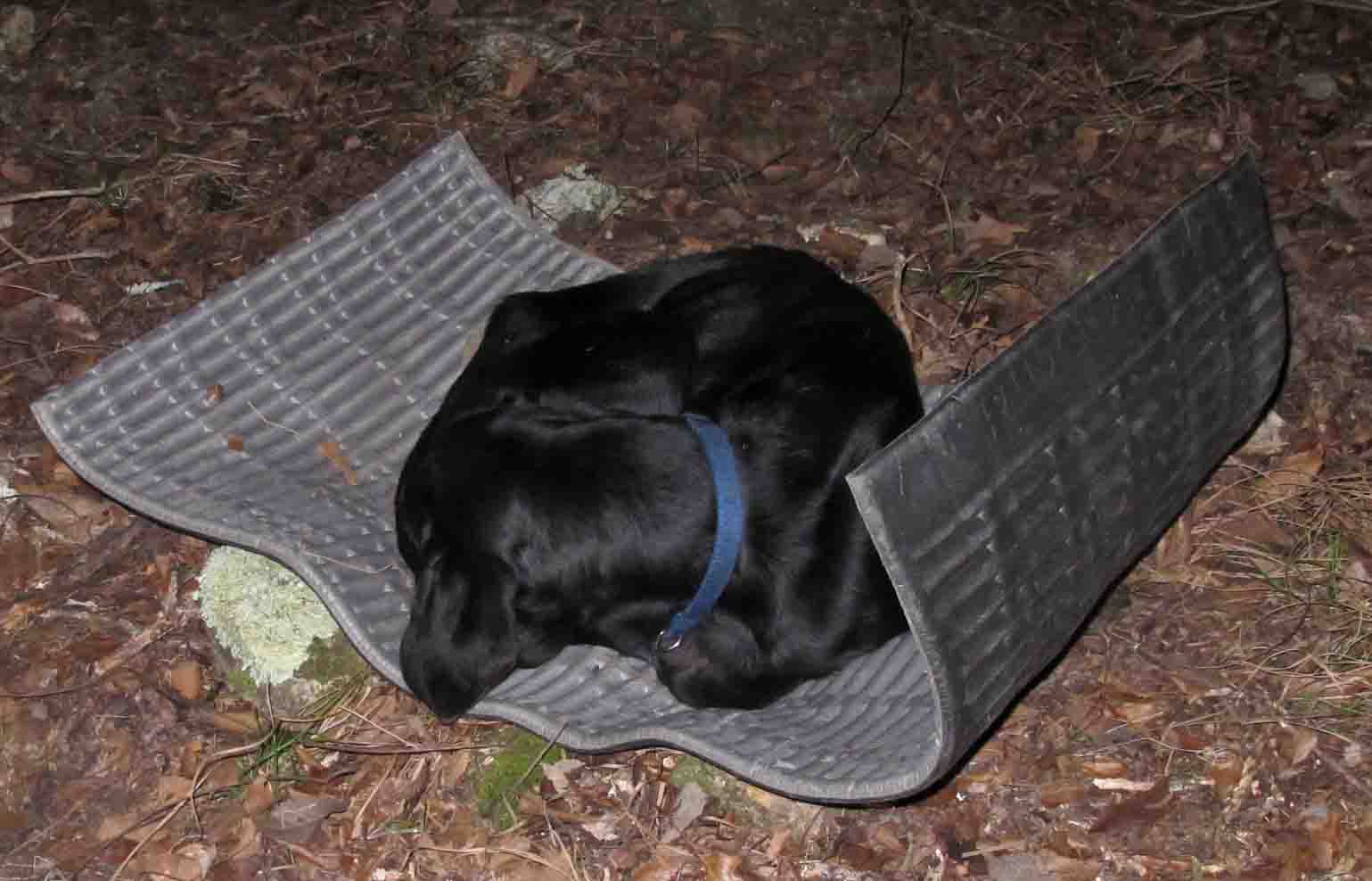
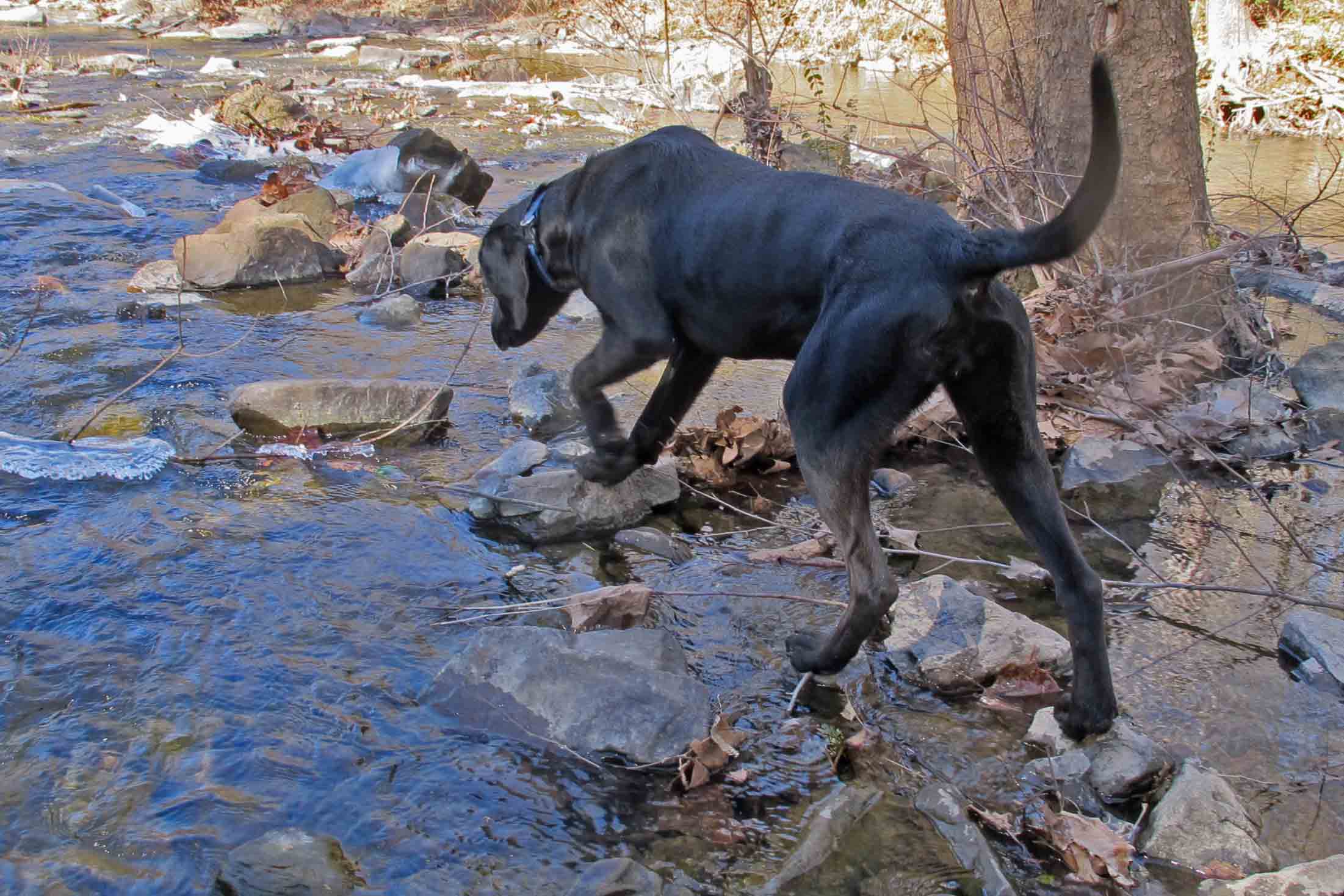
This black lab demonstrated good outdoor skills as she curled up in a nest of leaves next to a log. The following morning we feared we were going to witness the death of this dog but she persevered and continued mile after mile with only limited rations from our small surplus of food.

IMG_4955rr

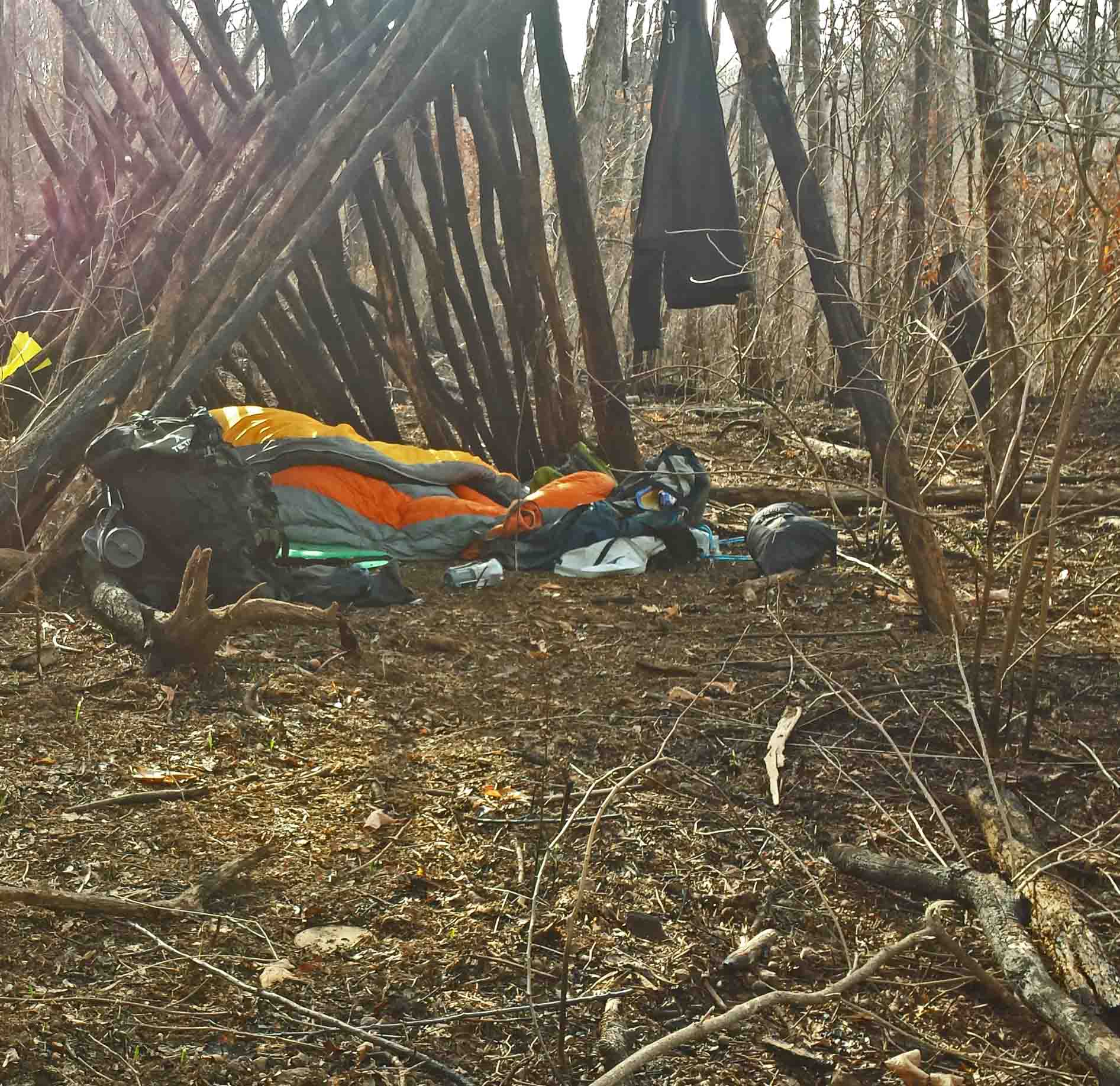
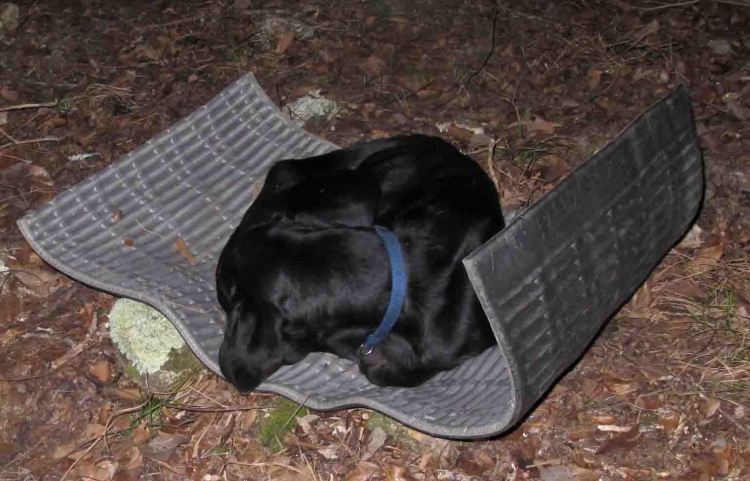
Later in our trip our junior hiking partner discovered the joys of avoiding cold conduction from the ground by sleeping on a foam sleeping pad.  Though she was skin and bones, we witnessed an improvement in her energy even with limited food.  We were amazed by her persistence on the trail and at creek crossings.  She was committed to following us for the 40+ miles to Tyler Bend!  We wondered if she would last.
IMG_5169rr

Historic structures along the Buffalo River

Historic structures along the Buffalo River

IMG_5058rr

IMG_5062rr

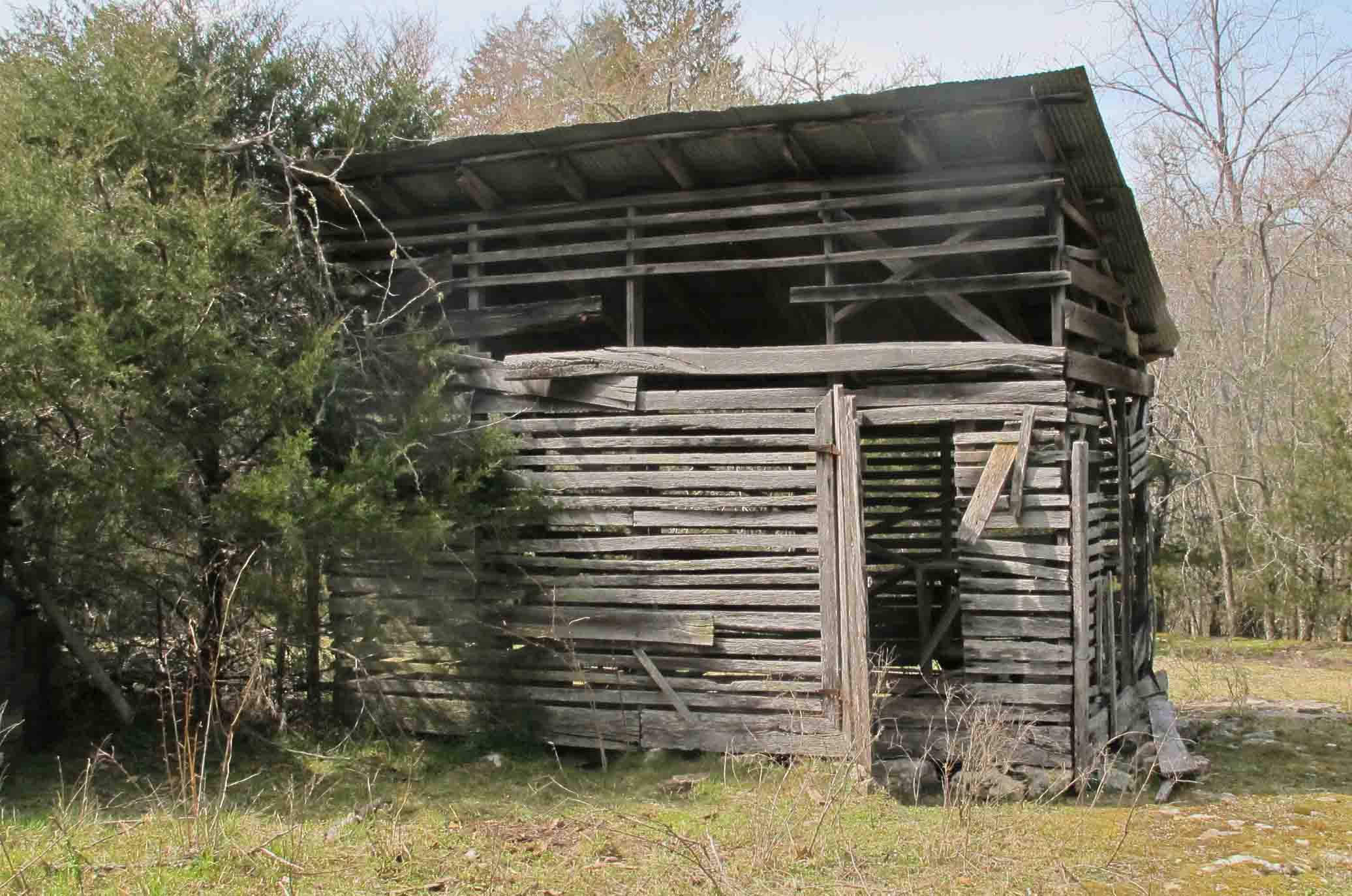
A number of historic structures can be found along the trail in the Buffalo River section of the OHT.  These can be so much fun to explore that it is sometimes difficult to maintain forward progress in hiking.

Breakfast and coffee in bed.

Breakfast and coffee in bed.

I chose to prepare my oatmeal and coffee in bed on this coldest morning of our trip.  It is important to set the Esbit stove away from any tent surface to avoid fire hazard.  Never burn a stove inside of your tent unless you’re wanting to end your outing early or have a death wish.

IMG_4976rr

This sign at the beginning of the last four miles of the 165-mile original trail made the distance seem more real.  We would complete the 165 miles, cross Richland Creek and continue fifteen more miles to complete the present 180 miles of the OHT on Monday, January 20th.  We had to hike upstream for a short distance to find a wide place on Richland to cross since it is pretty deep as it draws closer to the Buffalo River.  We were glad not to be crossing the Buffalo because it looked deep as in over our head deep.  If we were ending our trip here at Woolum a Buffalo River crossing would have been necessary.

A third hiker joined our group around mile 138.

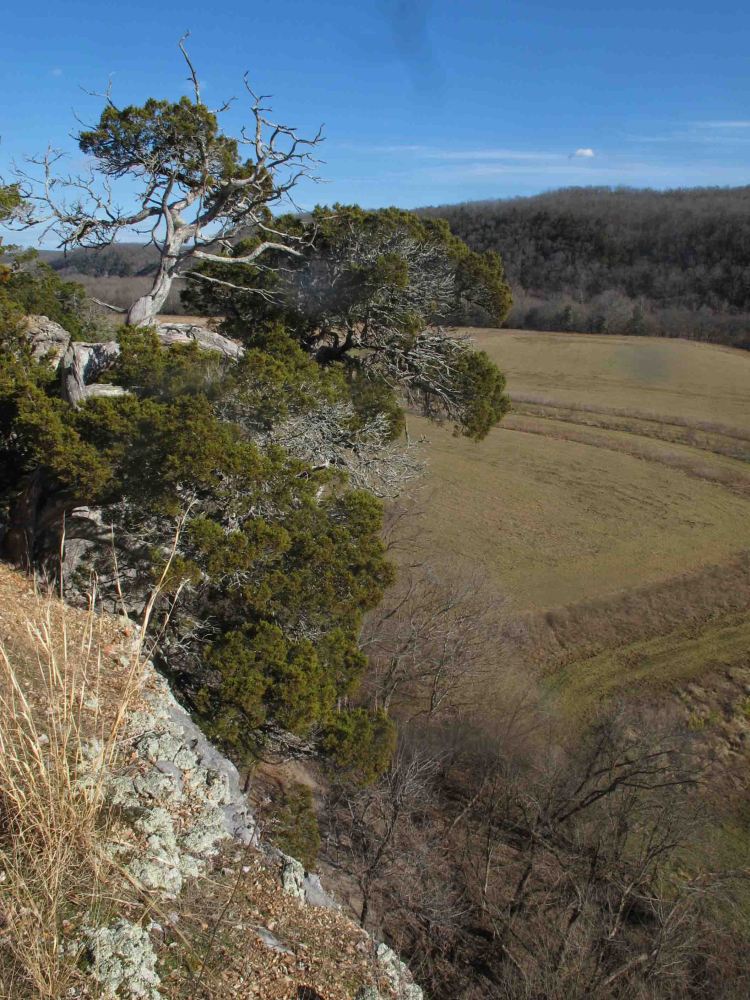
We took turns staying with our new hiking partner while the other hiked up the Narrs (Narrows) next to the Buffalo River.  This was my first time to climb up on this sidewalk in the sky.  It was a thrill to finally experience this beautiful and unique geological feature of our state.

The Narrs, a sidewalk in the sky.
The Narrs, a sidewalk in the sky.

Looking toward the southeast side of the Narrs

Looking toward the southeast side of the Narrs

Looking down the northwest side of the Narrs toward Skull Bluff.

Looking down the northwest side of the Narrs toward Skull Bluff.

Moderately confused.

Moderately confused.

We weren’t lost, just a little confused for an hour or so…

We carefully followed yellow horse trail blazes but when those blazes led us to a river crossing we knew something was wrong.  We filtered water and began to backtrack in hopes of correcting our mistake.   We started feeling a whole lot better when our revised route led us across Calf Creek and then back into the woods.  We were relieved to find this sign indicating we were right where we wanted to be!

A sign was needed on the road where the trail branched off to Grinders Ferry. One white blaze there would have kept us on the OHT route but as it turned out we saw some beautiful open fields and needed to replenish our water anyway.

Collier Homestead

Collier Homestead

On our last night we camped in a cedar grove not far from the Collier Homestead.  Mr and Mrs. Collier and their children began to homestead this property in 1928 with 15-cents to their name.  They grew a variety of crops, worked as hunting and fishing guides and raised their family off of the land through hard work and grit.

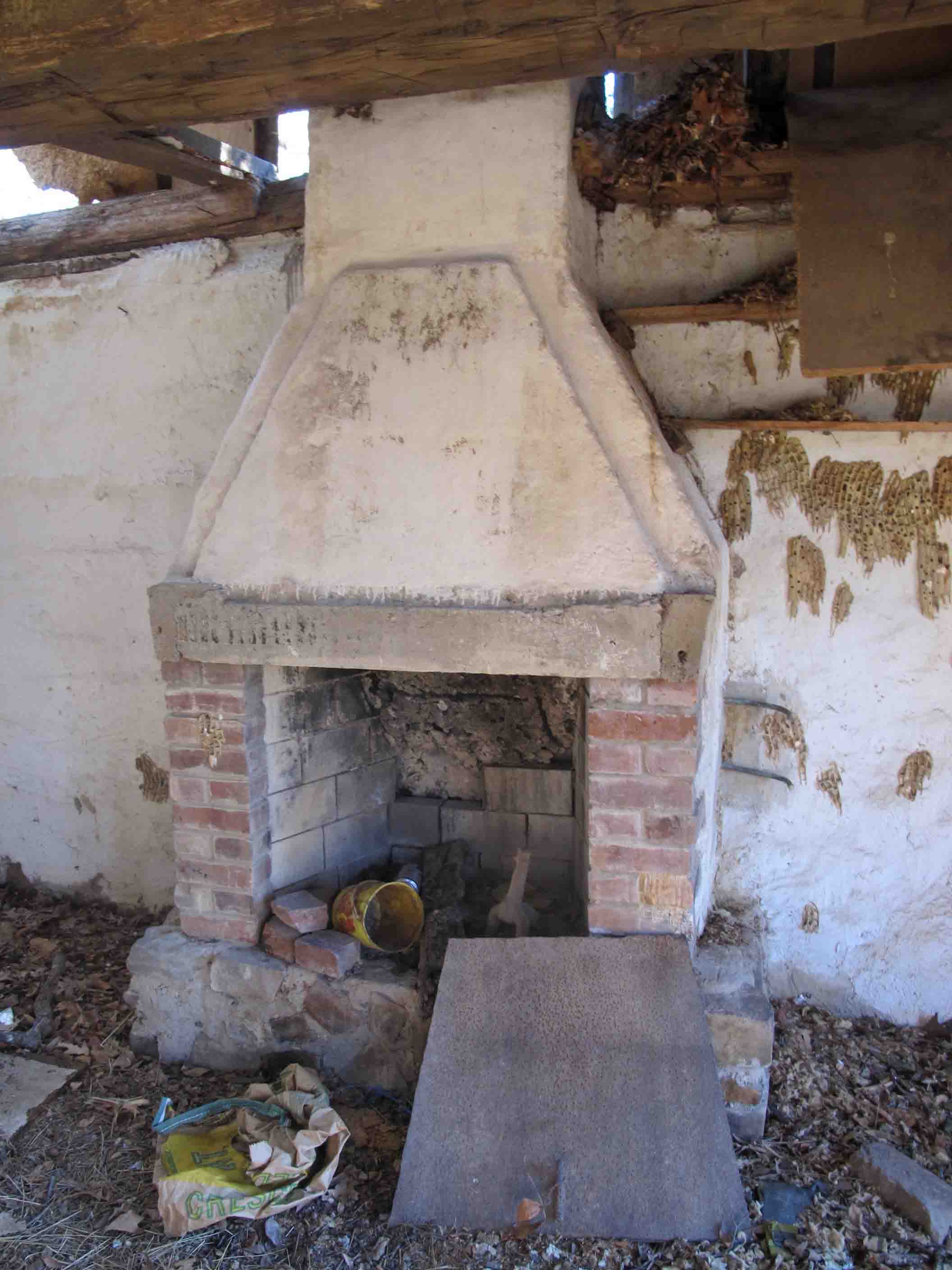
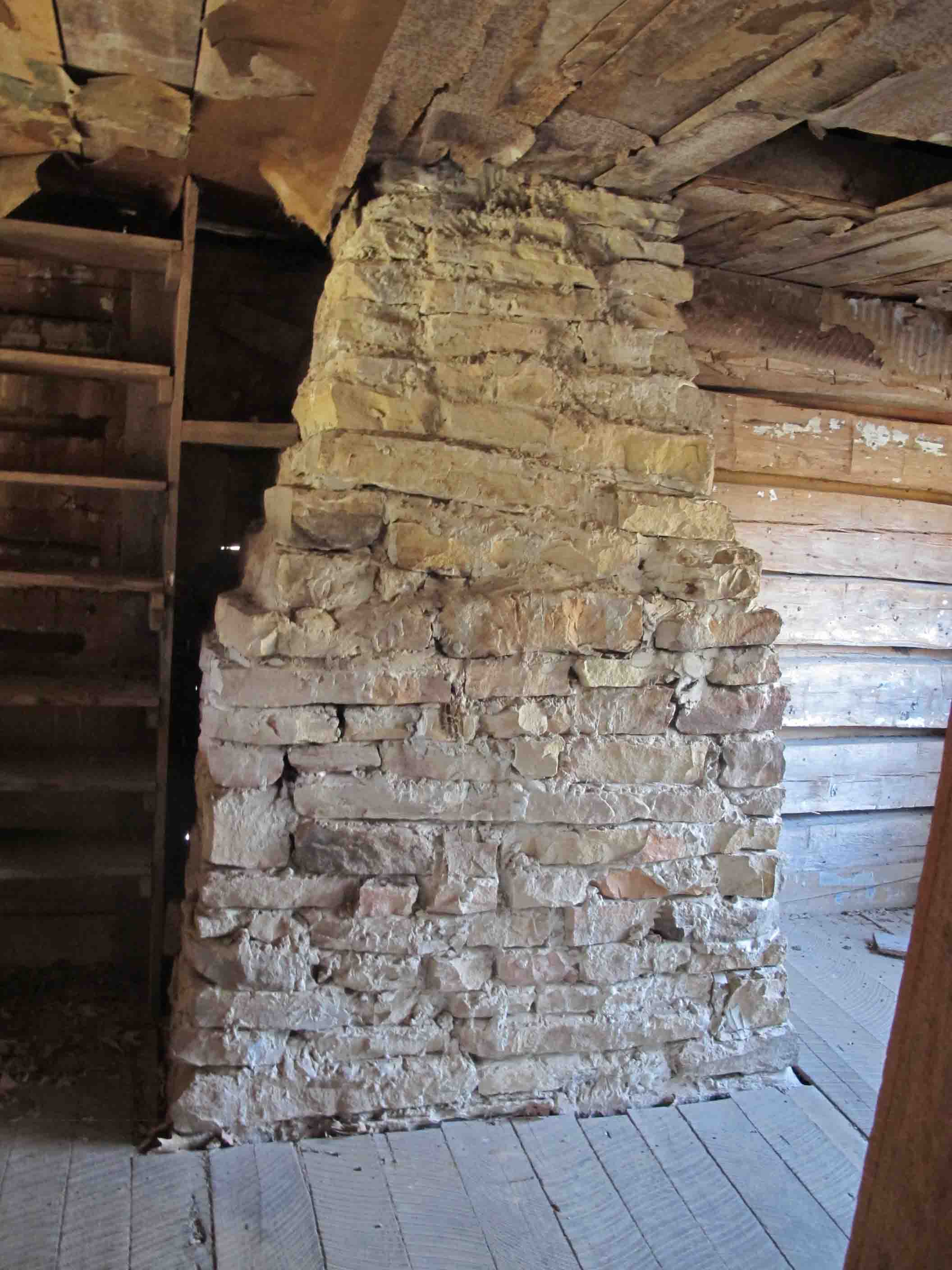
Fireplace in Collier Homestead

Fireplace in Collier Homestead

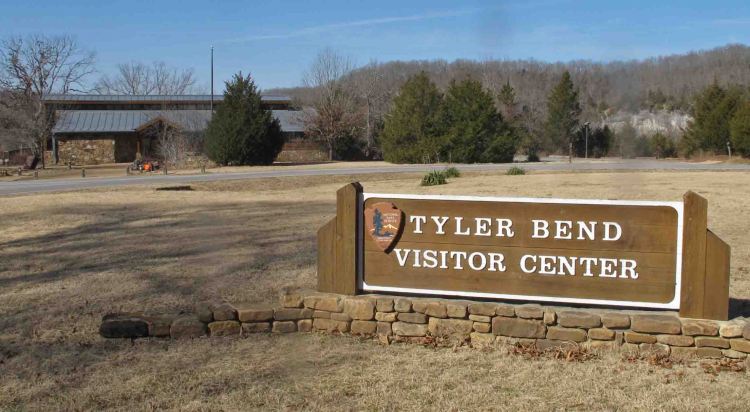
Remnants of insulation on a wall of the Collier Homestead.
Remnants of insulation on a wall of the Collier Homestead.

IMG_5255rr

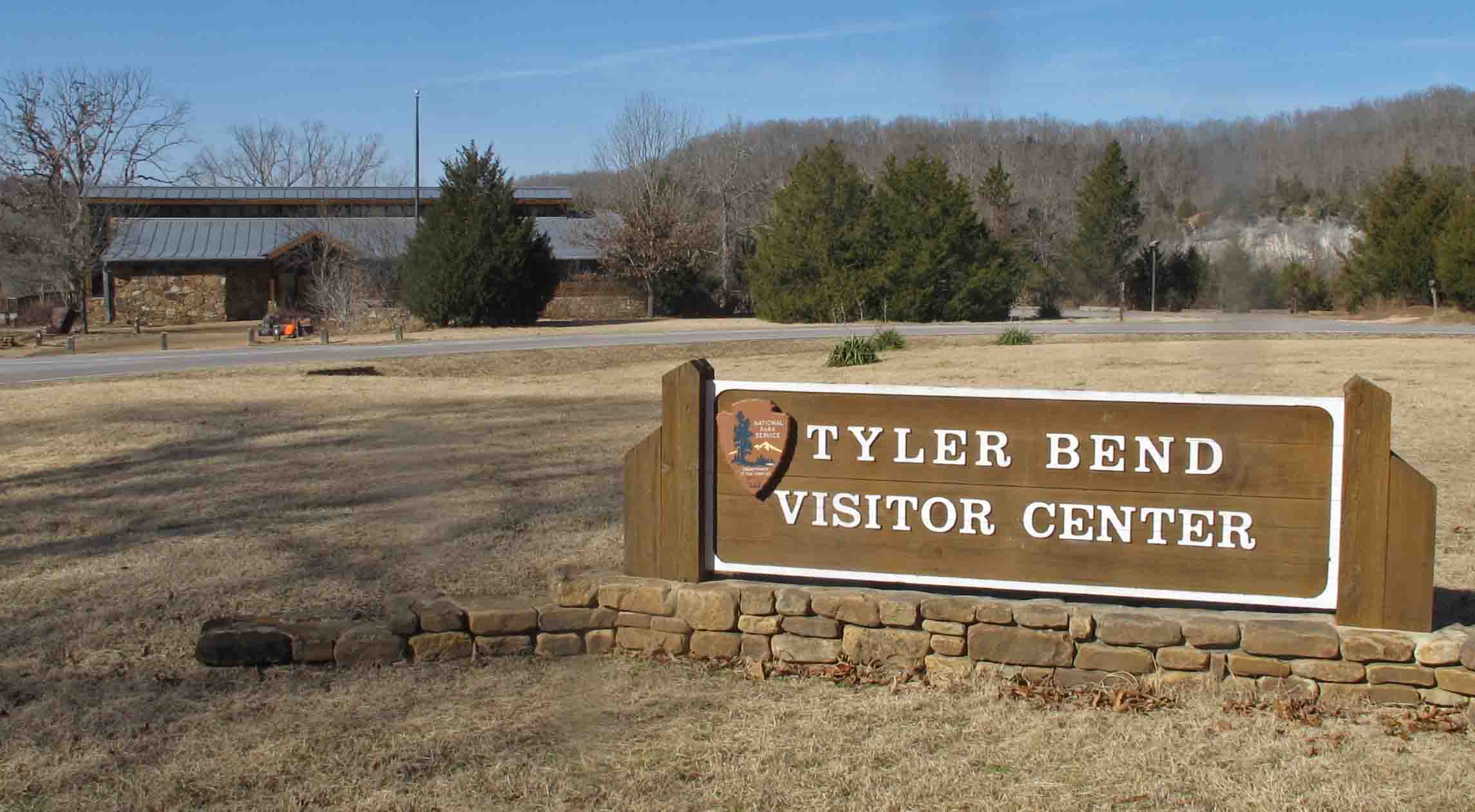
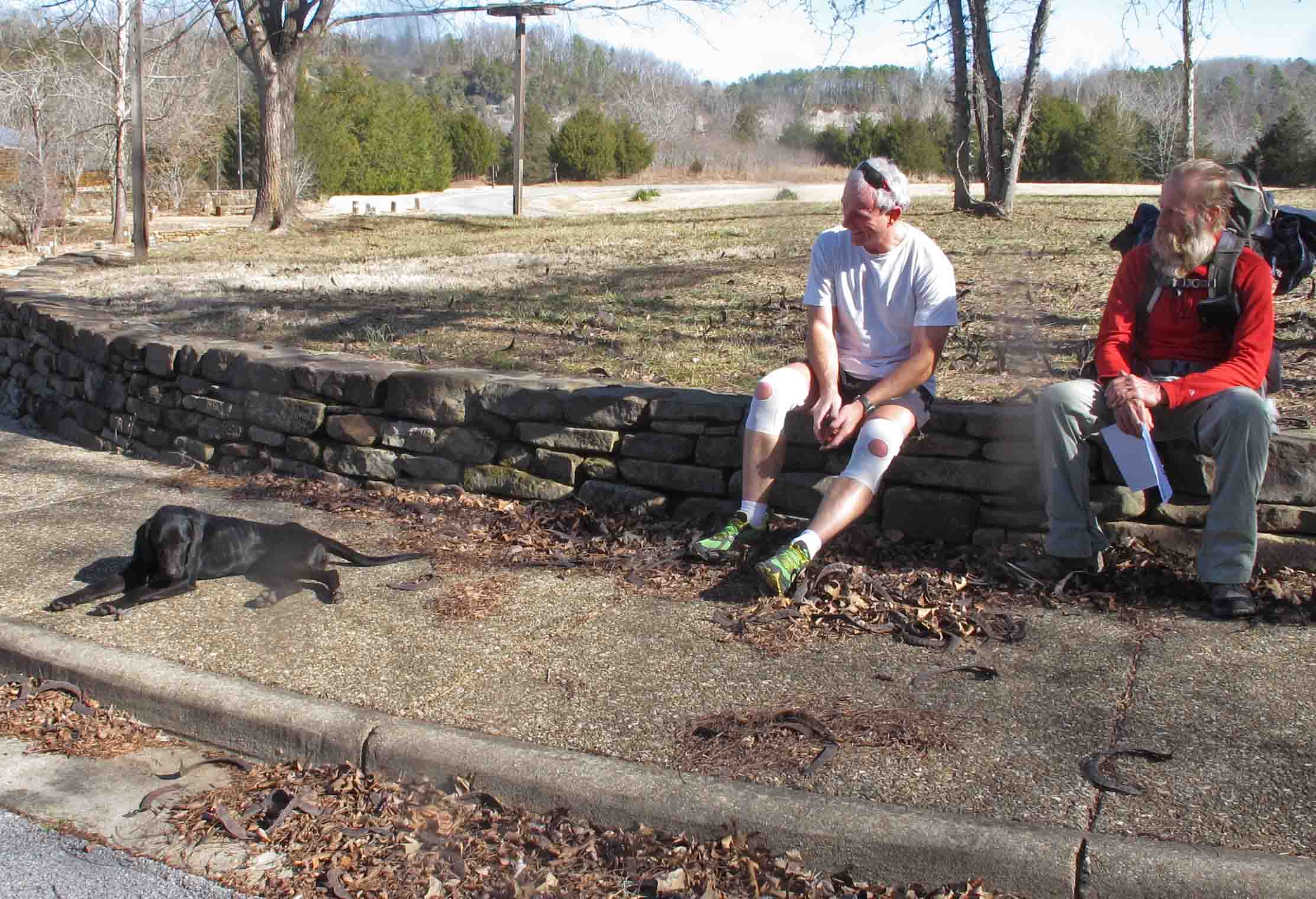
We were disappointed that the visitor center was closed due water damage repairs.  We were looking forward to reading more about the area while waiting on our shuttle.  A sign on the door said it would be open January 21st.  Joey, a UPS driver exercising on his lunch break, shared his cell phone so we could confirm our arrival with our shuttle.  We enjoyed sharing the story of our third hiking partner with him.

Joey taking a break from his lunch break workout.

Joey taking a break from his lunch break workout.

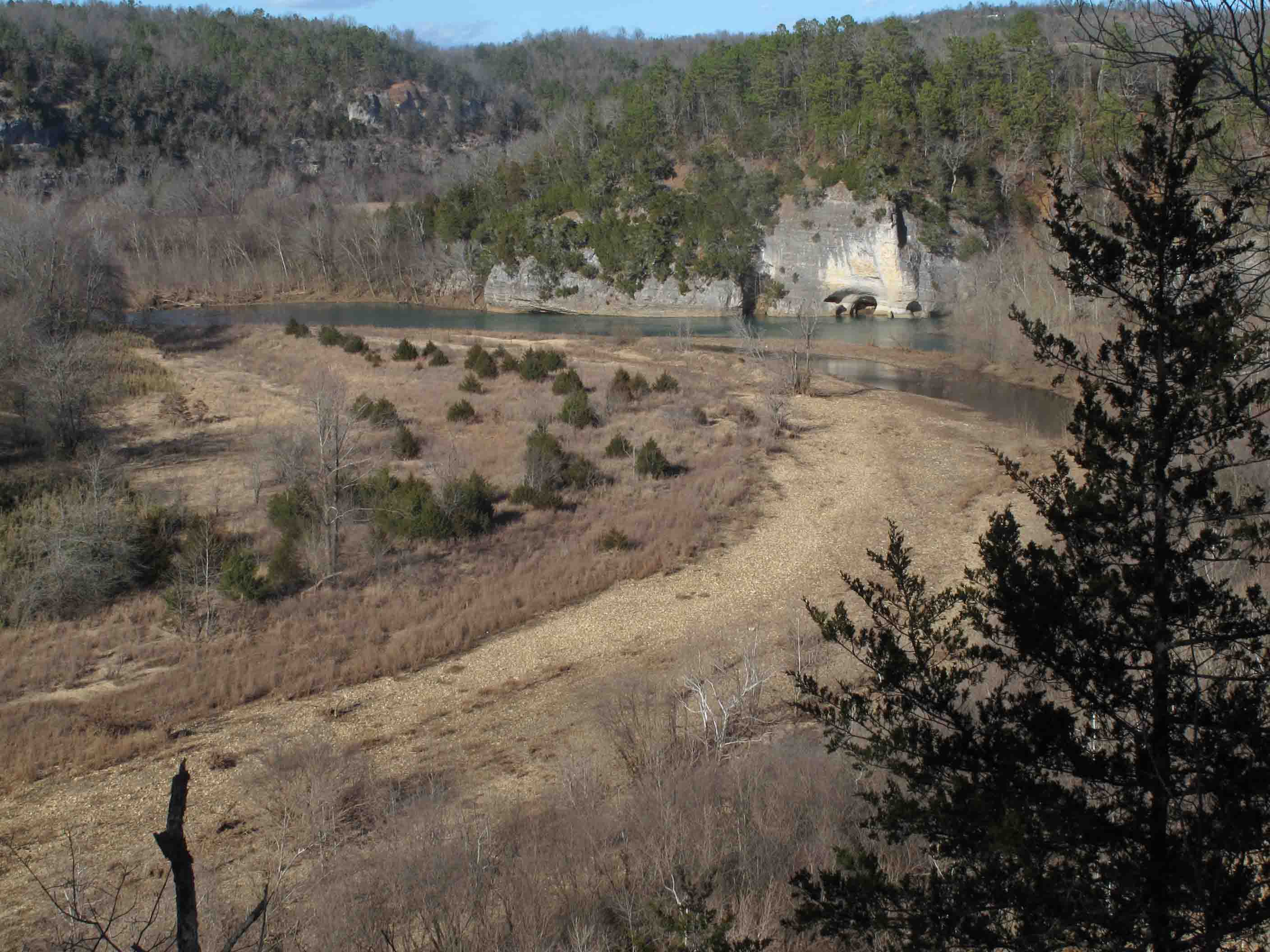
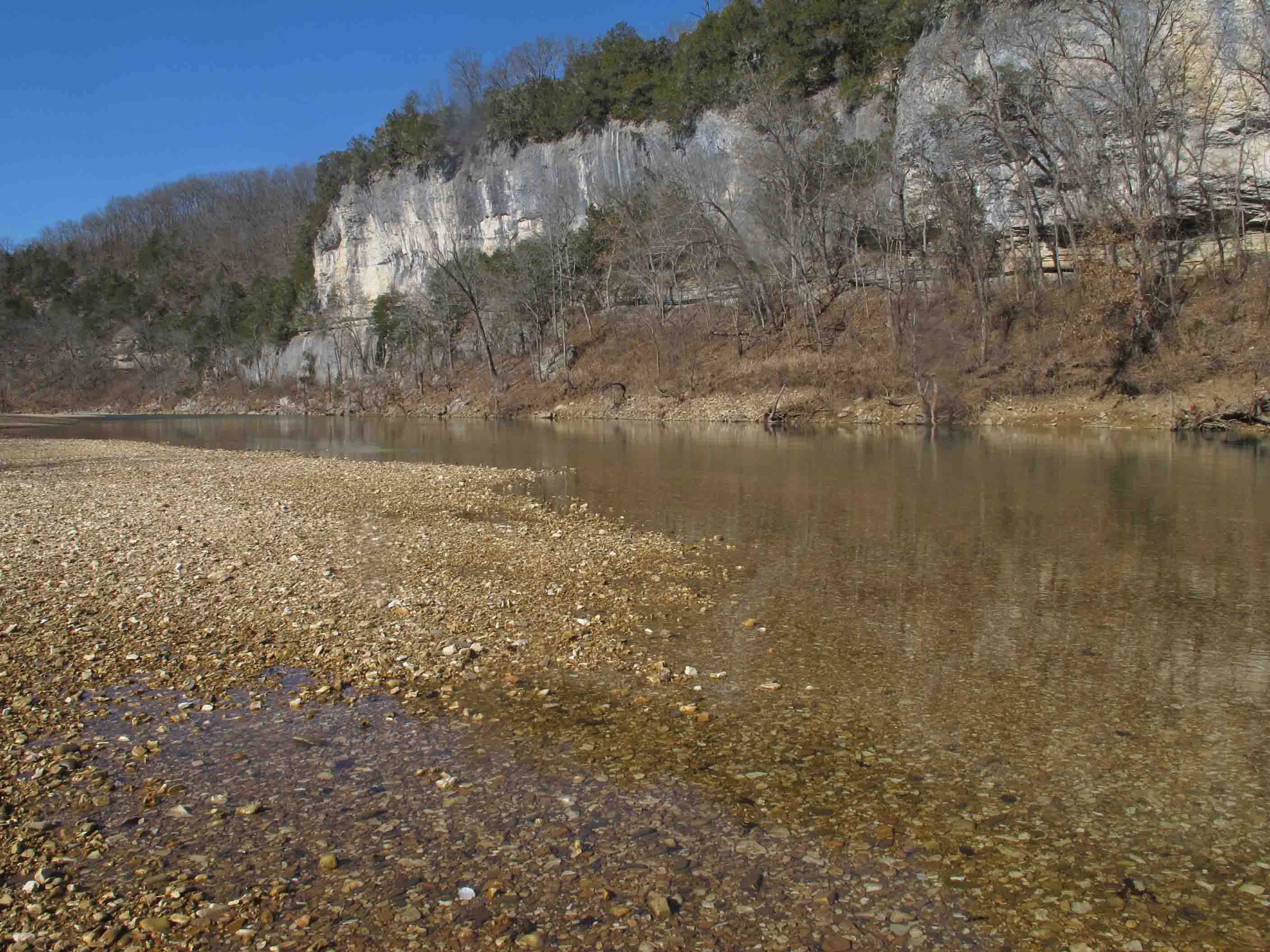
Buffalo River at Tyler Bend

Buffalo River at Tyler Bend

It felt good to splash cold Buffalo River water on my face and arms while waiting for our shuttle.  Hiking 180 miles of the Ozark Highlands Trail had been everything I’d hoped and more.  All expectations were exceeded which is typical of backpacking experiences.  I was looking forward to a warm shower and my wife’s wonderful meals but I was also beginning to plot my next long hike.  Where to go from here? So many trails and so little time…

Update on Hiker, our third travel partner: 

Hiker is currently my guest.  I’m enjoying watching her gain strength with some moderate but regular nutrition.  She is gentle with young children and has good manners.  The only time she appears aggressive is when she glides through the woods at high rates of speed.  Here’s a post four months following her adoption after she’s logged some serious miles: What Makes Hiker a Good Trail Partner?

We had several great suggestions for names.  I went with Hiker since the sound of this word projects well in the woods and it describes one of her strongest attributes.

The following pictures show Hiker’s progress beginning at Tyler Bend and the end of her OHT hike.  She was pretty exhausted.

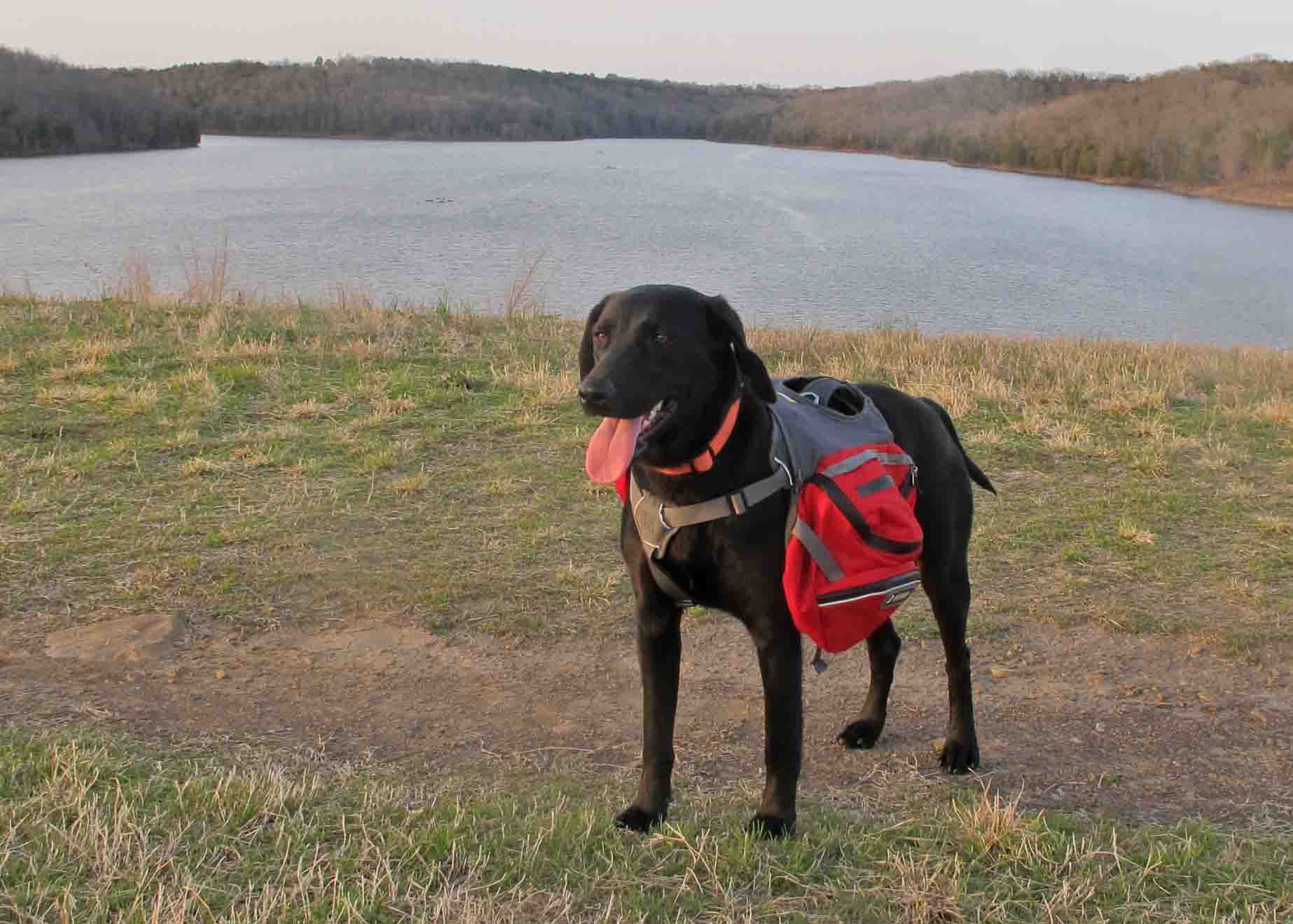
Hiker on January 20th after completing 40+ miles on the OHT with limited rations.
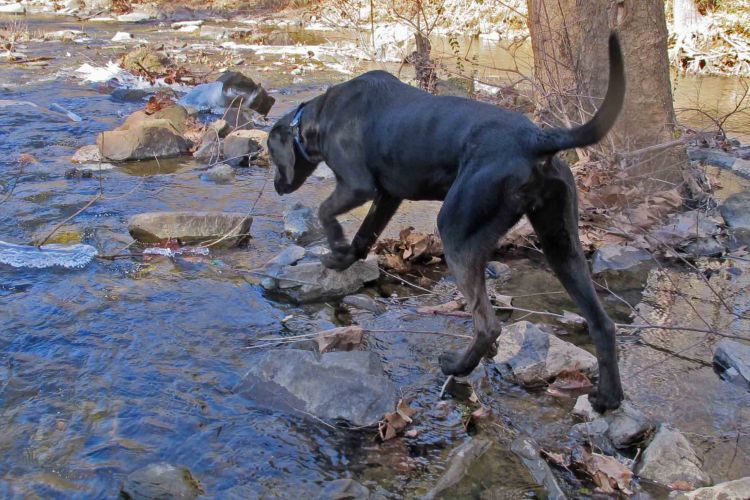
Hiker on January 20th after completing 40+ miles on the OHT with limited rations.

Hiker exploring Little Frog Bayou on the Lake Alma Trail.

Hiker exploring Little Frog Bayou on the Lake Alma Trail.

These pictures were taken on Hiker’s first four-mile hike around Lake Alma just five days following her 40+mile trek after being abandoned and near starvation on the Ozark Highlands Trail.  She was looking and feeling much better after her visit to Dr. Green at the Alma Animal Clinic.

Hiker picking her route down a bluff portion of the Lake Alma Trail.

Hiker picking her route down a bluff portion of the Lake Alma Trail.

Hiker 0214

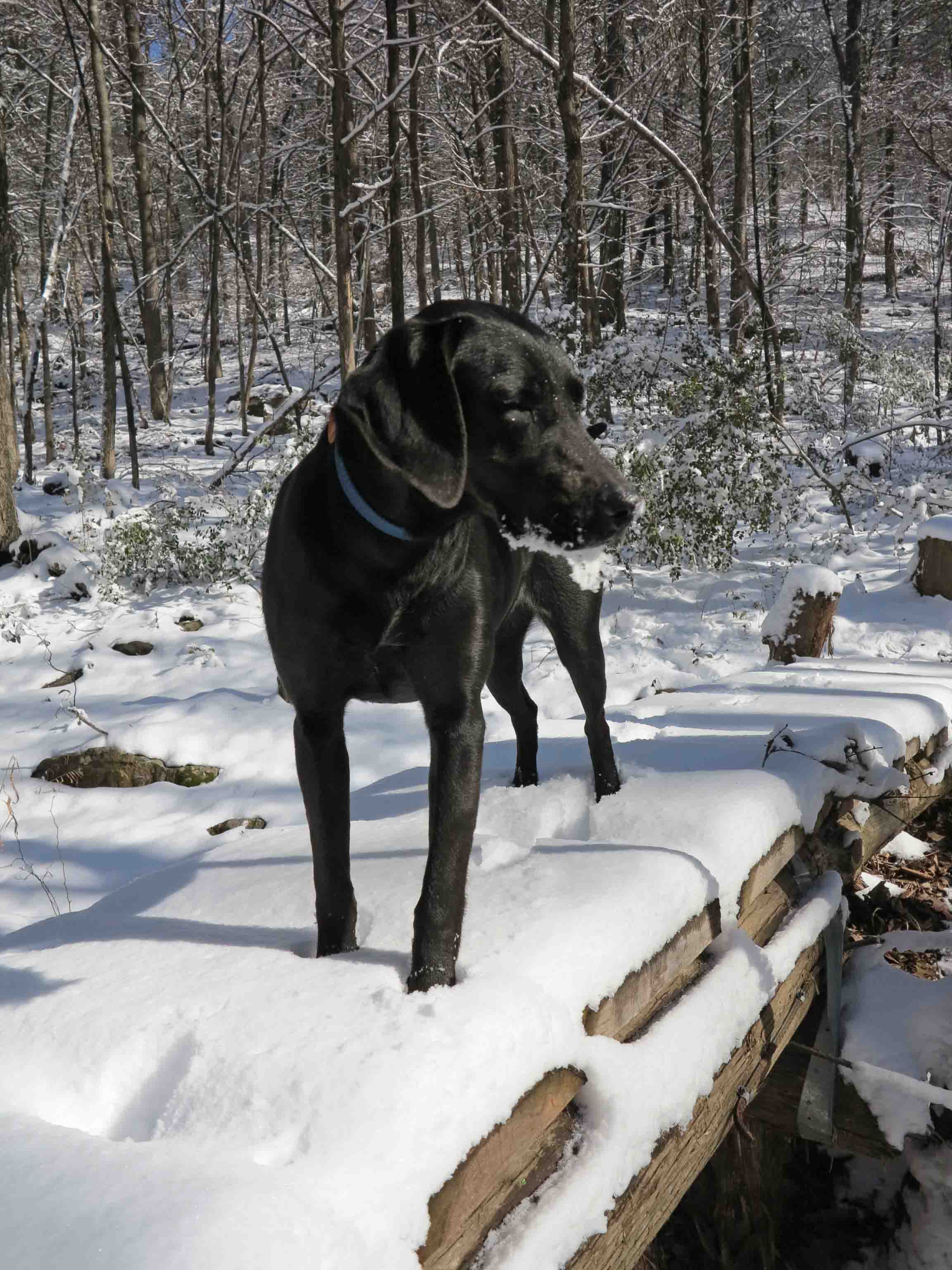
Hiker on February 3rd having gained about 7 pounds from January 20th.

Hiker crossing a bridge on the Lake Alma Trail on February 3rd, fourteen days after her arrival in Alma. She was enjoying the snow and managed to acquire a snow-beard from playing as she hiked.

Hiker on February 22, 2014

Hiker on February 22, 2014

Hiker after thirty-two days in Alma.  She’s stronger than ever and loves to travel by trail!

Hiker on March 18th, carrying her own food and stronger than ever.

Hiker on March 18th, carrying her own food and stronger than ever.

Crossing Little Frog Bayou with two days of dog food in her backpack.
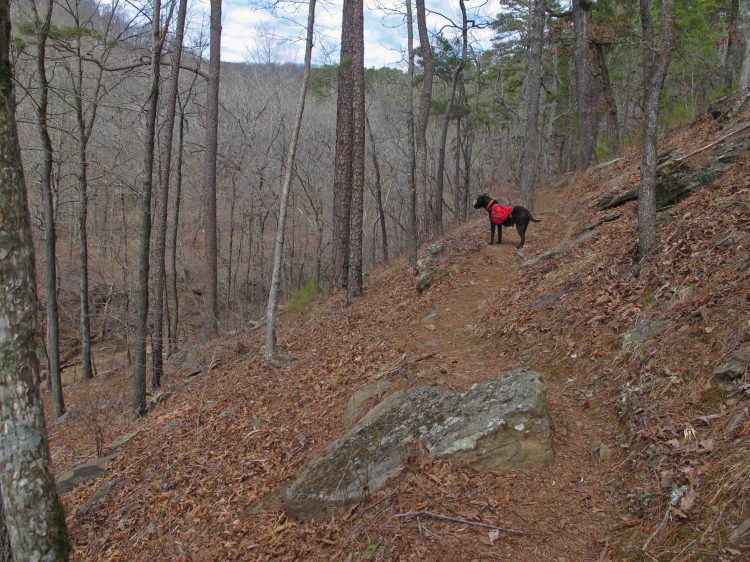
Crossing Little Frog Bayou with two days of dog food in her backpack.


Hiker's March 24-25 trip on the Shores Lake, White Rock Mountain Loop, and Salt Fork Creek.

Hiker’s March 24-25 trip on the Shores Lake, White Rock Mountain Loop, and Salt Fork Creek.


Thru Hike patch earned for hiking the first 165-miles of the OHT.

Thru Hike patch earned for hiking the first 165-miles of the OHT.
Buffalo River Trail from Boxley to Pruitt in “Typical” Arkansas Weather

Buffalo River from the trail.
Buffalo River from the trail.

Heat, cold, rain, fog, and sometimes sunny skies: Arkansas dished up its typical buffet of weather for our four-day hike on the Buffalo River Trail.

We were originally scheduled to be a group of five hikers, but  between chest colds, recent knee surgeries, family plans, and concerns about the weather, our numbers declined to two.  When I planned the trip, I’d decided that I would gladly do this one solo if necessary so it was a go no matter what.  Bob, who’d hiked this area extensively, and I were anxious to hit the trail.

We used the Buffalo Outdoor Center shuttle service in Ponca, which gets you out on the trail quicker.  They would drive my Jeep to the Pruitt Trailhead (Hwy 7) prior to our arrival at the end of our four days.  We piled into Bob’s vehicle for the short drive to the Boxley Trailhead (Hwy 21).

I was excited about doing the whole 37-mile Buffalo River Trail in one outing, having only done sections in the past.  The plan was to camp three nights avoiding the river campgrounds.

Day 1 (March 16)

We got started around 9:30 a.m. with weather that was sunny and cool.  As the day progressed, it warmed up and presented some challenges since this was our first warm weather hiking of the season.  We passed a small spring that was just beautiful.  It was one of those rare spots where you would feel confident to dip your cup into the cool water and take a swig without worrying about dangerous microorganisms.  Better to be safe than sorry and the filter doesn’t add anything to the water.

Later, we passed Pearly Springs which was another special place to explore.  Pictures were difficult due to the bright sun but the view from the top of the Pearly Springs Waterfall was a treat.   A smokehouse and storage building were located close to the spring.  According to Ken Smith’s Buffalo River Handbook, Pearl Vilines lived up the hill from the spring in the early 1900s and could drop a bucked into the spring from her front porch.

Pearly Springs Waterfall

Pearly Springs Waterfall

Pearly Spring Smokehouse

Pearly Spring Smokehouse

We camped on a ridge close to Big Hollow.  A small creek drainage had some nice cool water.  I dropped my melted Snickers bar into the creek so it would be ready for desert.

Snickers bar cooling in a small stream.

Snickers bar cooling in a small stream.

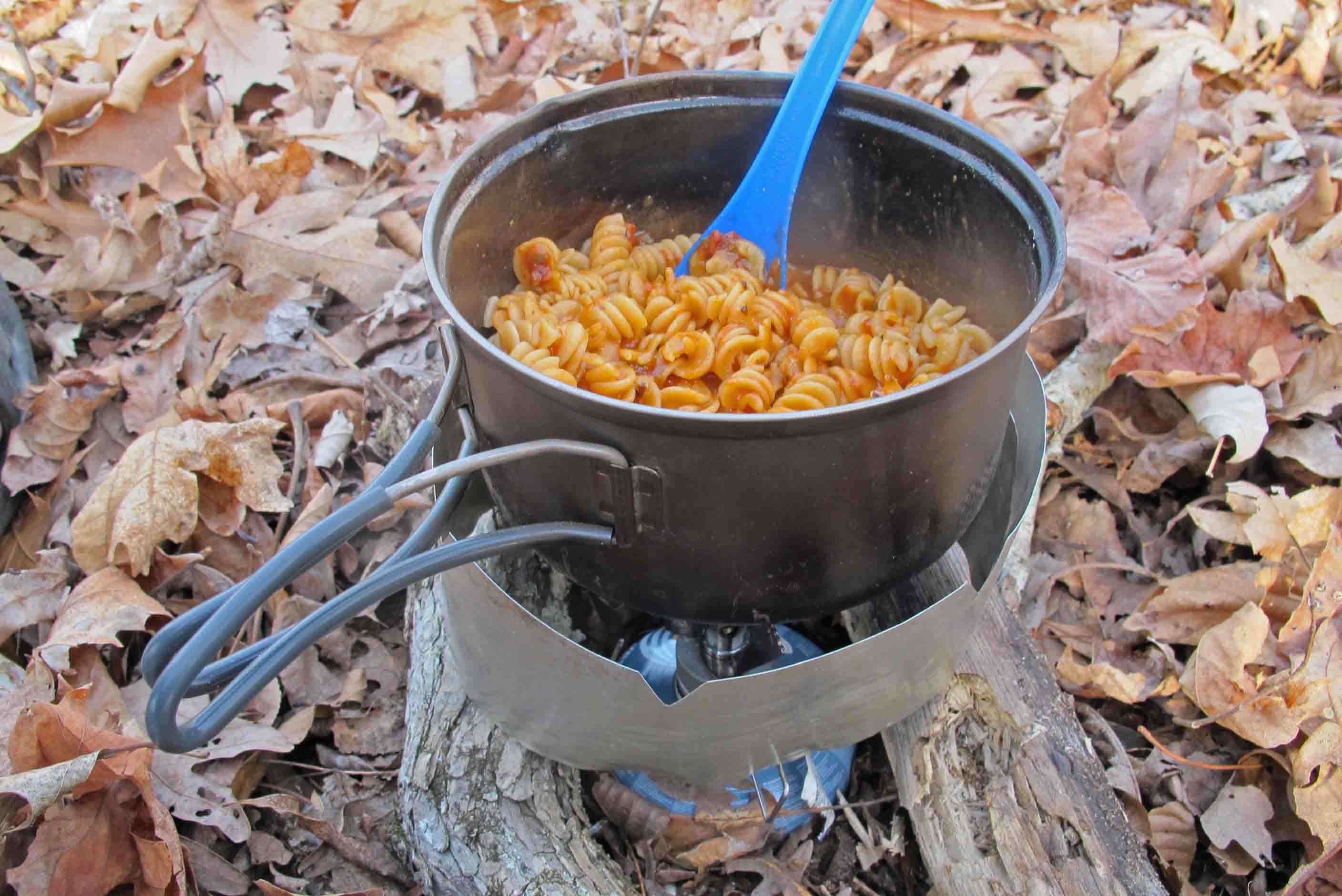
Supper was boiled potatoes followed by pasta and sauce that I’d dehydrated, but not used, for a trip in December.  Tasted great even after three months of storage.

Dehydrated rotini and marinara sauce

Dehydrated rotini and marinara sauce

Enjoyed some reading as the sun slowly descended, revealing a bright moon and stars.  This was a no-rain-fly night for sure.   As I woke the next morning I felt a light mist of icy crystals.  A fog had enveloped the ridge.  I hopped up and prepared my first cup of coffee.  A freshly ground cup never tasted as good as that Taster’s Choice instant made with water from an Ozark stream!  After oatmeal and another cup of coffee, we were back on the trail.

Day 2

We found that Indian Creek and Bear Creek were both dry.  I thought they would have water with recent rains but the thirsty ground must have soaked it up.  We made a detour to Kyles Landing to get water from the campground or river. The water was on so we filled up and hiked past Bear Creek, climbing to a nice ridge where we camped. This was a good workout at the end of a long day because we each carried 5-7 extra pounds of water at this point.

Supper was boiled potatoes followed by broccoli-cheese soup.  Bob said my trail name should be Tater since I always throw a few red or gold potatoes into the pack.    Several worse trail names come to mind so Tater it is.  Those potatoes are easy to pack, prepare, and they taste great at the end of a long day’s hike.

Home next to the Buffalo River.

Home next to the Buffalo River.

It was a cool and foggy evening so we turned in around 6:00 p.m.  After a little reading I dozed off, waking briefly at 10:30 p.m.  I then continued with a good night’s sleep until 7:00 the next morning.  When have I ever slept for twelve hours?  Coffee that morning was not the best due to the park service treated water.  I was looking forward to better coffee the next morning when we were once again treating our own stream water without the chorine taste.

Day 3

Walking along the ridges watching occasional canoes pass, we contemplated how different this area might have been if not for Neil Compton and many other advocates for the Buffalo National River.  It might well have been just another lake among many in Arkansas.

View of the river through cracked bluffs along the trail.

View of the river through cracked bluffs along the trail.

One of the visual gems so easily missed along the BRT

One of the visual gems so easily missed along the BRT

Approaching the Parker-Hickman site.

Approaching the Parker-Hickman site.

Parker-Hickman cabin

Parker-Hickman cabin

The trail passes the oldest known structure along the Buffalo River.  Built by Alvin and Greenberry Parker between 1847 and 1849, the structure is now known as the Parker-Hickman cabin because it was occupied by the Hickman family from 1912 to 1978.

Newspapers and magazines were used to cover the inner walls and some print can still be read.   Mud and wood pieces were used to fill between some of the large timbers.  The cabin was skillfully built with precisely cut half-dovetailed log corner joints (Buffalo River Handbook by Ken Smith).

Detail of an inner wall of the Parker-Hickman cabin

Detail of an inner wall of the Parker-Hickman cabin

Detail of an inner wall of the Parker-Hickman cabin showing an excerpt from Home Life Magazine

Detail of an inner wall of the Parker-Hickman cabin showing an excerpt from Home Life Magazine

We camped a couple of miles past Cedar Grove Picnic Area next to a little oxbow off of the river. Nice water and a small flat spot for tents.  Several horse riders passed by that evening heading toward the Ozark Campground a couple of miles away.  The sounds of owls hooting, coyotes howling, deer feeding, and turkeys gobbling filled the night but did not disturb sleep.

Day 4

We had frost on the rainflies and some ice in water bottles when we woke the next morning.  It was to be a cool and sunny hike out.   A highlight on that last day was the spring-fed pond between Ozark CG and Pruitt TH.  I remembered the pond from a few years ago but did not remember how beautiful the spring was.  There were dark green watercress growing close by.  We found ourselves wondering about the people who built the small pond just below this spring and what their lives might have been like.

Small clear spring with watercress

Small clear spring with watercress

On the last mile of the trail while noticing wildflowers beginning to peek out from under the leaves, I found myself thinking about the next season I would target for a Buffalo River hike.  I’ve only seen a fraction of its beauty.

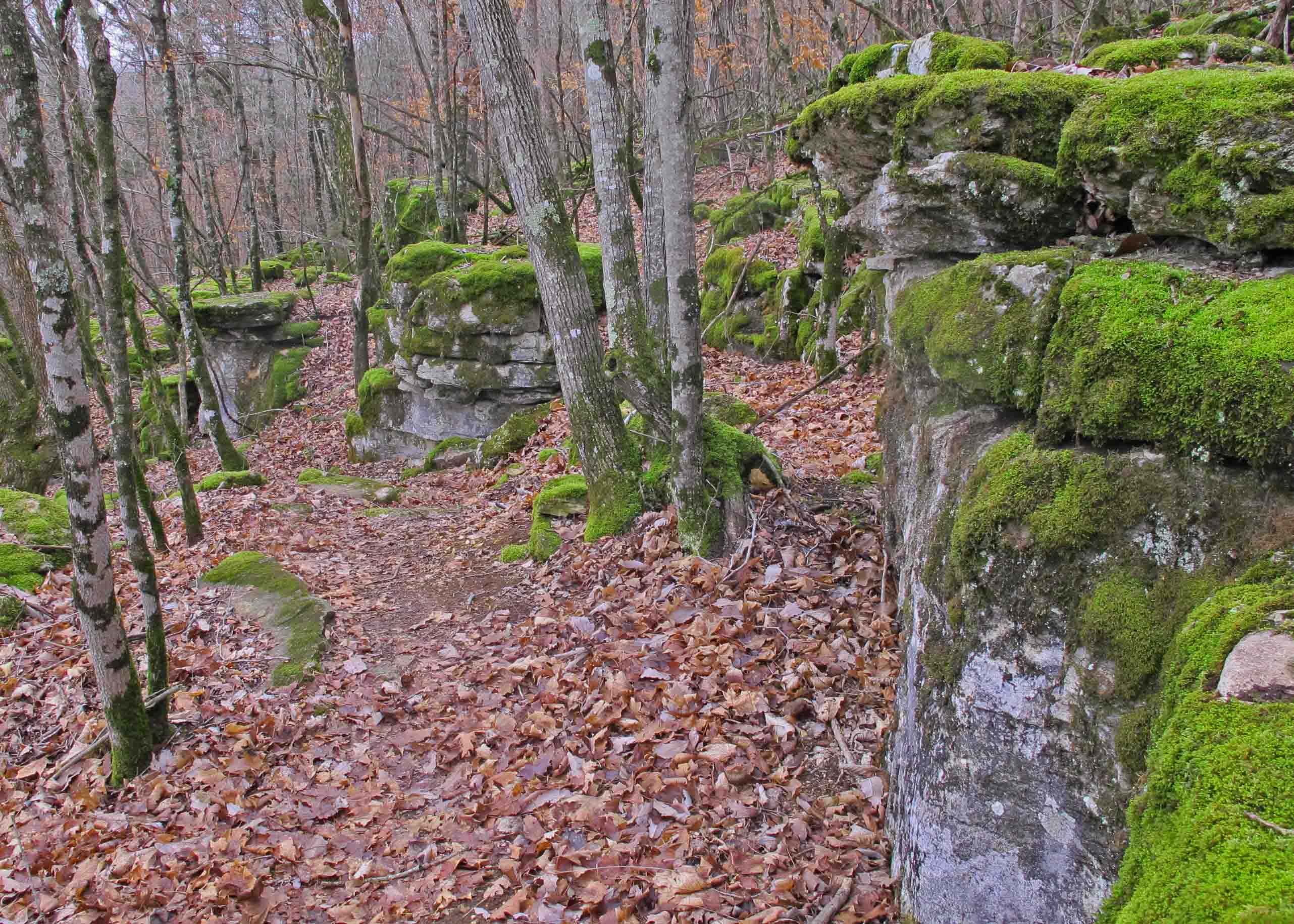
Moss-covered limestone maze similar to many that surround portions of the Buffalo River Trail.

Moss-covered limestone maze similar to many that surround portions of the Buffalo River Trail.

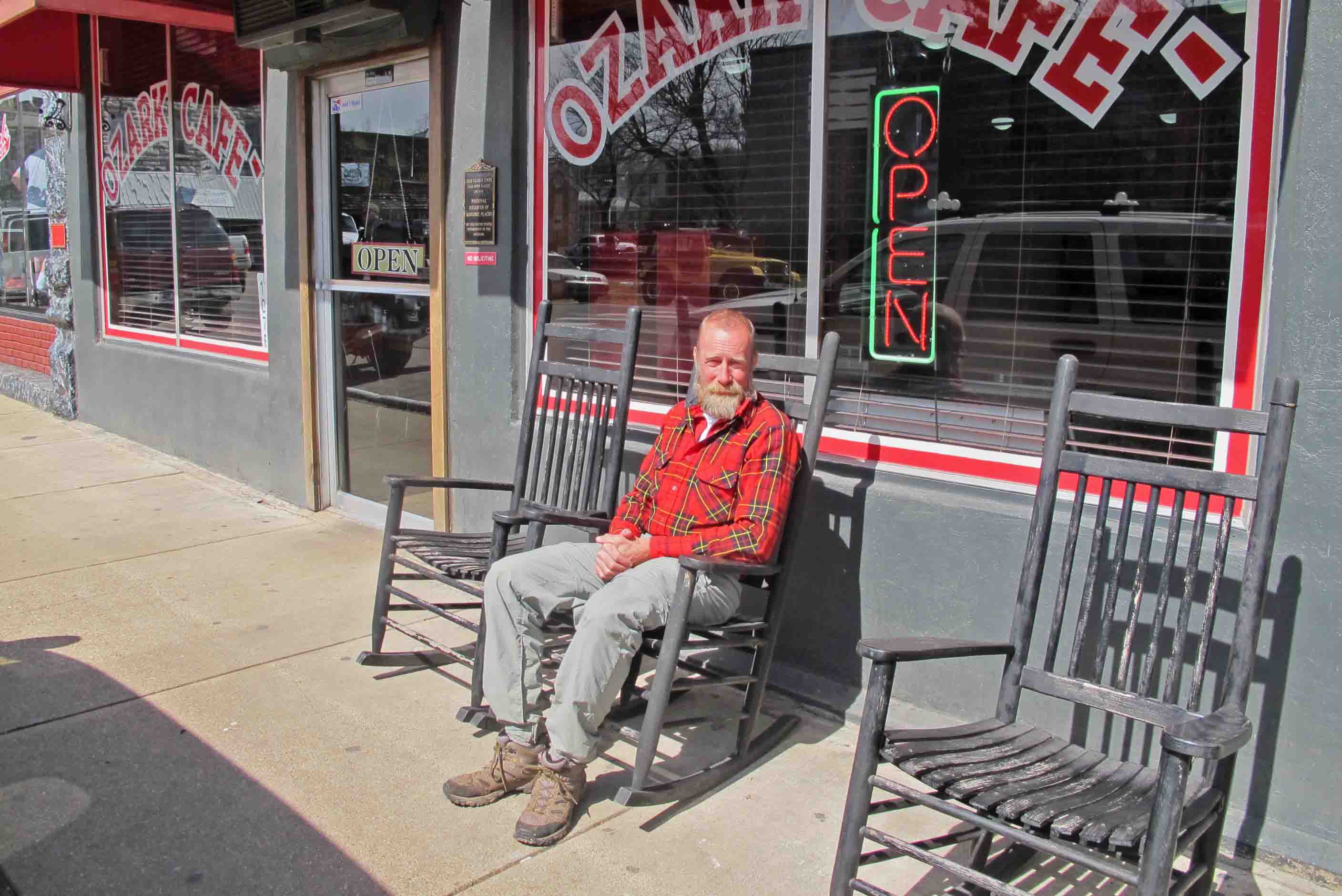
The perfect ending for our four-day trek was a meal at the Ozark Cafe in Jasper.  The food is good and they’re used to serving grungy hikers and floaters coming out of the Buffalo River area.

Bob at the Ozark Cafe in Jasper

Bob at the Ozark Cafe in Jasper

Travel Theme: Mountains

White Rock Mountain, in the Ozark Mountains of Arkansas

White Rock Mountain, in the Ozark Mountains of Arkansas

White Rock Mountain is one of my favorite mountains because it is beautiful in every season and especially friendly during winter.  The Ozark Highlands Trail passes across White Rock at about mile 18.  I like traveling to White Rock because the trailhead is only 45-minutes from home which means more time on the trail and less time in the Jeep.

Campsite with a view on White Rock Mountain

Campsite with a view on White Rock Mountain

Camping on White Rock is a treat.

White Rock camping 2

This picture of the morning after the previous picture demonstrates just how quickly conditions can change on this relatively low elevation mountain (2,320 feet).

There are overlooks for viewing sunset and sunrise on a 2-mile loop trail on top of White Rock Mountain.

Sunrise from White Rock Mountain

Sunrise from White Rock Mountain


On the Ozark Highlands Trail just east of the spur to the top of White Rock

On the Ozark Highlands Trail just east of the spur to the top of White Rock


Visit http://wheresmybackpack.com to get more travel themes and possible locations for your own travels.

White Rock Creek along side the Shores Lake White Rock Loop Trail.

White Rock Creek along side the Shores Lake White Rock Loop Trail.

McWater Falls – Lake Alma Waterfall

Lake Alma Waterfall as viewed from the trail.

McWater Falls as viewed from the trail.

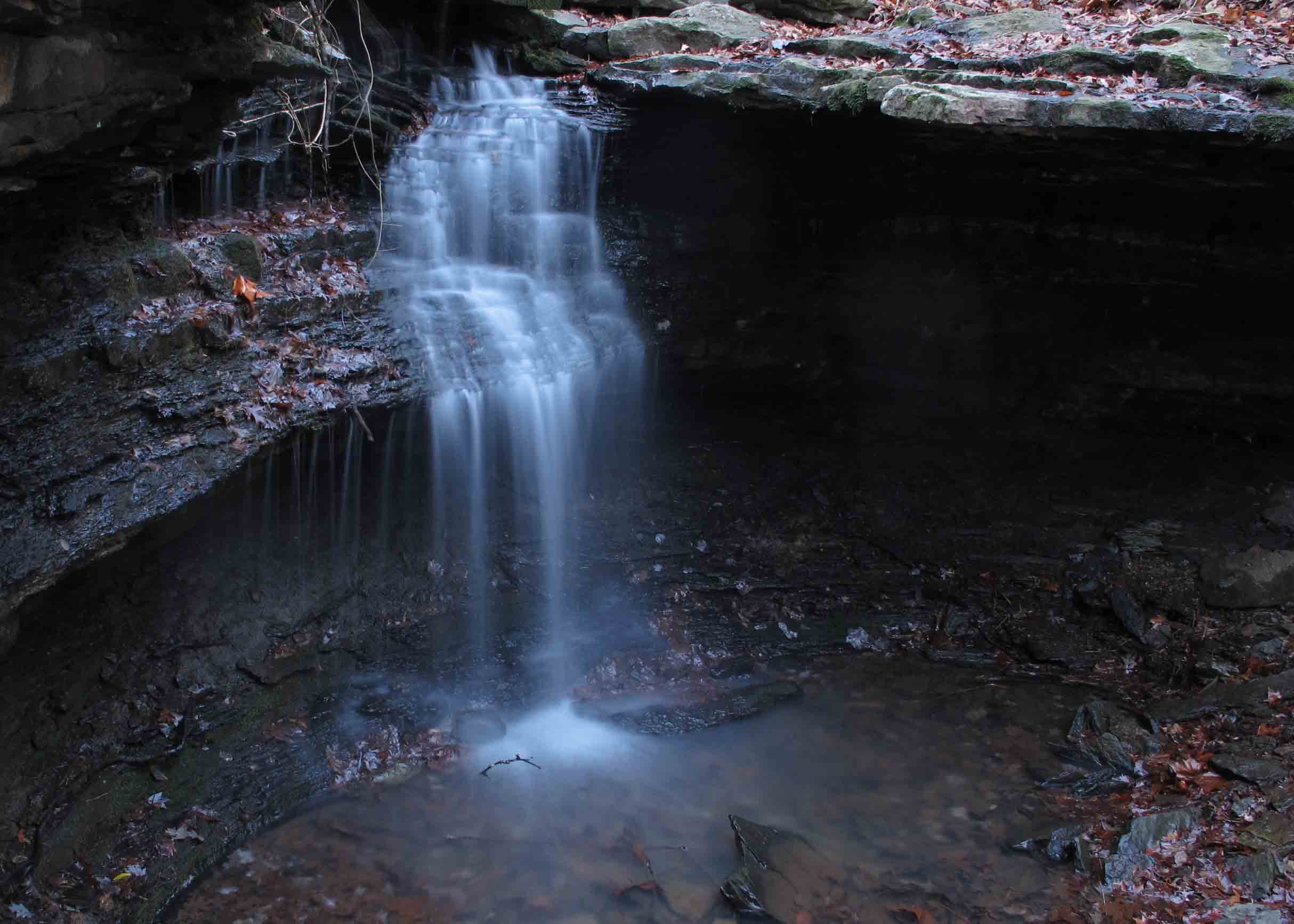
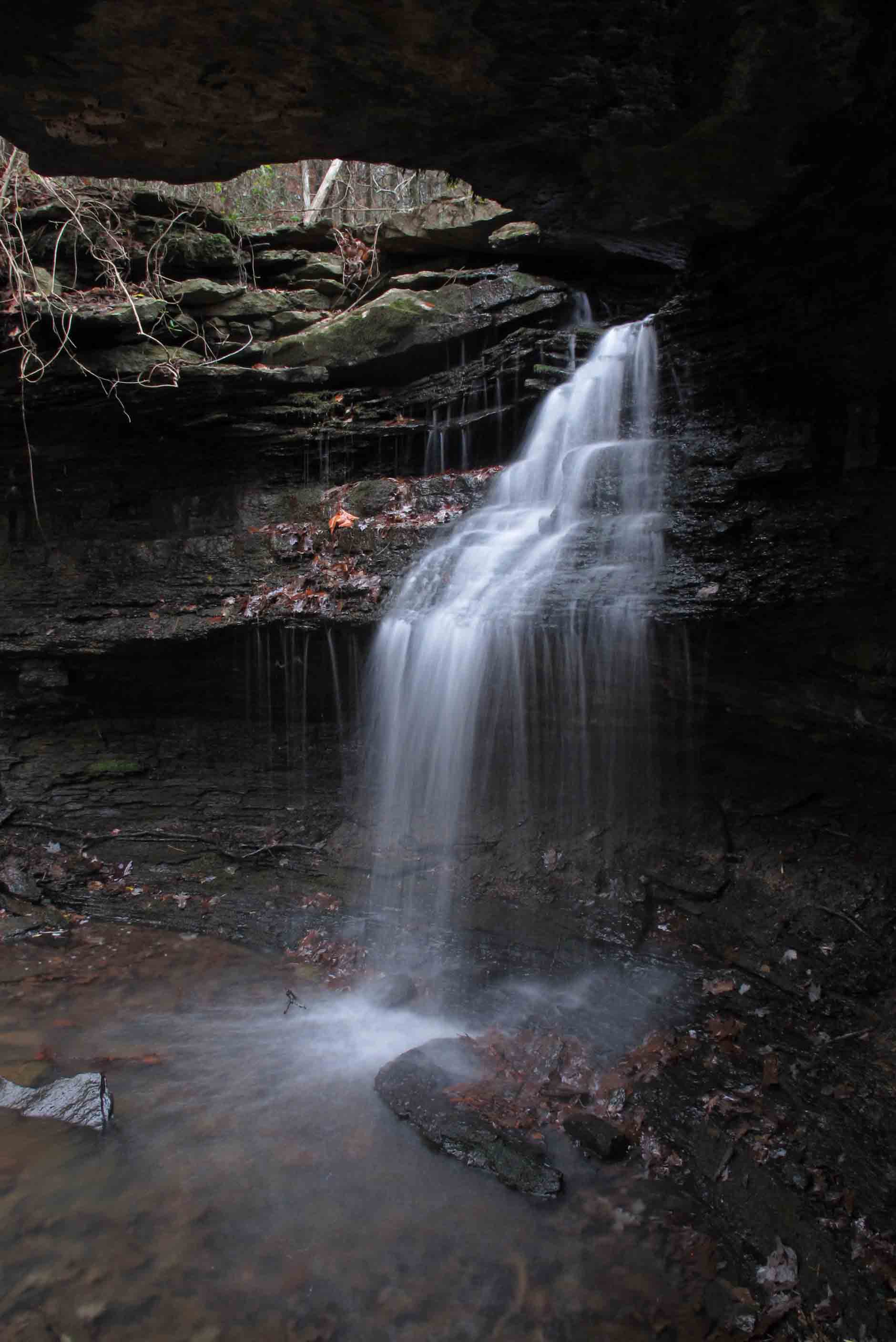
Every little lake should have its own little waterfall and so it is that we have Lake Alma Waterfall, a short distance from the trailhead of Lake Alma Trail.  We’ve been longing for some rain, not only because water levels are low, but because the creeks around Lake Alma and the Ozarks have been pretty dry. With recent rain, we’re finally able to see the Lake Alma Waterfall (Update as of April, 2013: The Alma City Council designated McWater Falls in recognition of Harry McWater who was instrumental in the construction of the Lake Alma Trail).

At approximately 12-feet tall this is definitely worth checking out. The shape, location, and pretty little drainage make this a great place to spend some time.  Give yourself an hour or more so you can sit and enjoy the sight and sound.

Read my blog about the Lake Alma Trail for directions on how to get there.  The spur trail to this waterfall is only a 25-minute walk from the trailhead.  The spur is about one tenth of a mile long.

Get out and enjoy!

Lake Alma Waterfall as viewed from underneath its bluff.

McWater Falls as viewed from underneath its bluff.

Lake Alma Waterfall located in a beautiful drainage .1 of a mile off the main trail.

McWater Falls is located in a beautiful drainage .1 of a mile off the main trail.

This next picture is of poor quality but it gives a perspective on the size of the waterfall.

LAT Waterfall with person

Lake Alma Trail Waterfall

Lake Alma Trail Waterfall, McWater Falls

Arbaugh Trailhead to Ozone on the OHT

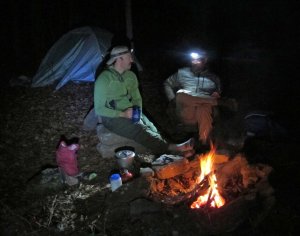
Campfire conversation...

Campfire conversation…

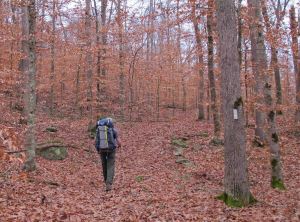
The hike from Arbaugh to Ozone on the Ozark Highlands Trail was beautiful!  We hike 8.8 miles the first day and camped at Boomer Branch.   The surround sound howl of coyotes and an owl in the distance were the only disturbances to the silence of the woods and soft sound of flowing water.   The weather was just cool enough to justify a small fire for cooking, warmth and good conversation.  During a silent moment one hiker said, “You know where I would like to be?”  Another asked, “Where?”  “Right here,” he answered.  “This is the best place in the world to be right now.”   Night brought a few light sprinkles with lightning in the distance.

Sunday morning was cool but pleasant.  Coffee made with Boomer Branch’s water was delicious.  We hit the trail by 8:00 a.m. and gained a lot of elevation over the 4 miles to Ozone.

Open birch forest.

Open birch forest.

Highlights included hiking through a forest of beech trees with their deep brown leaves holding on through the winter.  There were some smooth-hiking sections of shortleaf pine woods along the way before hiking back into the Mulberry drainage for a nice cool crossing.  The final mile was a heart-throbbing, thigh-burning pull up to the Ozone Campground on Highway 21.

Crossing the Mulberry River.

Crossing the Mulberry River.

Jack Creek Criminals on the Ozark Highlands Trail

As I hiked east from Dockery Gap to check my section of trail a dad and his four sons approached from the opposite direction.   They had a haggard and disheveled look as they lumbered up the trail loaded down with one-gallon plastic milk jugs filled with cloudy water and overloaded backpacks.  One of the sons carried a rifle presumably for protection from wild bears.

The gun made me nervous, but I relaxed when the dad spoke.  He explained that they had camped at Jack Creek with plans to hike to White Rock Mountain, but now they were wondering how to hike out and where they might get cell phone service to call mom to come get them.  I took my map out and showed them the road they were approaching and how to walk toward civilization.  They explained that their water filter wasn’t working correctly, hence the murky water jugs.  They’d not slept well, were overheated and exhausted.  As I continued down the trail, I thought they’d made the right decision in exiting the forest.

Approaching Jack Creek less than a mile later, I saw smoke and a burning campfire.  There was a hammock tied between two trees next to the creek and trash everywhere.  Thinking someone must still be occupying the site I called out, but there was no response.  It gradually dawned on me that this was the camp left by my exhausted friends who’d just asked for directions.  I extinguished the fire, kicking a large aerosol can of insect spray out of the coals and then collected the trash.

I continued down the trail picking up more trash at each creek crossing.  It appeared that these young men and their dad deposited trash at every rest stop.  After doing a little maintenance I returned to the trashy camp, scattered the now cooled fire ring, and bagged the trash I’d collected earlier.  Then I noticed scaring on a tree next to the creek where they had chopped it with an ax for no apparent reason.  This began to feel like a crime scene.

Some of the trash collected at the site.  Notice the burned aerosol can.

Some of the trash collected at the site. Notice the burned aerosol can.

I had visions of driving up on these fellows as they walked along the road and what I would like to say but then considered the rifle and thought a more diplomatic approach might be best.  As I hiked up the trail away from the scene of the crime, I rehearsed the discussion I would have about the beauty of the Ozark National Forest and how important it is that we care for it and pass it on to our children.  I wished for words to help these men discover a better way to treat the wilderness but, in reality, it seemed futile to try to convert remorseless criminals who enter the forest for recreation and harm it by their very presence.

As it turned out, by the time I arrived at the trailhead to throw my bag of trash in the Jeep, the father and his sons were nowhere to be seen.  I do wish I could have that conversation, but I take comfort in the knowledge that I probably witnessed the conclusion of their first and last backpacking trip on the Ozark Highlands Trail.  If I just had some assurance that they don’t have access to four-wheelers I’d feel a whole lot better.

Lake Alma Trail: A Trail for All Reasons

By Jim Warnock – Published in the @Urban Magazine (now Do South Magazine) of Fort Smith in October, 2012

Lake Alma Trail at sunset.

Lake Alma Trail at sunset.

Whether you’re a parent looking for an easy day hike to introduce your children to the gentle pleasures of nature or a trail runner looking for a heart-throbbing, rock-hopping, scrambling good time, Lake Alma Trail is for you!

Chuck Dovish, of Exploring Arkansas with AETN, said, “It’s amazing that so much variety and diversity of scenery is found right inside the town of Alma.”

Step onto this little 4-mile trail and your eyes are in for a treat. You’ll see bluff lines and moss-covered boulder fields up close.  You’ll walk beside clear streams, rocky cascades and small waterfalls.   Situated within a diverse mixed hardwood forest, you may spot deer, rabbit, fox, great blue heron, and a variety of songbirds.  Watch your step and give right-of-way to the many terrapin turtles that call Lake Alma home.

On any given day you’ll find families out for a stroll or a nature walk and picnic lunch at McWater Falls, just twenty-minutes into the trail.  Said one father, “I want my kids to know how beautiful and fragile our environment is.  When they see Little Frog Bayou and realize this is the source of our drinking water, they’ll become caretakers and protectors of places like this.”  History buffs will enjoy exploring rock structures located just past mile one.  Mystery surrounds the “when” and “why” of these structures which include a small hexagon rock house with fireplace.

Old homesite hexagon house

Continue down the trail and you’re likely to encounter trail runners soaring up “little bluff scramble” and churning around the whole loop in preparation for competition.  “I love this trail!  It allows for an intense workout in a short amount of time and the scenery makes even the hills enjoyable!” said Tommy Griffin, a local runner.  Hike early and you’ll see locals trotting slowly and carefully along the rockier paths preparing for future marathons or just enjoying a morning workout and quick dose of nature.

Trail runners

Trail runners

Harry visiting with Chuck Dovish at Lake Alma as trail volunteer,Laura Seal, looks on.

Harry visiting with Chuck Dovish at Lake Alma as trail volunteer,Laura Seal, looks on.

The beginnings of Lake Alma Trail can be traced to longtime resident, Harry McWater.  The idea of a trail around the lake occurred to him during the late 1990s as a member of the Alma City Council.  He mentioned the possibility several times only to be told that money for such a project wasn’t available.

Then, about a year ago during a conversation with the mayor he asked, “What if I find volunteers to get that hiking trail built?”  Mayor John Ballentine said, “Go for it!”  With that, Harry sought expertise and labor from the Arkansas Master Naturalists, Ozark Highlands Trail Association and local volunteers, including Alma School District student organizations and scout troops.  Students were enthusiastic about the project.  Nathanael Mickelson, then a senior Student Council member said, “I can’t believe I have a hiking trail three minutes from my house!”

McWater Falls (approx. 12-feet)

The actual work began in March of 2012 and the forward momentum that followed was undeniable.  Since that time well over one-hundred pairs of helping hands have spent time making this trail a reality.   Volunteers blazed and cleared the route.  There was side-hilling, raking, and general cleanup to be done.  With each workday, a deeper beauty was revealed.  As the route became established, hikers’ feet helped firm up the tread and keep it open.  One volunteer said, “It’s like remodeling your kitchen.  You use it before it’s finished.  Maybe it’s never really finished.”  The work continues as constant improvements are made.

The best trail maintenance is use!  Give your concrete-weary feet a break or drop the cumbersome baggage of civilization for a few hours.  Relax beside a clear, cool stream or let your mind wonder about the early inhabitants of the “hexagon house.”  Whatever your reason, Lake Alma Trail is ready to greet you in all its beauty and variety.

Logo design, Ashley Campbell

Getting There Take Alma Exit 13 off I-40, then drive north on Hwy 71 to the first light. Turn right onto Collum Lane East then left onto Mountain Grove Road.  Go north past the Alma water tanks on the left then a quick left into a picnic area.  The trail begins at the fishing dock.  Walk the paved Nature Trail north with the lake to your left.  The Lake Alma Trailhead is at the north end of the paved trail where it turns sharply back toward the picnic area.  Read the information sign built and installed by volunteers with some help from the City of Alma.  If you hike the whole 4-mile trail, you’ll come back to the fishing dock from across the dam.   A shorter family-friendly hike is the forty-minute walk to the waterfall and back.  To get more information about Lake Alma Trail and volunteer opportunities, follow updates from the Lake Alma Trail Facebook page.


Reflections

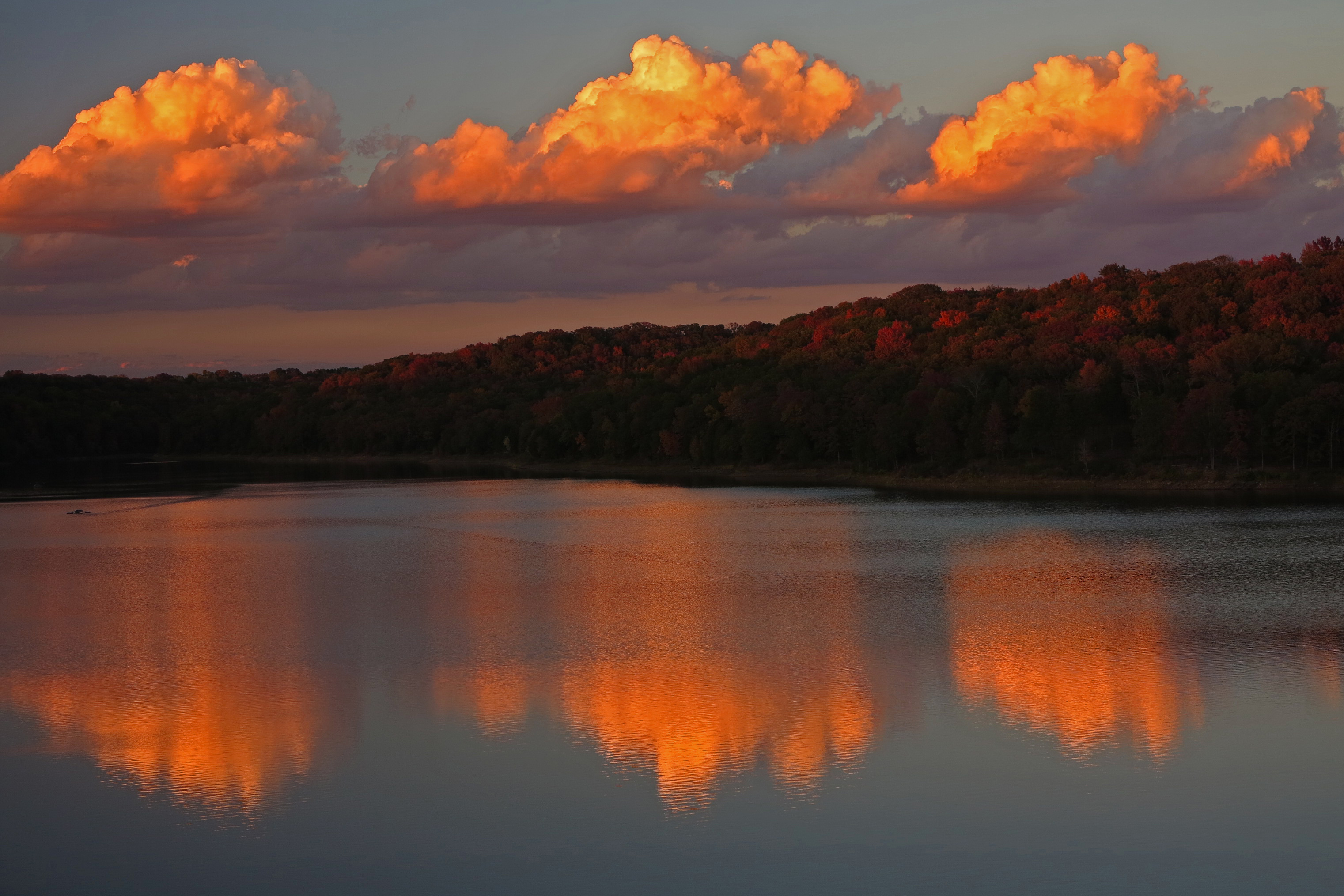
Springtime reflections on Little Frog Bayou

Bridge over west creek built by volunteers, Joe and Laura

Lake Alma fishing dock

Lake Alma fishing dock

Tim Ernst Cloudland Journal and Photography

Tim Ernst Cloudland Journal and Photography

Follow the daily events of Tim Ernst, one of Arkansas’ experts on wilderness areas, trail systems, and photography.