Black Fork Mountain

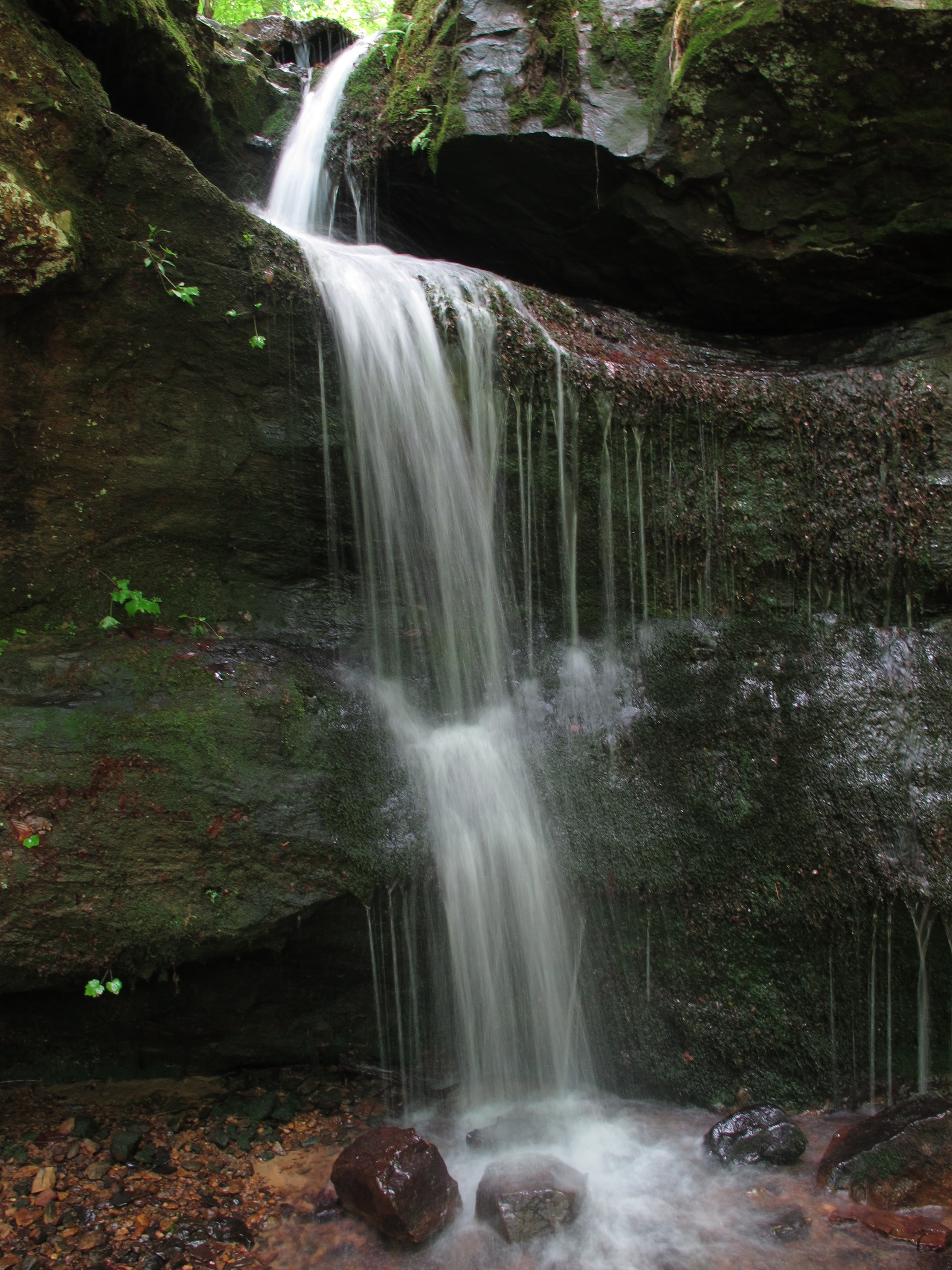
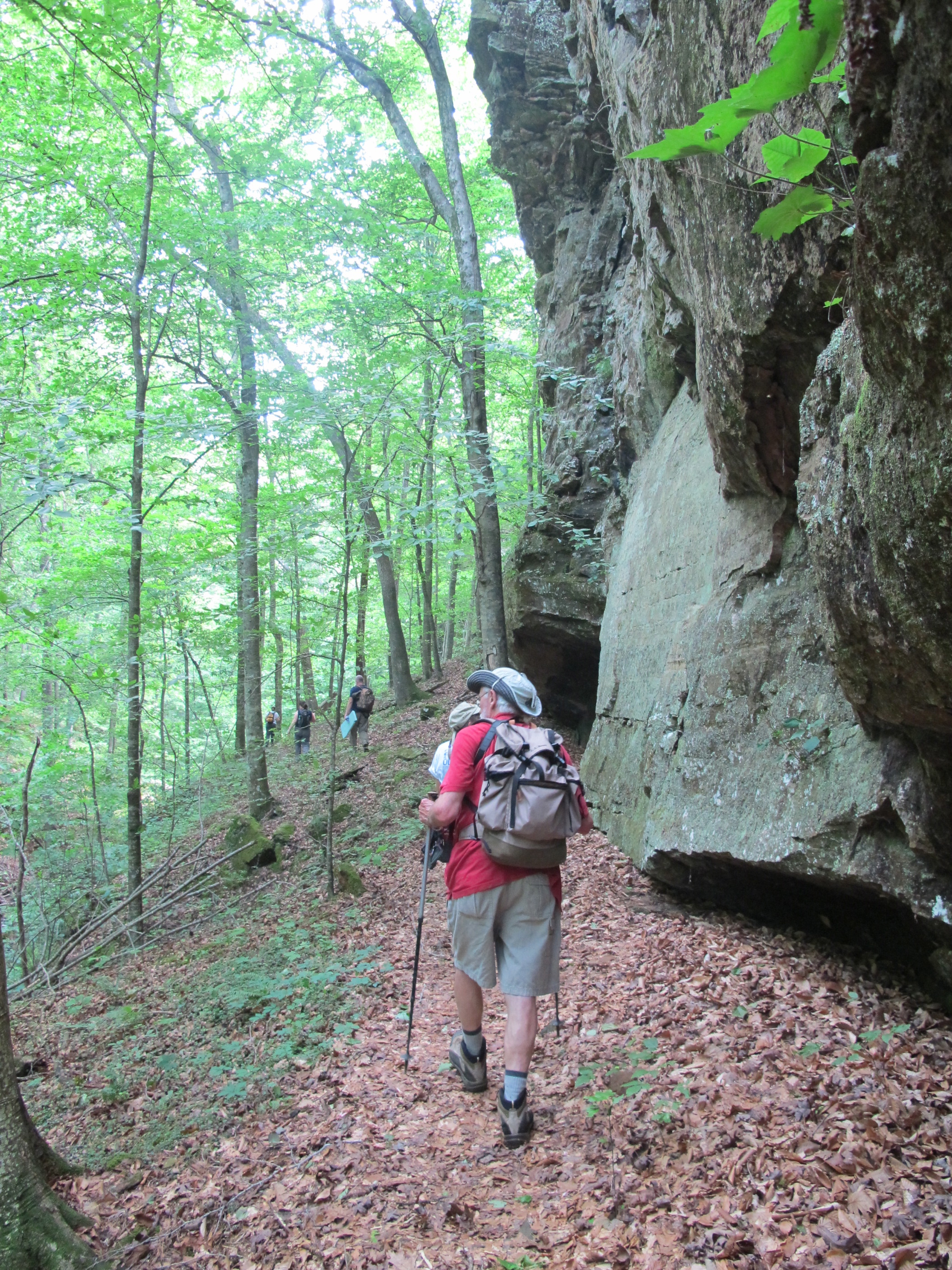
Kerry, Bob, and I wanted to hike Black Fork Mountain. It would not be our first time on this trail, but several years had passed since any of us had been up that trail. Our plan was to begin at Queen Wilhelmina State Park and hike down to where the trail crosses the Ouachita River. There we’d pick up extra water and hike to the Black Fork Shelter for a couple of nights.
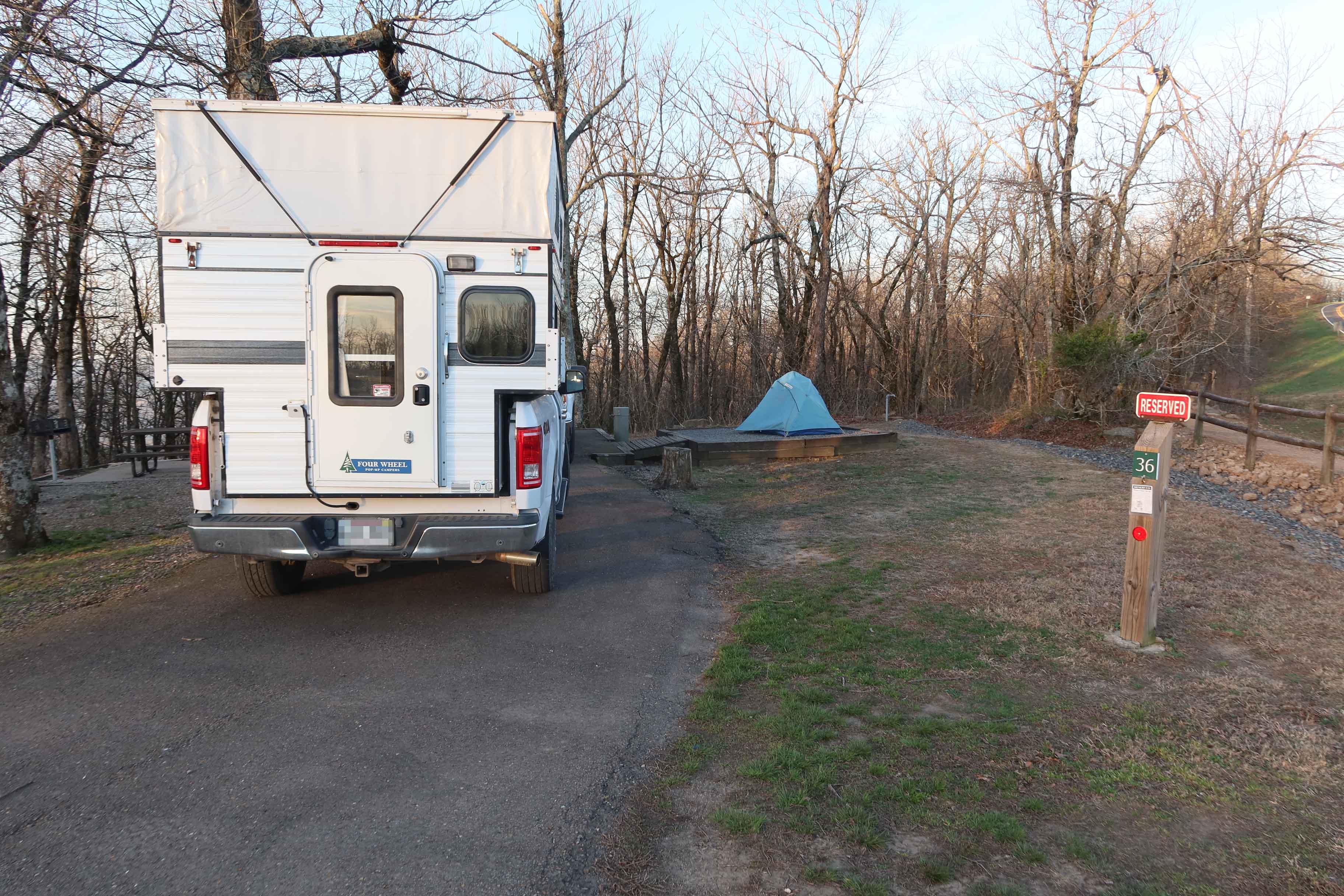
Our first night was at Queen Wilhelmina State Park. We were “Glamping” with nice campsites, access to restrooms, and a restaurant close by. I almost felt guilty in my truck camper while Bob and Kerry tent camped but both options gave a good night’s sleep. I look forward to using this campground and the nearby Winding Stairs Campground again. Rich Mountain and the Queen Wilhelmina area are great camping destinations.

As we walked, I thought back to a thru-hike on the Ouachita Trail in the winter of 2018. Back then, flakes of ice hung from the trees and littered the ground. Quite a different scene now as a warm sun beat down on this spring day.
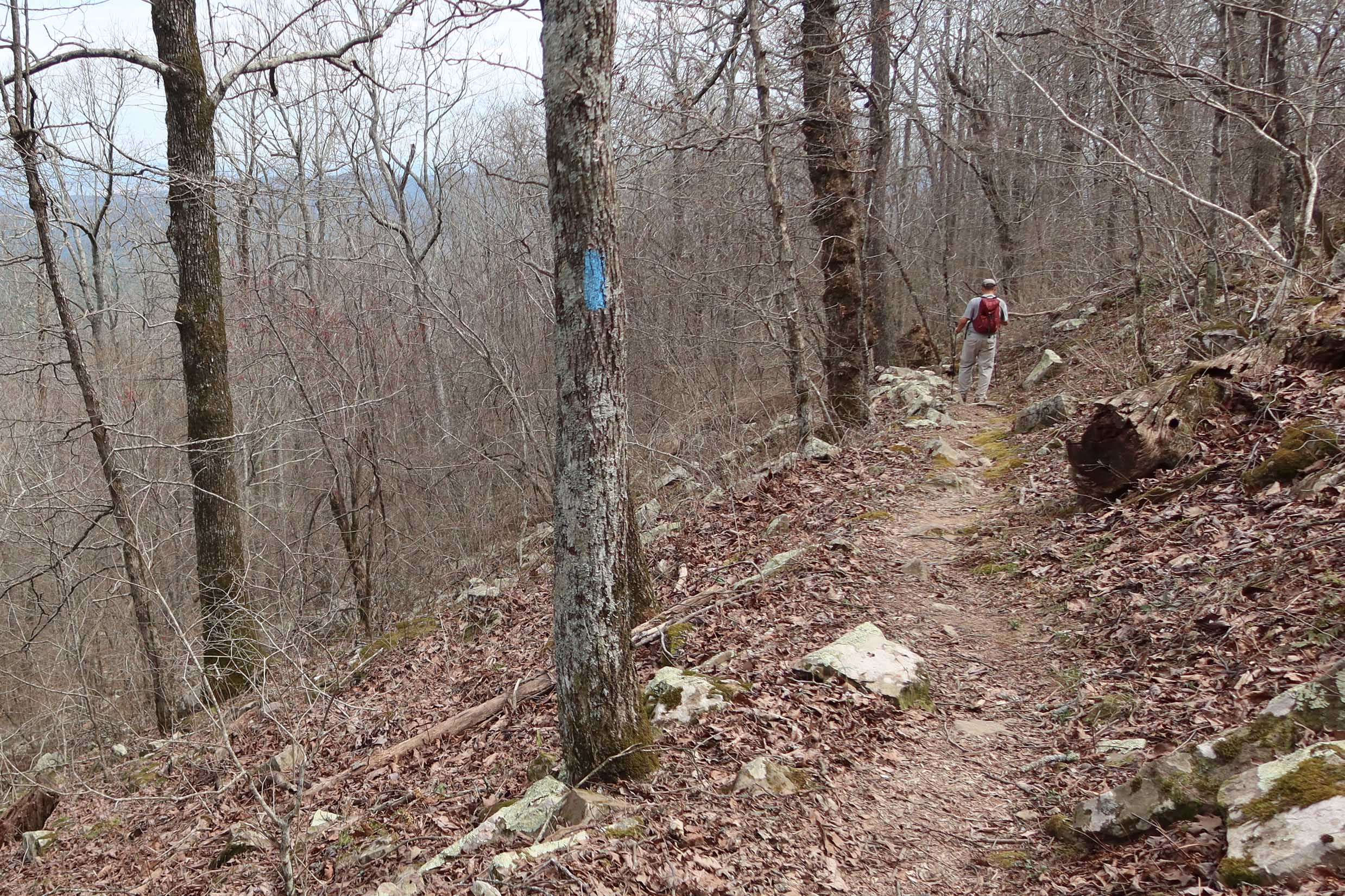
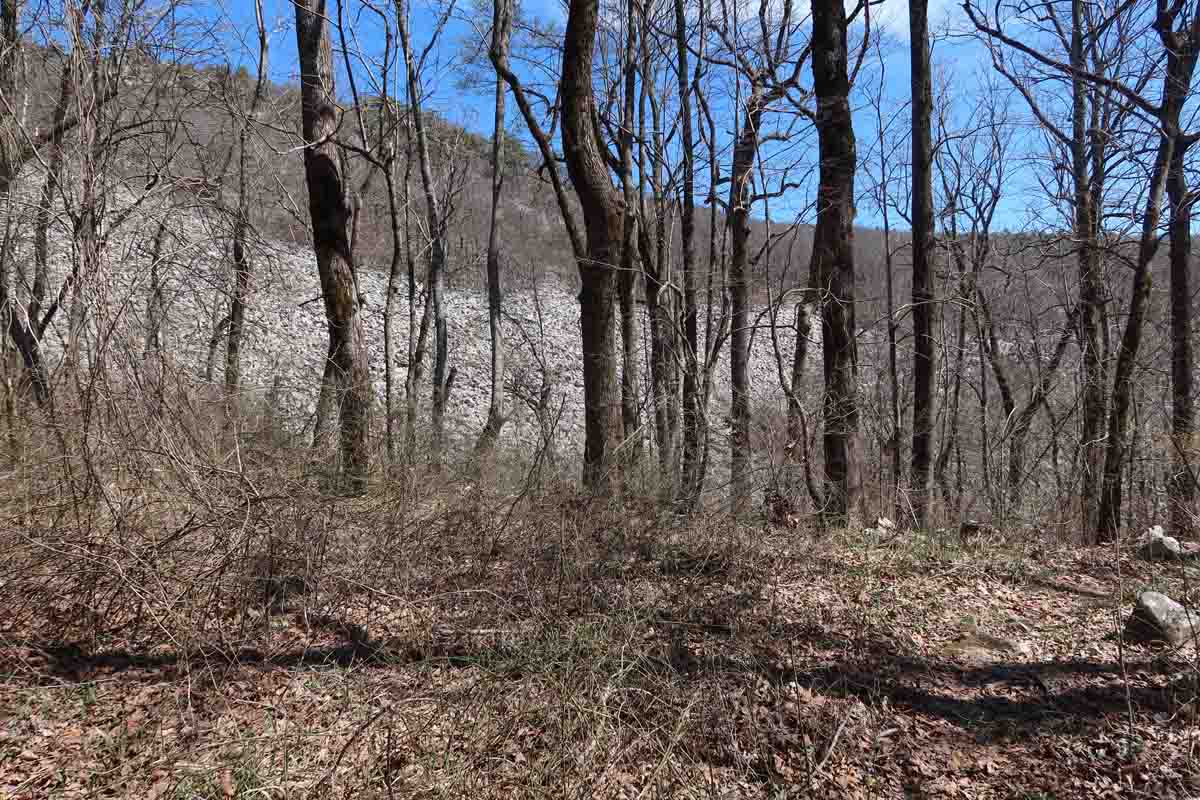
The next morning, we began working our way up Black Fork Mountain through alternating pine groves, hardwood forests, and scrub oaks along high ridges. The hardest part was following a reroute down below a rockslide. Every step down meant another uphill step later to regain the elevation lost.

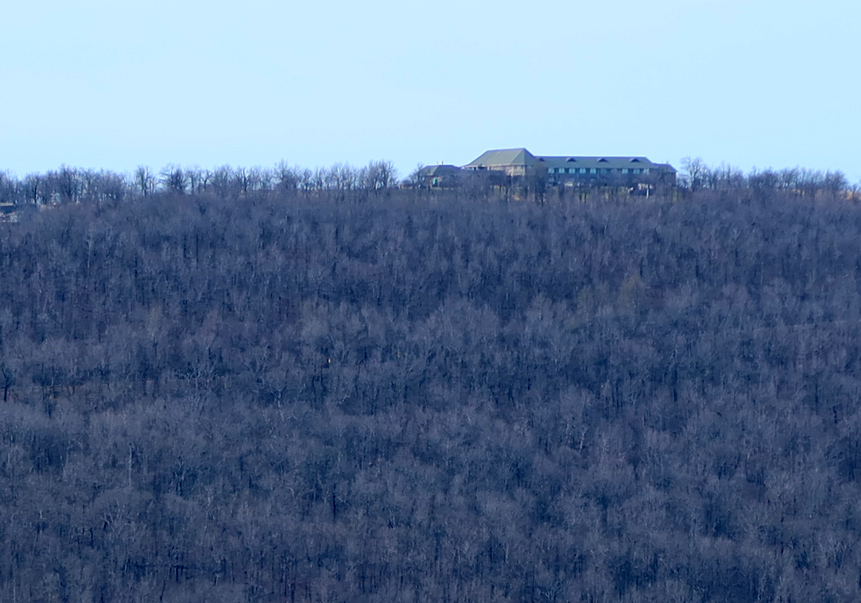
The views across the valley to Rich Mountain kept us engaged as we tried to identify roads, Queen Wilhelmina Lodge up top, and a little Country Store down below. 
Thanks to occasional survey tape we were able to follow the trail without difficulty. Greenbriers clawed at us on the high ridges and we agreed this was a “long pants trail.” 

We were pleased to find an old chimney still in place along with a few rusty artifacts. I had a close look at the blade of what looked like a small hoe before returning it to where I found it. Bob found what looked like pieces of a horse or mule shoe. All items were left as we found them.

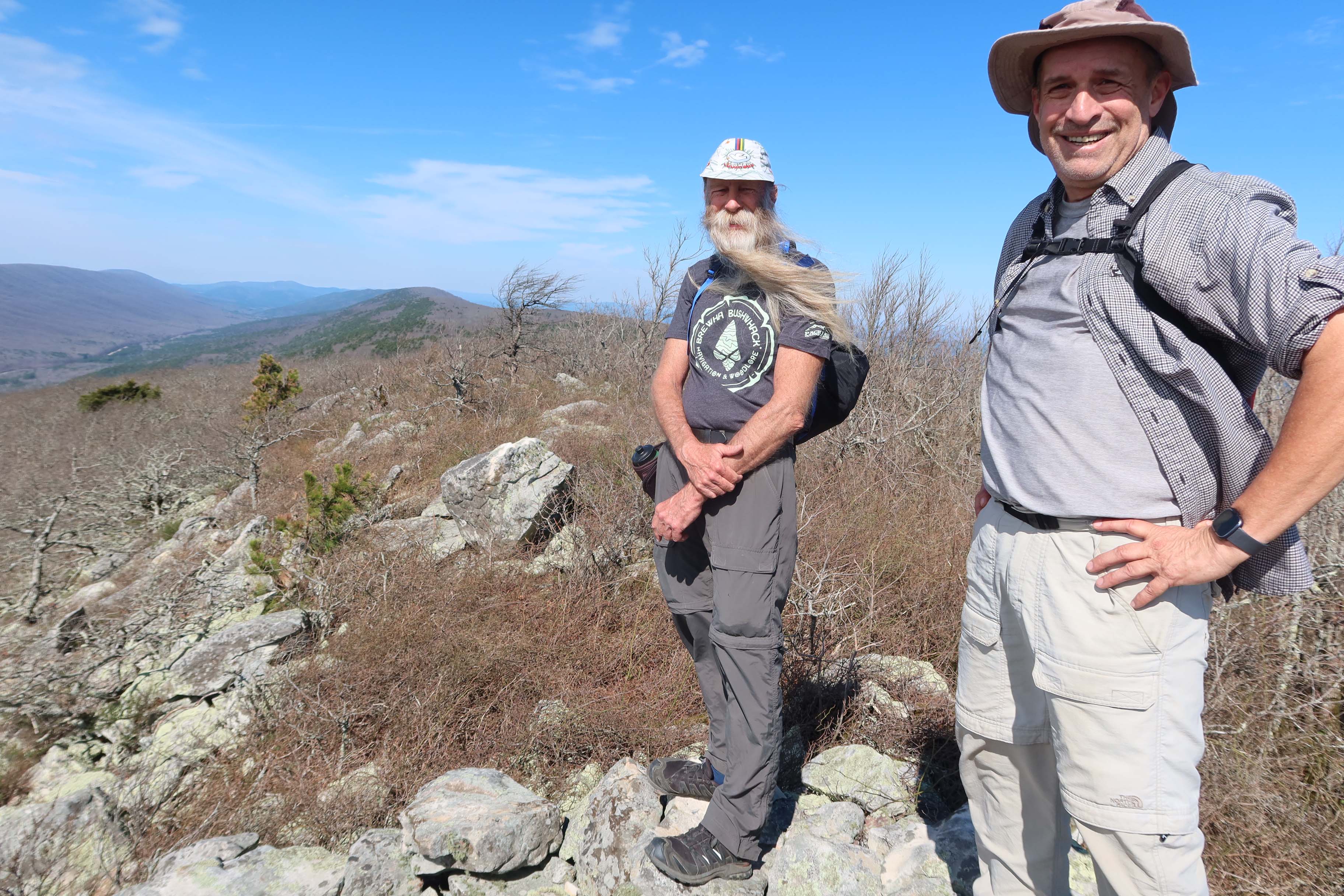
We were pleased to finally arrive at the rock outcrop that marks the top of Black Fork Mountain.
I filled my water bottle at a small murky pond less than a mile from the Black Fork Shelter. I ran that water through my Sawyer filter when we returned to the shelter and it was good! Water options up on Black Fork Mountain are limited unless there’s been recent rain so the pond is a treasured little resource.

The hike back down the mountain included that long uphill from the reroute around an old rock slide. We were thankful for every little cool breeze that came our way as we worked our way back down to Black Fork Shelter for the night. Everyone had a good appetite after their Black Fork workout.
Hiker-dog at Alum Cove Natural Bridge

It doesn’t seem possible that Hiker-dog has been part of our family for over ten years now. She must be around twelve years old now but she still loves the trails and exploring.

Recently we visited Alum Cove Natural Bridge and had the whole trail to ourselves for a little while, so I let her go off leash for a few minutes, especially around the icy spots in the trail. I had visions of her pulling me across the ice as a sled and wanted to avoid that fun.

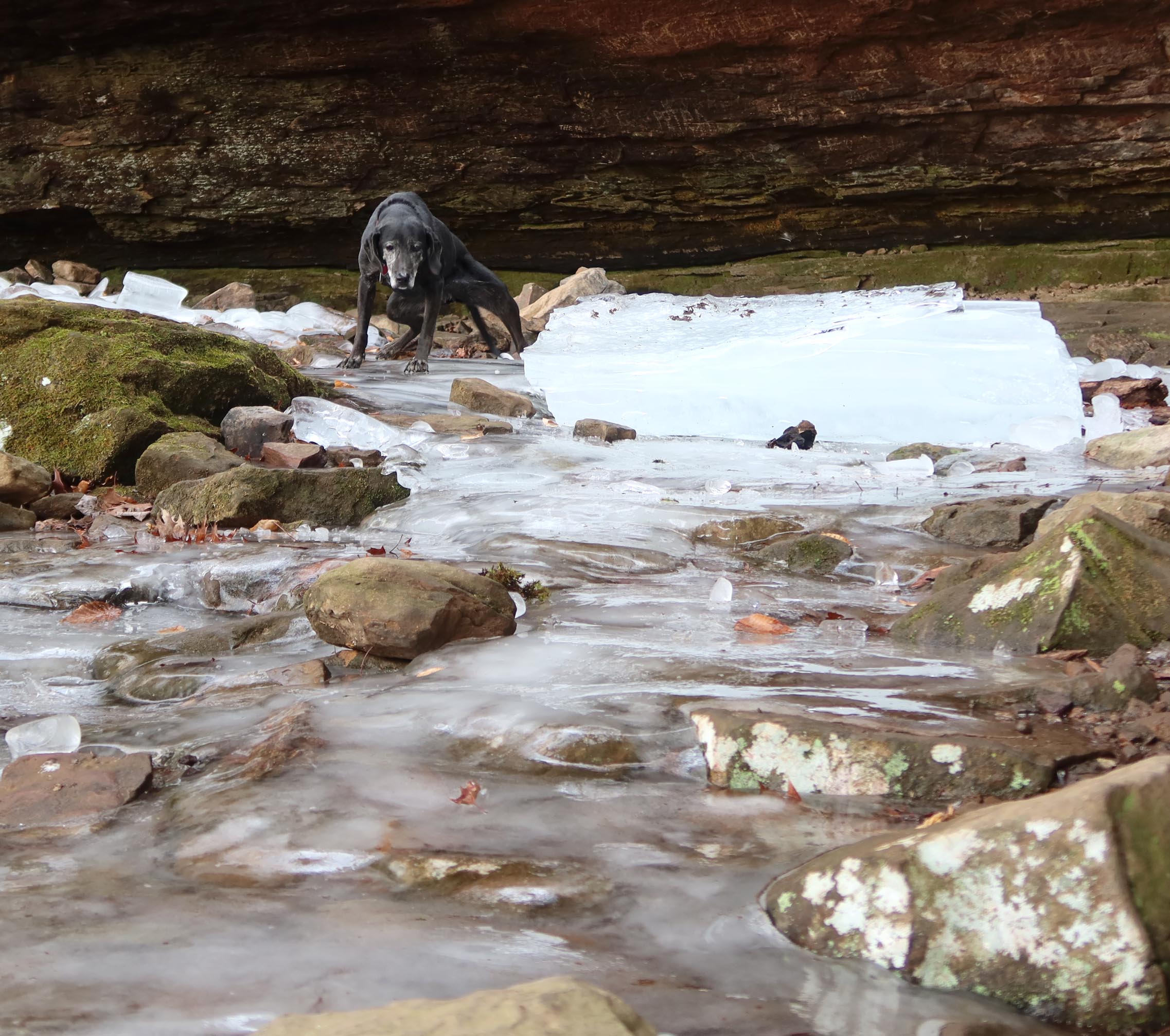
She provided me with some entertainment underneath the natural bridge as she danced and skated across the icy stream that runs through and down the bottom of the cove. As temperatures warmed, we avoided being underneath massive ice formations that could fall with the impact of small boulders.

View from on top of the natural bridge.

We took a little time to explore the areas around this natural wonder. I always marvel when facing such complex but artistic views formed mostly by water and time.

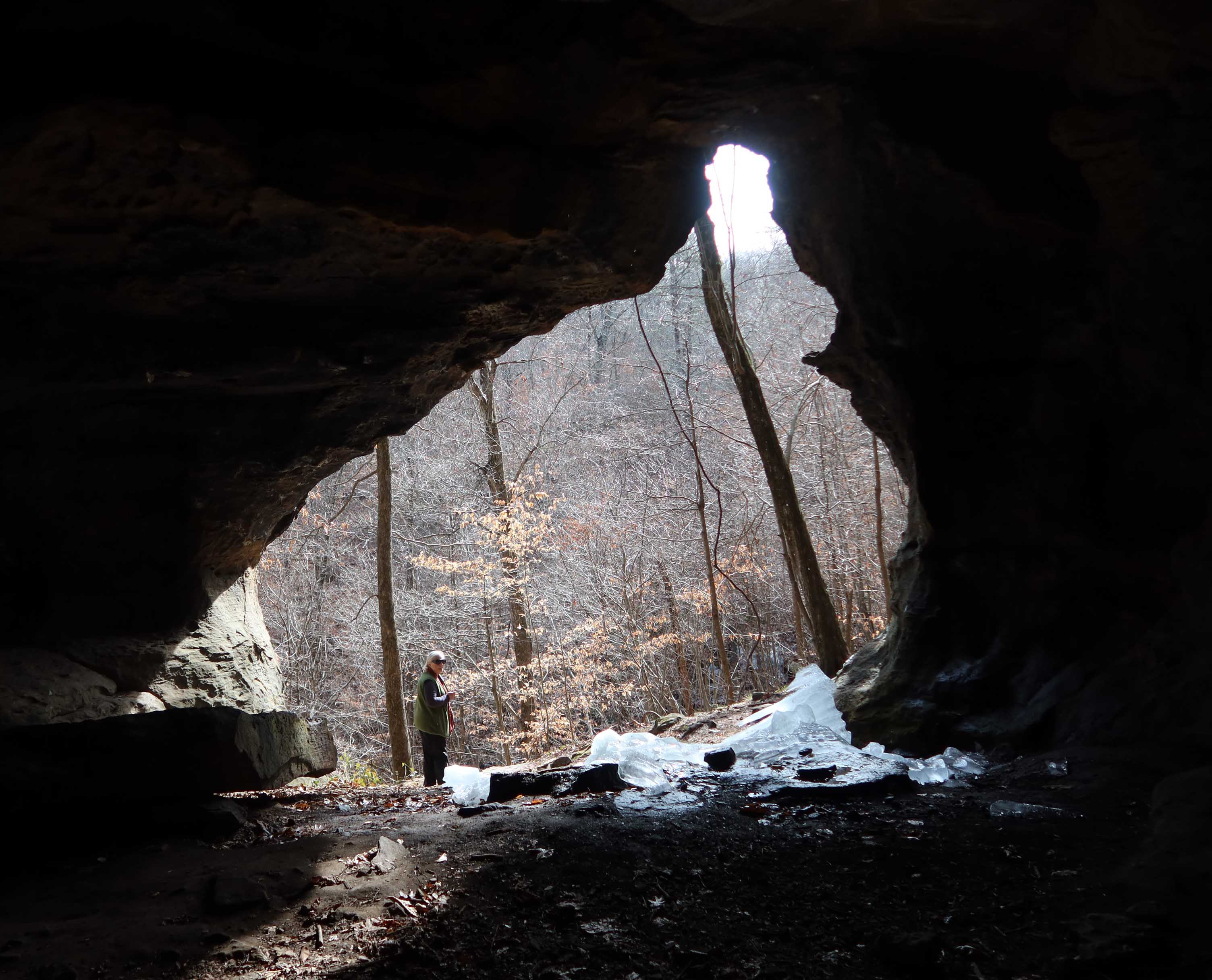
Hiker-dog liked this little cave on the other side of Alum Cove. Nice view and protection from the elements. I’m pretty certain these caves were shelters for early inhabitants of the Ozarks. While inside, we had to keep an eye overhead to be sure we weren’t walking under icicles hanging from above.

Spotting Becca at the entrance of this cave helped me realize the size.

Hiker-dog says, “Thanks for joining us.” If you’d like to read how Hiker-dog joined up with our family at mile 138 of the Ozark Highlands Trail, it’s available at Chapters on Main in Van Buren, Bookish in Fort Smith, and Amazon.com online.

Ozarks Camping and Trails on the Cheap

If you’re looking for a quiet campground in the Ozarks, the Ozone Campground is a little jewel of a location. It’s less than three miles north of the community of Ozone on Hwy 21 north of Clarksville, AR.

The water faucet at the pavilion worked in January when I visited. No guarantees but when I visited, the outlets on the pavilion were on and available to charge your electronics. The pit toilets are convenient, functional, and filled with that refreshing outhouse aroma that says you’re roughing it. 

The Ozone Campground is located right on the Ozark Highlands Trail (OHT). From campsite #5, it’s a short walk downhill to the trail register. From there either direction promises a beautiful hike. You can make it as strenuous as you like by customizing the length and your pace. The OHT is open to foot traffic only.

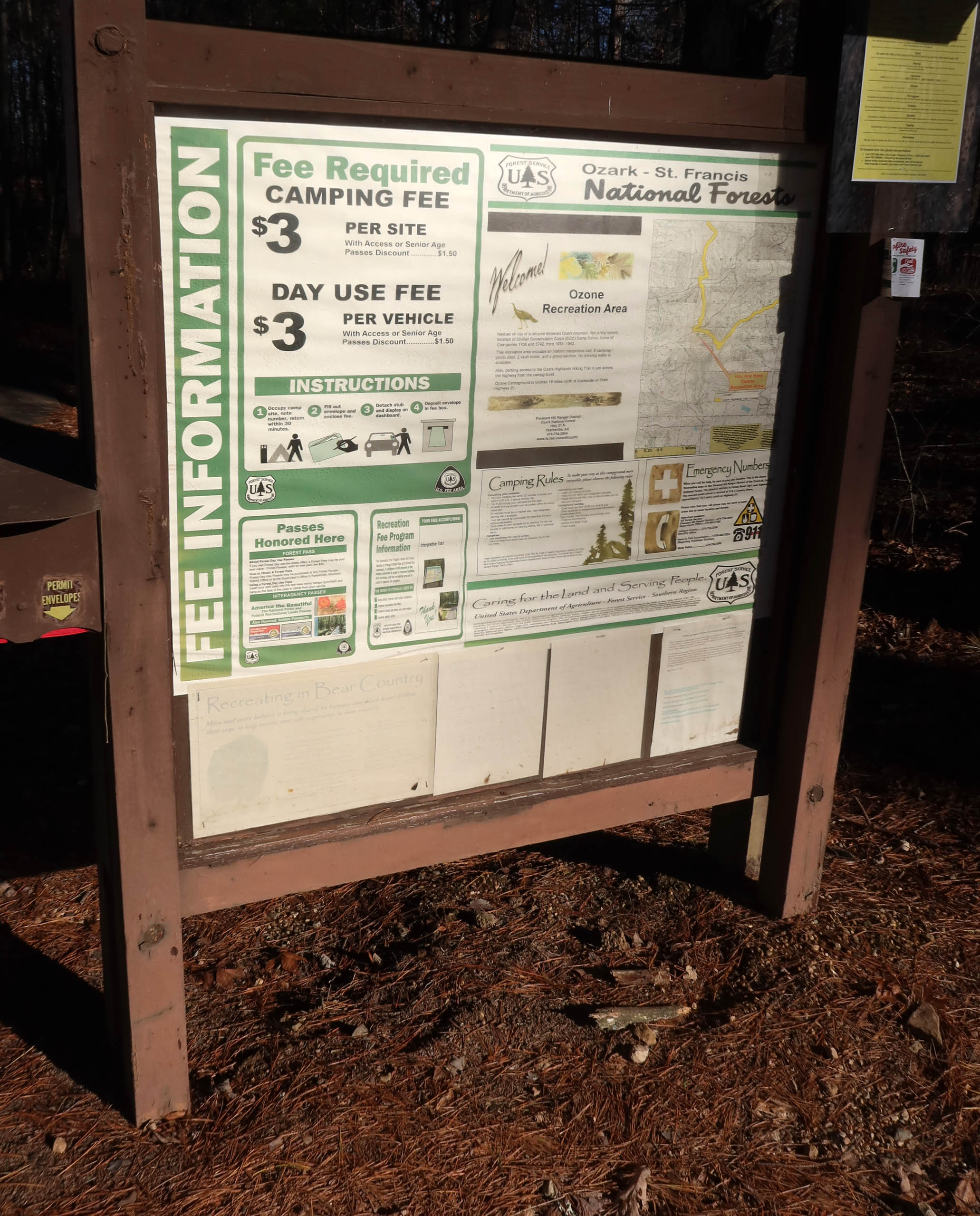
 After taking a close look at Camp Ozone, named for the CCC Camp that once stood here, I decided the next trip would include camping. Where else can you get a campsite like this in a beautiful location for $3 a night ($1.50 with a senior pass).

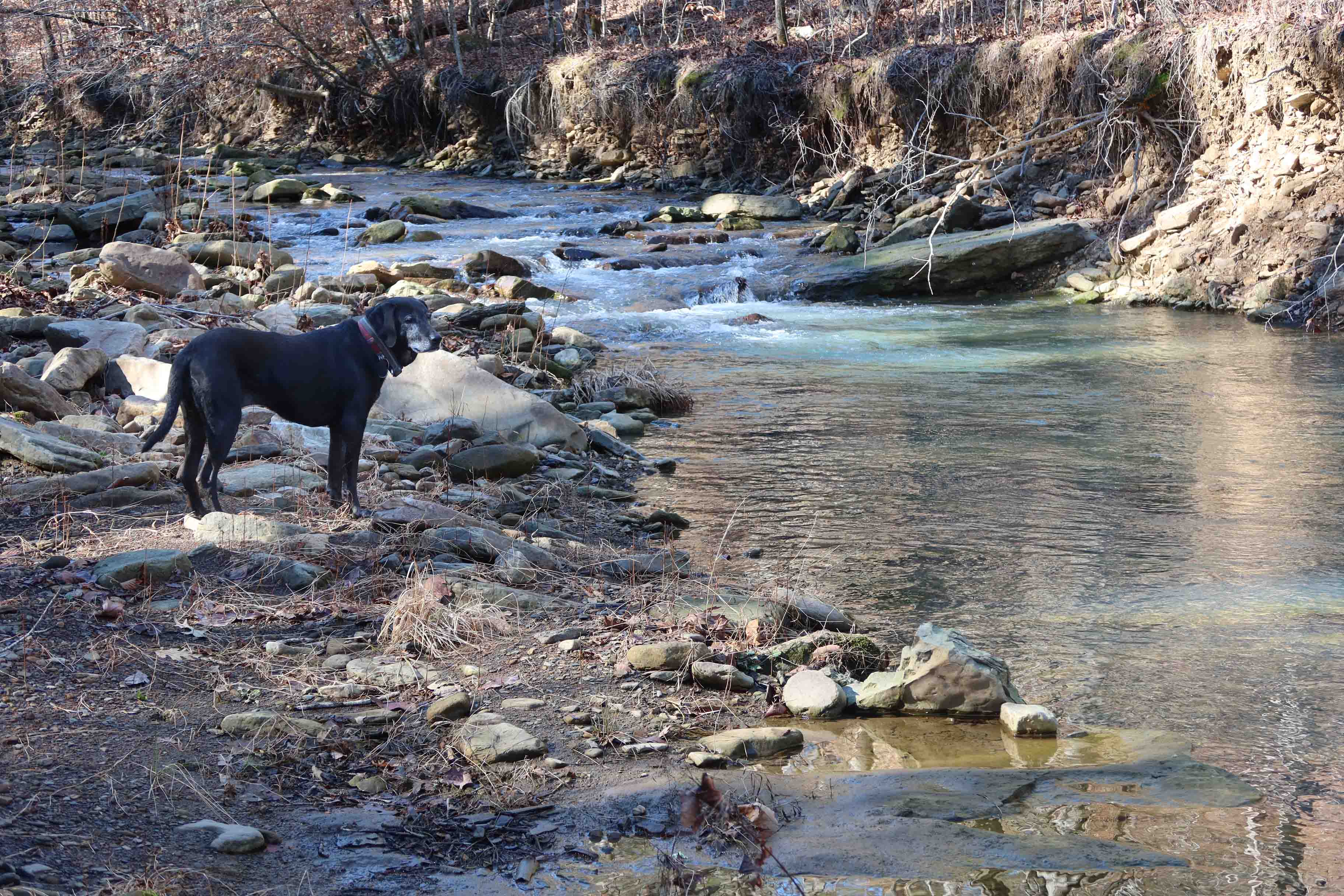
Hiker-dog and I did an out-and-back on the OHT down alongside Little Piney Creek for 3.5 miles which gave us a 7 mile hike with a good workout on the climb back up to the campground.


Had a great meal at the Burger Barn a couple of miles south on Hwy 21 in the community of Ozone. A couple was just finishing when I stopped there and another couple was ordering about the time my catfish plate was ready. That seems pretty busy for a small town in the Ozarks of Arkansas.

Trash on the Trail

Recently I encountered a dad, mom, and their three children, younger than 7 years old, hiking the Lake Alma Trail.  It was a warm afternoon and we were close to mile 2 on the 3.6-mile trail.   The dad asked how much farther it was around the loop.  Seeing no evidence that they were carrying water I offered an extra bottle I carry just for such occasions along with a banana I had in my pack.

I later saw them wearily crossing the dam and was relieved that they would make it back to their car.  As we passed I thought it strange that I didn’t see the water bottle but figured it was in the dad’s pocket. After they passed I wished I’d asked for it so I could use it again.

Most of my walks around the lake are early mornings with a flashlight but later during that same week I was hiking during the daylight hours while picking up trash.  Most of the trash had obviously been there for years.  No “new” trash was to be found along the trail, showing that our hikers are being considerate of this area.

Then I saw it.  The same water bottle I’d given that dad earlier in the week.  I was sure it was the same bottle because of the unusual shape and the location being just a little farther down the trail from where I’d met them the week before.  I wondered what my reaction might have been if I’d asked for the bottle and he’d told me he dropped it on the trail.  As it was I had the luxury of making a few comments to myself as I picked up the bottle.

This experience reminded me of “Leave No Trace” principles, one of which is that preparation is an essential part of protecting nature.  Hikers who are unprepared end up in bad situations (like having a thirsty family).  They make mistakes and demonstrate poor judgment.  Still, I wonder what the thought process is when a person takes a bottle of water given by a fellow hiker and then tosses it on the trail after using the much-needed water.

The Irresistible Pull of The Grand Canyon

Image

I’ve done multi-day hikes in the Grand Canyon on five or six different occasions.  The first trip in June of 2002 was memorable for the heat.  We went from the north rim to the south camping at Cottonwood and Bright Angel.  I learned many lessons on that outing, especially related to packing light, dealing with heat, and estimating distances to cover each day.

A few years later I teamed up with some good guys and hiked The Canyon in December.  What a treat that was!  We hiked down the South Kaibab Trail on a cloud of fog which gradually gave way to crisp canyon walls as we walked along the Tonto trail and viewed the soft clouds against the South Rim.

The very next winter another trip to The Canyon and then another.  I realized this was looking like an addiction but in fact, it was more like a natural magnetic pull I felt toward those majestic walls and their infinite variety of light, texture, and air…THE AIR! It is like visiting a beautiful cathedral without ceilings, as spiritual as physical…as worshipful as it is beautiful.

There have been trips to Colorado and New Mexico along the way and I look forward to returning to those locations for more adventures but there’s nothing like the positive addiction I feel toward the Grand Canyon.  I’m looking forward to getting my “Canyon fix” again this winter with a great group of hiking buddies!

Here’s a link to our packing list.  Backpacking List Grand Canyon

Making Time for Marinoni

Image

Making Time for Marinoni

story and images  JIM WARNOCK

Published in At Urban magazine of Fort Smith (This magazine is now named Do South)

There’s a treasure waiting for you in Franklin County, near the small town of Cass. One local backpacker recently said, “Hiking there is like walking through a beautiful cathedral!” Those who have experienced the Marinoni Scenic Area would completely understand this statement.

Imagine a place with twisting waterfalls, arching rock bluffs and towering trees. Walk along a gentle stream that flows over rocks into quiet, clear pools. The sounds of gurgling water, windblown trees, and a variety of songbirds will soothe your soul. Leave your cell phone in the car because there’s no coverage here; who wants to hear cold digital sounds in this acoustic setting?

The Marinoni is beautiful in every season. Fall colors glisten and shimmer,appearing as stained glass atop pools of water. Winter brings the possibility of stunning ice formations and frozen splash patterns around waterfalls. Spring brings dwarf crested irises peeking out from the most unlikely cracks and crevices. Their violet-to-purple hues sparkle against damp stone walls. During any season, you’ll find lush green moss-covered sandstone and lichen-speckled bluffs. Your greatest challenge on this hike might just be keeping your footing as you gaze up, entranced by the beauty.

Access to this jewel of a place used to be difficult and limited to strong, long-distance hiking legs. The Ozark Highlands Trail Association (OHTA) held a weeklong work camp in March of 2011 and built a .6 mile spur trail that connects to the Ozark Highlands Trail (OHT) just west of the Marinoni Scenic Area. You’re now able to hike a couple of miles and find yourself in one of the most beautiful places in Arkansas.

“Well worth a 3-hour drive,” says Dale Fudge, a hiker from Oklahoma City. Dale goes on to say, “The Marinoni Scenic Area is one of the most intimate and inspiring sections of the OHT. It’s secluded and packed full of dramatic landmarks. The area is now more accessible than before with the addition of the Dawna Robinson Spur Trail at Indian Creek, making for one of the best day hike opportunities in the entire region.”

It’s fitting that this area feels like a sanctuary and that it memorializes the lives of two special individuals. Paul A. Marinoni was from Fayetteville and was involved in volunteer efforts with Tim Ernst’s father. Tim, renowned outdoor photographer and author of the Ozark Highlands Trail Guide says, “My dad had his first heart attack when I was only six, so he was unable to take me to the woods like he would have wanted to. When I was seven, I began spending a lot of time with Paul Marinoni, hunting and camping during annual retreats into the woods. Paul was a real character, one of the most down-to-earth and honest people you would ever meet.” Given Tim’s sentiments, it seemed proper to name this area after a man who influenced others to appreciate the Ozarks.

The short trail allowing us to enter this natural area is named in memory of Dawna Robinson. Dawna and her husband, Bob, spent years maintaining sections of the OHT.  She was well known for her love of the trail and her desire to share it with others. “When the new Indian Creek Spur Trail was first proposed, Dawna’s spirited personality and dedication came to mind as a fitting tribute to memorialize how the entire trail came into existence through the hard work and perseverance of volunteers,” says Mike Lemaster, President of the OHTA.

In many ways the Marinoni Scenic Area reflects qualities of these two lives. Sitting at the edge of Briar Creek, you’d think these bluffs had always been as they appear today but this valley was shaped by centuries of water and ice. There’s an honesty and straightforwardness in its beauty. Giant rocks stand like monuments of strength where they folded down to the creek years ago. Although fragile, there’s a sense of permanence here and although subtle, the beauty is deep and unmistakable in any season.

If you’ve never visited the Marinoni Scenic Area, it’s an experience not to be missed. If you have hiked the area, you will want to return again and experience an even deeper appreciation of its beauty. So, lace up your walking shoes! Let’s go visit an Arkansas natural cathedral and pause there as it becomes our own special place of sanctuary and reflection.

Getting there:  From Hwy 23 just north of Cass, turn onto Hwy 215 east. Travel 7.4 miles to Indian Creek Canoe Launch and OHT Access. The trail is on the north side of Hwy 215 and begins at an opening in the fence directly across from the Indian Creek OHT Access sign. The spur trail is marked with 2×6-inch blue metal blazes. You’ll hike .6-miles to the OHT and then turn right, hiking another 2 miles to the Marinoni Scenic Area marker at the base of a bluff. Hiking out-and-back gives you approximately 5.2 miles. With a shuttle you can hike through to the Lick Branch Trailhead which will be a 5-mile hike and cover even more scenery.

For more information:

Ozark Highlands Trail Association  ozarkhighlandstrail.com

Ozark Highland Trail Association Facebook page

Ozark Highlands Trail Guide by Tim Ernst