No nonsense day hiking guide for the novice hiker

IMG_8410rr

What do I wear?

What do I take with me?

Where should I go?

When should I go?

What are the dangers? Will a bear get me?

Many questions come to mind when you consider taking a hike for the first time. We’re going to consider these questions and be sure we have some simple answers before heading out. A few good questions can keep us out of trouble and ensure that we want to continue hiking after our early experiences.

Disclaimer: This is not an all-encompassing day hiking guide. These are just my thoughts based on personal experience and a few mistakes along the way.

Oboz hiking shoes

Oboz hiking shoes

What do I wear?

You can wear almost anything and get away with it on the trail. Don’t worry about fashion, but function. We’ll look at this from the ground up since feet are very important to hikers.

  1. Socks are among a hiker’s most important pieces of clothing. I use SmartWool socks, but there are other options. Don’t wear cotton socks unless you like blisters and soggy, smelly feet. Any tennis shoes of reasonable strength are fine for day hiking. Don’t go purchase a heavy pair of hiking boots unless you just want to. I don’t even wear heavy boots when backpacking. I use low-top hiking shoes. I like Oboz right now, but whatever feels good on your feet should guide your decision.
  2. Pants – If the weather is nice, any pants will do. If it’s cold, I prefer anything but cotton pants. Cotton gets wet (making you colder) and then will not dry out in the humid Ozarks until a few days later. When hiking in the Ozarks I almost always wear long pants because of undergrowth, briars, and ticks.
  3. Underwear – For a short day hike, you can use cotton, but as you work up to longer hikes, you’ll want a pair of undies made from a fabric other than cotton.
  4. Shirt – A cotton shirt in summer is alright but if there is a chance of colder temperatures, something like an UnderArmor t-shirt will keep you warmer than cotton.
  5. Hat – A hat is good for sun protection and heat retention, depending on the weather. I accidentally left my hat in my car at the Grand Canyon once and was thankful I had a bandana to tie into a makeshift hat. In some conditions, a hat is a necessity!
  6. Rain protection (especially in cooler temperatures) – A light rain jacket can be wadded up in the bottom of your daypack and forgotten about until needed.
  7. Gloves – Anything but cotton and only if needed. I wear some cheap army surplus wool glove liners when I hike, and they’re fine. I also have some nicer gloves for colder weather but am nervous about losing them. They hook together which is nice for storage in my pack. Finding one glove is more irritating than finding one sock in the drawer.
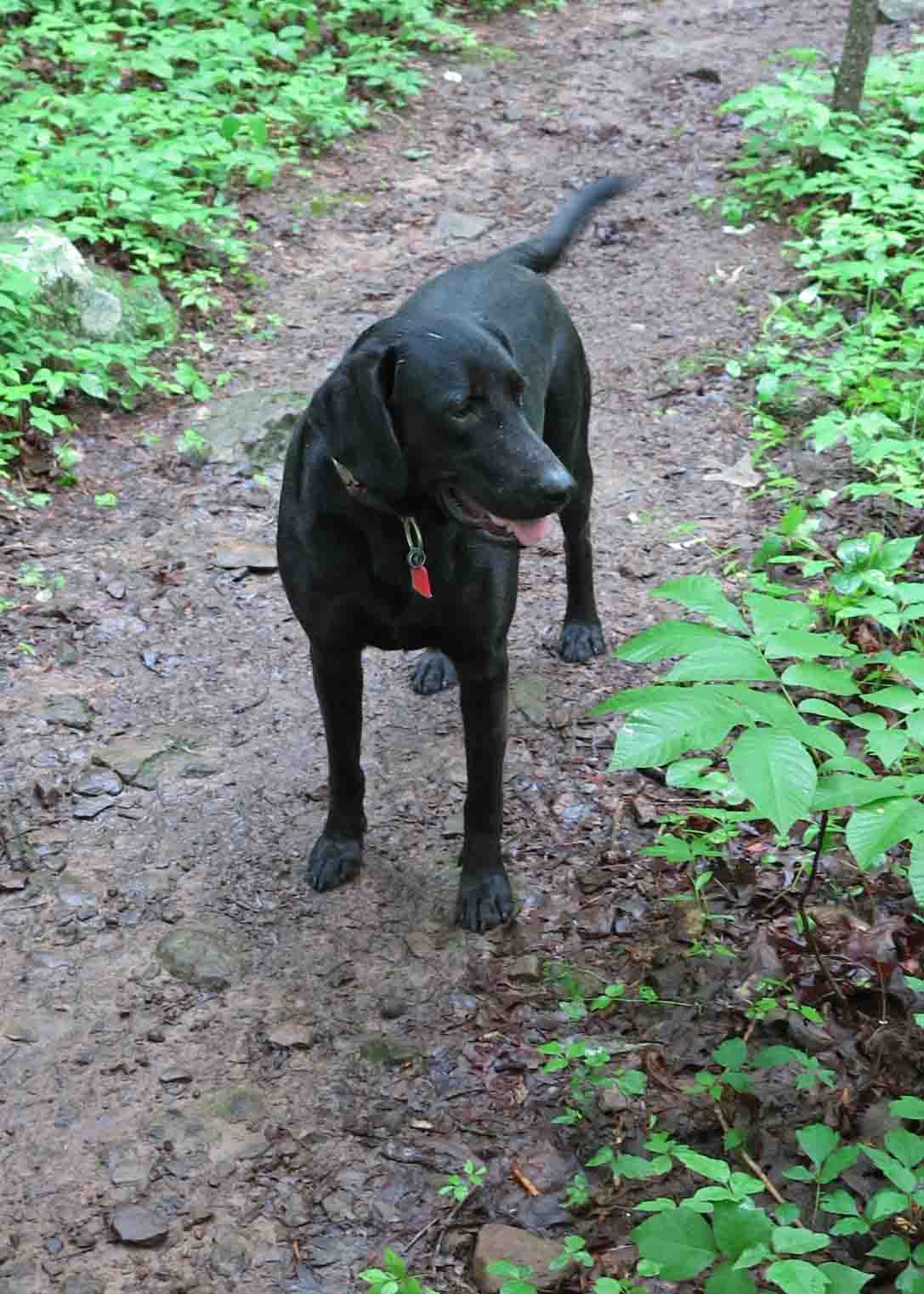
Hiker-dog says,

Hiker-dog says, “The less you carry, the better you move.”

What do I take with me?

As little as possible is my short answer, but there are some essentials you’ll want to have depending on the conditions.  This list is drawn from the ten essentials that are published in many forms. Below is my list roughly by personal priority.
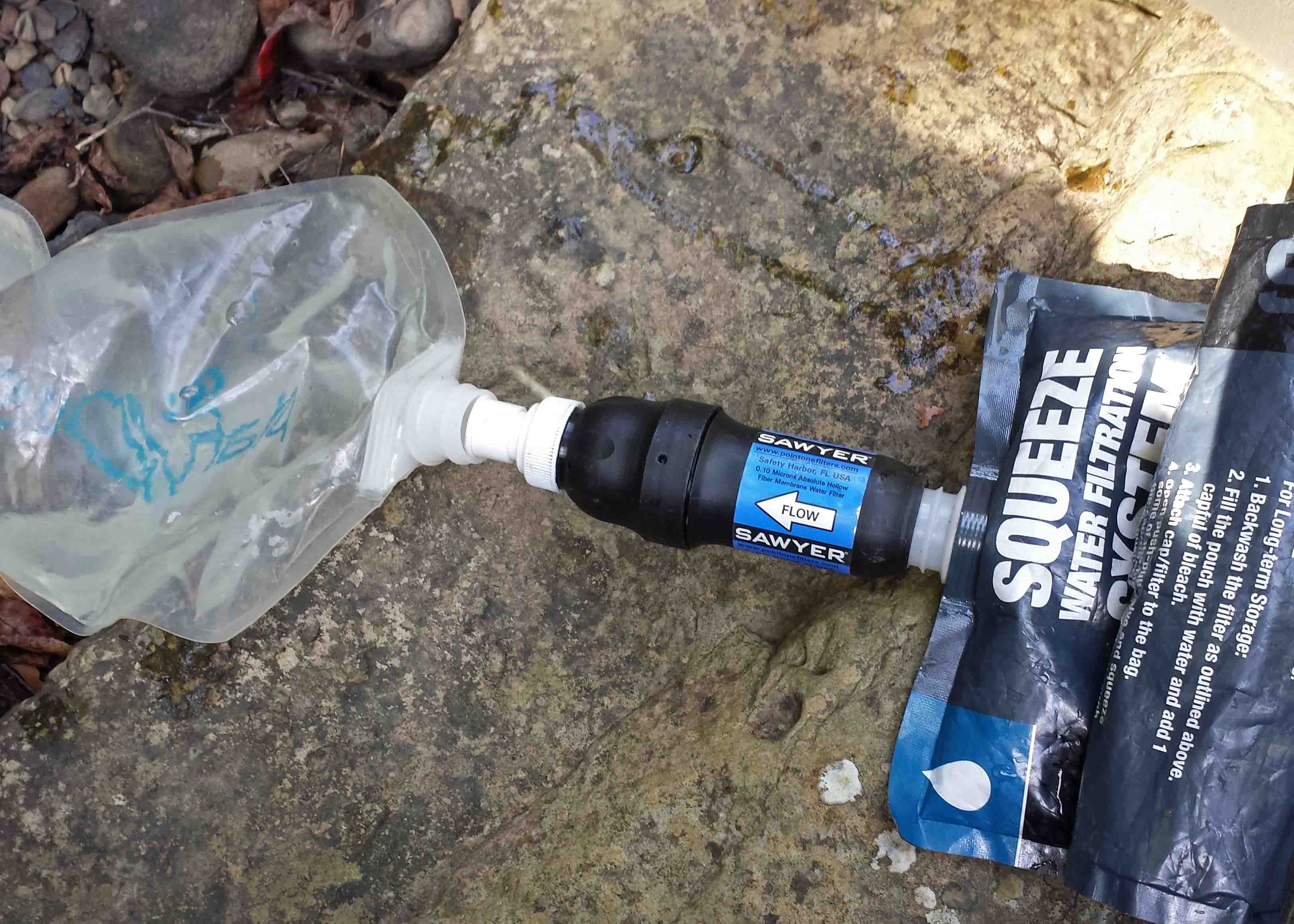
Filtering water from Spirits Creek.

Filtering water from Spirits Creek with a Sawyer Filer

  1. Water and access to water – Put your water in a bottle or a bladder in your pack. One expert hiker friend, Grey Owl, swears by carrot juice bottles. He gave me a couple, and I use them all the time. I carry a small Sawyer water filter in my daypack in case I run low. It doesn’t add much weight and has made me a few friends on the trail when others needed water.
  2. Food – Snacks that you’re used to eating are what you should take on the trail. This is no time to try something new in the food department.
  3. Extra clothing – Think protection from the elements. If it looks like rain, carry rain protection. If it looks like cold, carry an extra layer. My all-time favorite is an insulated vest. Stuff it in the bottom of your pack and it’s like a little insurance policy against a cold snap.
  4. Navigation – Don’t assume that you can’t get lost on a well used trail. Like Jeremiah Johnson, “I’ve never been lost, just confused for a month or two.” Fortunately, I’ve only been confused an hour or so, but it can be a little scary if you’re not prepared. A trail map of the area you’re hiking can make or break your trip. It doesn’t have to be elaborate. Sometimes I just copy the appropriate pages from a trail guide and put them in a zip-lock bag. A compass is important. Even a general idea about directions can save you some grief. Don’t count on the compass app on your phone or GPS. Batteries don’t last. I have a small compass/thermometer that ties to a belt loop or my day pack. It’s always there.
  5. Illumination – A small headlamp or flashlight in your pack can be a big help if a hike takes longer than anticipated and you’re walking the last part of your trail in the dark. I carry a small LED light in my day pack at all times.
  6. Sun and bug protection – A little sunscreen can make you a happy and healthy hiker. Bug spray around the cuffs of your pants can discourage ticks. A little spray around your hat area can discourage deer flies and mosquitoes if you’re hiking in summer. Check for ticks often. If they get attached and stay awhile, your chances of getting one of several tick-borne diseases increase. I can usually feel the little guys climbing up my legs and pick them off before they attach.
  7. First Aid supplies – I like a zip-lock with some bandaids and any medicines I might need if stranded for a while. Keep it simple and light and then forget about it until you need it. Avoid purchasing a first aid kit because it will not be customized for your needs and you’ll be carrying unnecessary stuff.
  8. Fire – I carry a lighter. Don’t smoke, but I always have a lighter with me just in case I need a fire.
  9. Emergency shelter – This is simple to do. Cut a 8-10-inch hole close to the bottom of a large trash bag. I stuff it in the bottom of my pack and forget about it. I can put the bag over me and sit inside for shelter. The small opening allows me to see and breath but protects me from the elements. I’ve never used this but it’s like that cheap insurance policy I mentioned earlier.
  10. Most ten essentials lists include repair kit, but for day hiking I don’t carry any tools other than a small pocket knife. One of my hiking poles has some duct tape wrapped around it for emergencies. I’ve used this twice to reattach a shoe sole for other hikers.

OHT Map

Where should I go?

The short answer is, “Hike anywhere your feet will take you.” The longer answer is to put in a little thought and planning before you head out. When in doubt, hike fewer miles. Begin with 1-2 trail miles. I say trail miles because hiking on most trails is more demanding than walking a track. I learned this lesson once on the Seven Hollows Trail at Petit Jean State Park. I figured we could do four miles in just over an hour since that was what it took on a track. Over two hours later as it was getting dark, my wife and I finished our exhausting hike. Even as an experienced hiker, I always allow about one hour for every two miles of hiking distance.

Pick up a Five-Star Trails guidebook that covers trails in your area. I collect guidebooks like my mother collected cookbooks. It’s fun to browse through to determine possible next hikers. If you’re traveling, Google the area to see what hiking trails are available. I came across a couple of hikers on the Lake Alma Trail who were from Nebraska. They’d checked the web and found our trail. They were delighted with the hike and looking forward to a meal in town before hitting the road refreshed and relaxed.

Fall leaves along the trail.

Fall leaves along the trail.

When should I go?

The short answer is to go as often as possible. In the Ozarks, we have a large hiking window. My favorite months are October through May. September is iffy due to possible warm days. Fall and winter are prime hiking months. June, July, and August are good months for early morning day hikes or some trips out west at higher elevations. Sometimes you’ll catch a cool snap in the Ozarks during the summer months, but that’s rare.

What are the dangers?

The dangers are few and not what you might expect. Bears and snakes are not a concern. Just don’t step on or antagonize a snake and you shouldn’t have a problem. Bear sightings are rare because of the noise hikers make, and our smell usually cues the bear to our presence. I’ve only seen one bear in Arkansas, and that was at a distance. I don’t carry a gun when hiking because it adds weight and addresses none of the real hazards of hiking.

Hazards to avoid through preparation (in no particular order): dehydration / heat exhaustion / hypothermia / ticks / mosquitoes

Deer season coincides with some of the best times of year to hike. I tie a hunter-orange bandana to my day pack year round and avoid impersonating a deer while in the woods. I’ve never had a problem.

One of my readers reminded me of the importance of telling a friend or family member your itinerary, even if it’s a short day hike. Do this whether hiking alone or in a group. I write my trail location and route on a note and leave it with my wife in hopes that she’ll want me to be found if I become lost. If my wife is with me on a hike, I’ll email my itinerary to a trusted hiking buddy.

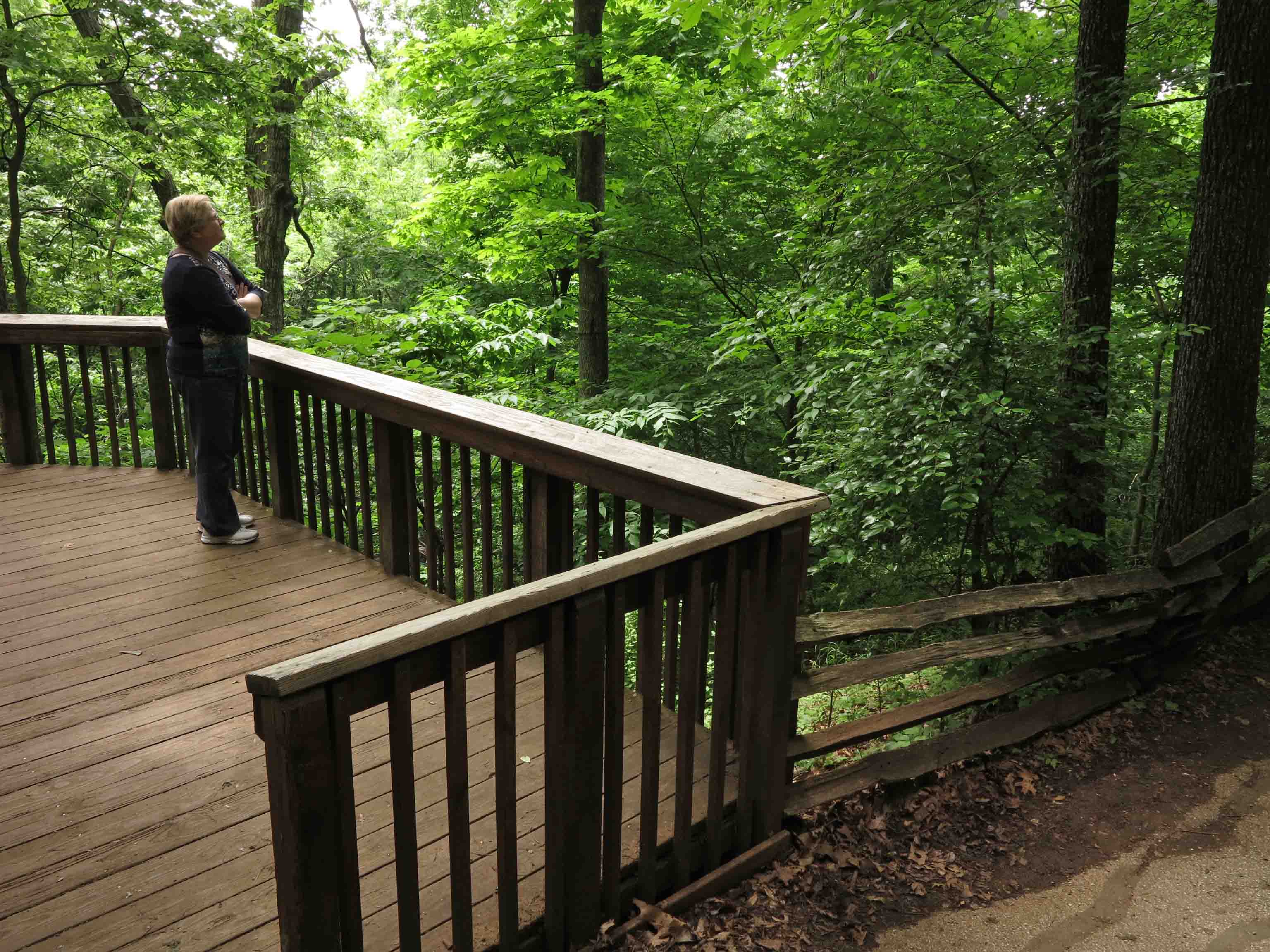
A couple looking at Hawksbill Crag in the distance.

A couple looking at Hawksbill Crag in the distance.

Get linked up and get out!

You might want to join a hiking club in your area, but check the descriptions of their hikes carefully, so you don’t end up exhausted or with a stress injury. Most hiking groups schedule hikes suitable for novice hikers. The truth is experienced hardcore hikers still enjoy a nice scenic stroll with their camera. In my area, the Fort Smith Trailblazers do a lot of great day hikes. The Ozark Highlands Trail Association and Ozark Society also do group day hikes and backpacking trips of varying difficulty. Hiking with others is a great way to accelerate your knowledge about hiking and hiking locations to explore.

Hiking has enriched my life, enhanced my health, and connected me with some great folks. It’s a great big beautiful world out there. Get out and enjoy!
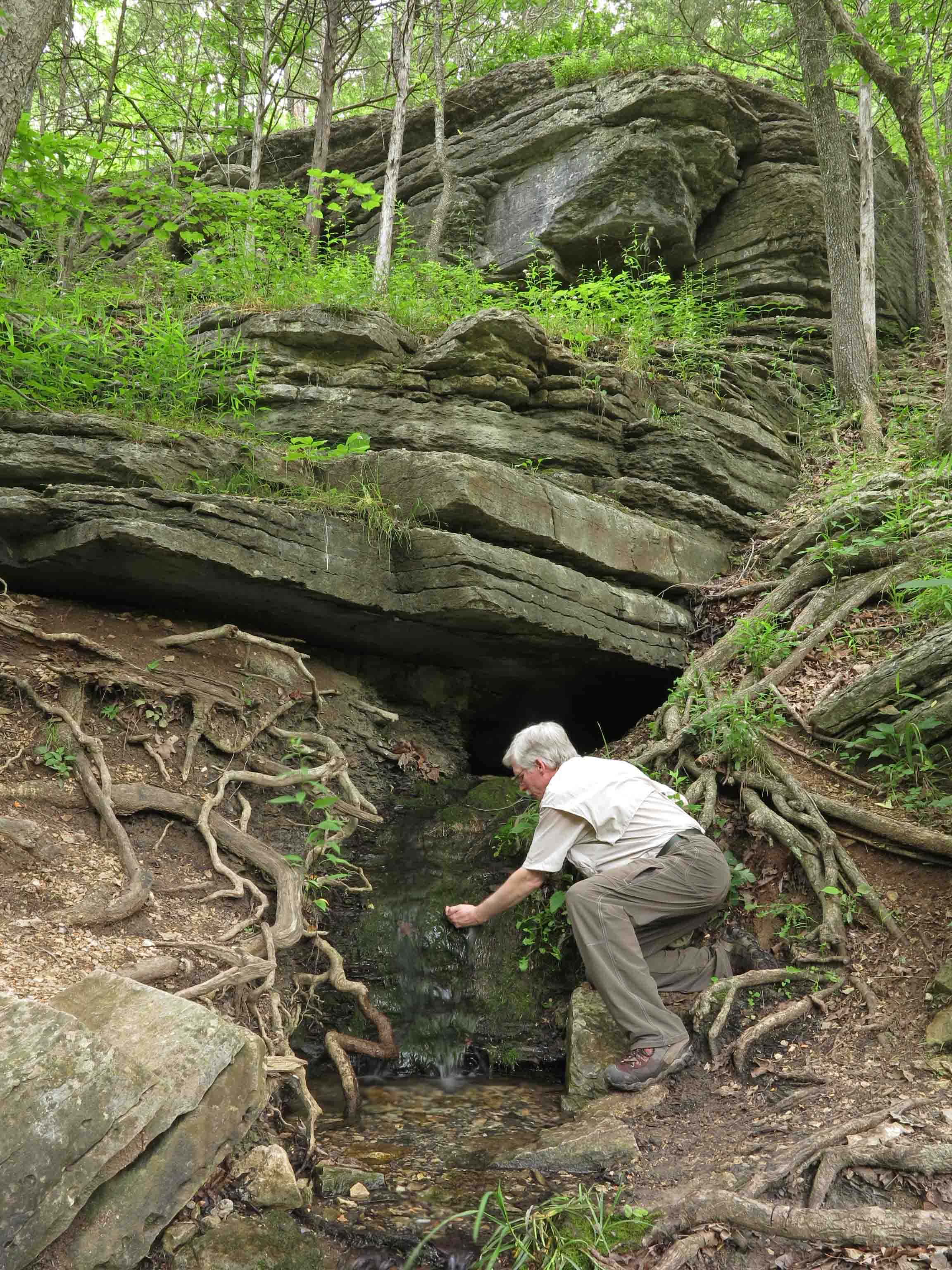
Small spring next to the trail in the Ozarks of Missouri

Small spring next to a trail in the Ozarks of Missouri

Vivid Roaring River Spring

Roaring River in Missouri
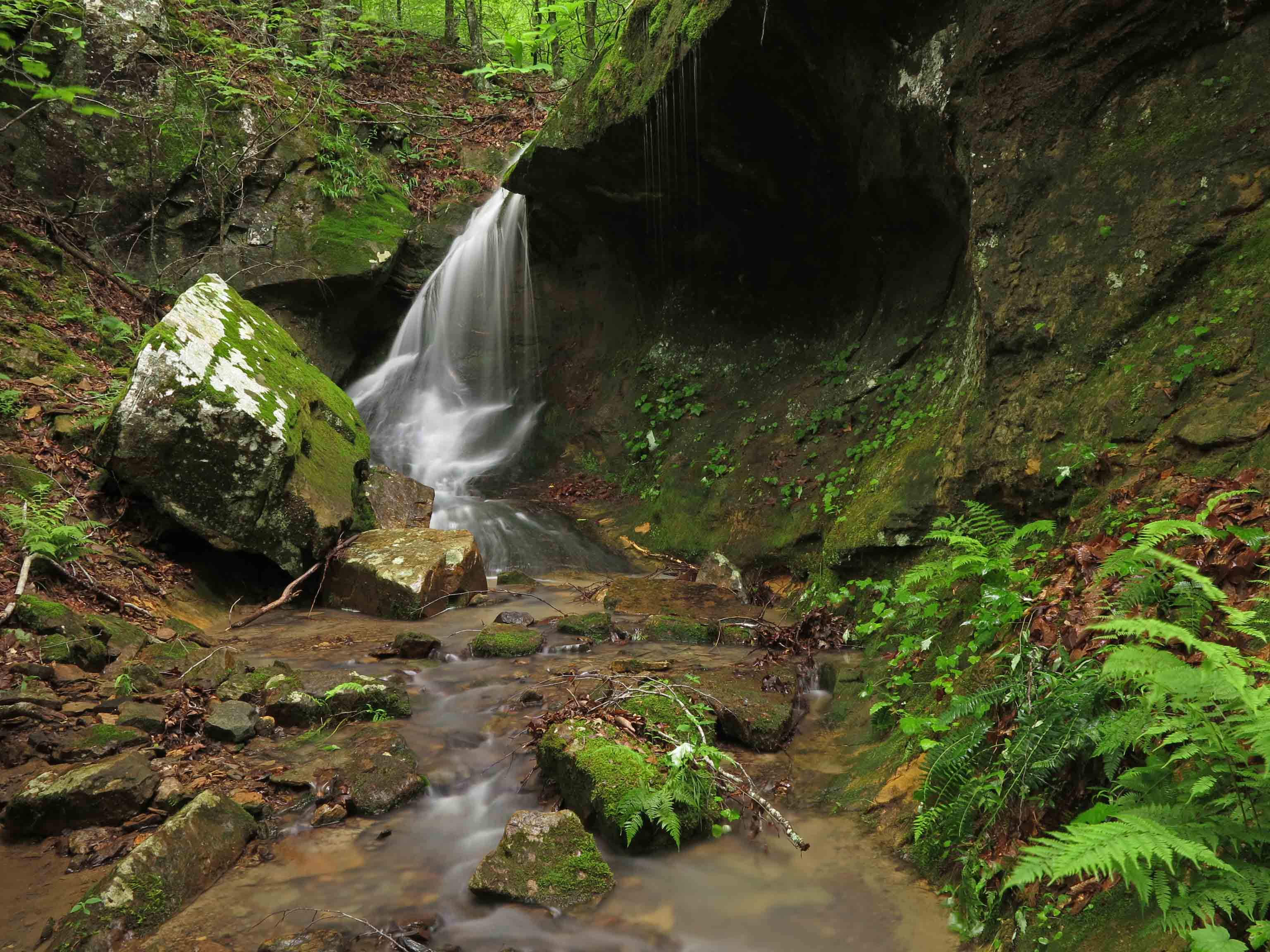
Roaring River

This morning while hiking at Roaring River State Park in southern Missouri, I was fascinated by vivid greens and browns as they blended in fast flowing and trout-filled water.

Roaring River

Roaring River

Roaring River Spring

Roaring River Spring

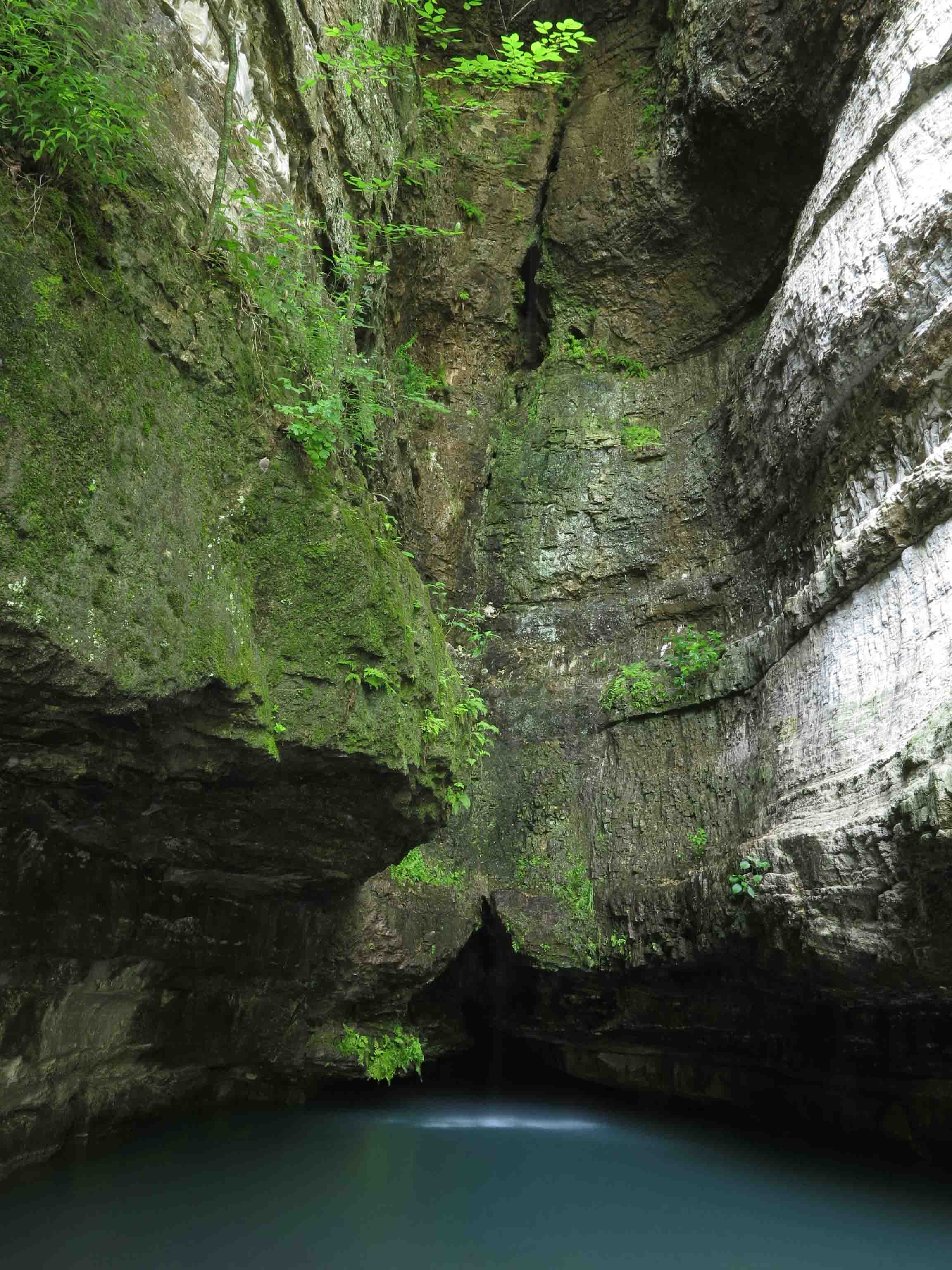
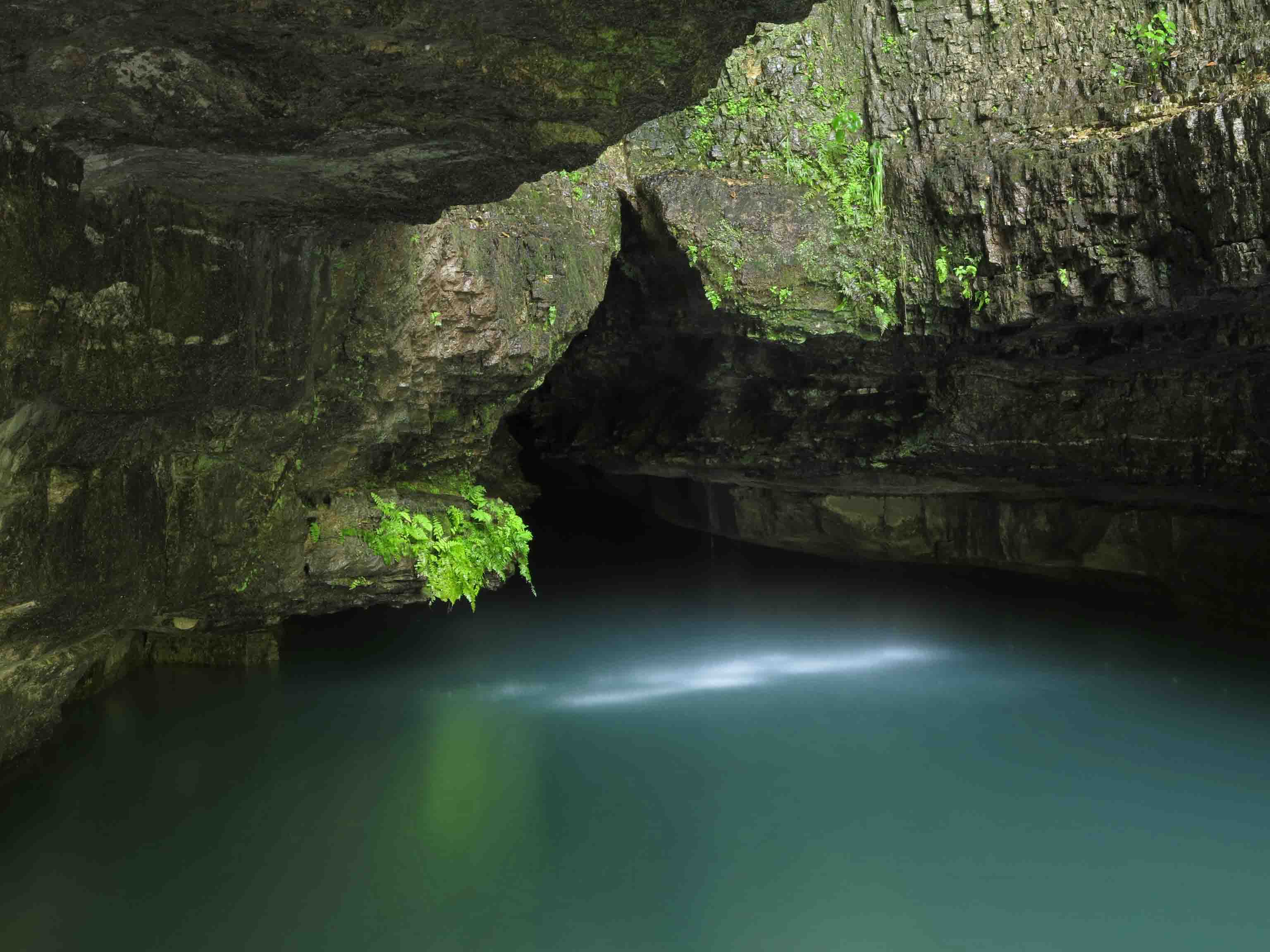
Roaring River Spring drew me in with it’s subtle beauty and strength. The surface of this spring, which flows up from a canyon-like cave far below the bluff, seems to hide the average flow of 20 million gallons of water each day. This cold spring produces the rapids downstream, filled with color and life.

Roaring River Spring

Roaring River Spring

In response to The Daily Post’s weekly photo challenge: “Vivid.”

A Right Wrong Turn

Flat Creek Bridge

Flat Creek Bridge

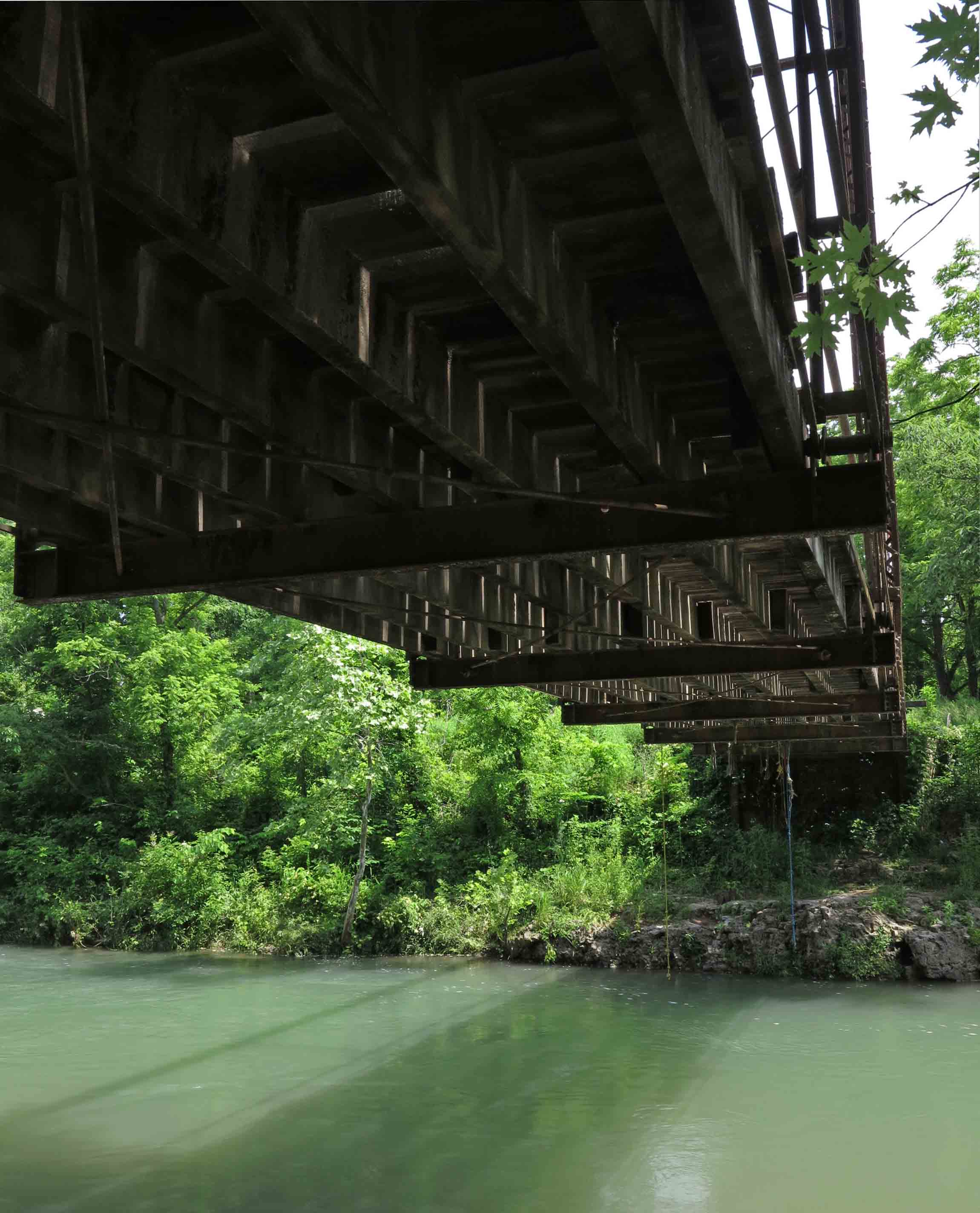
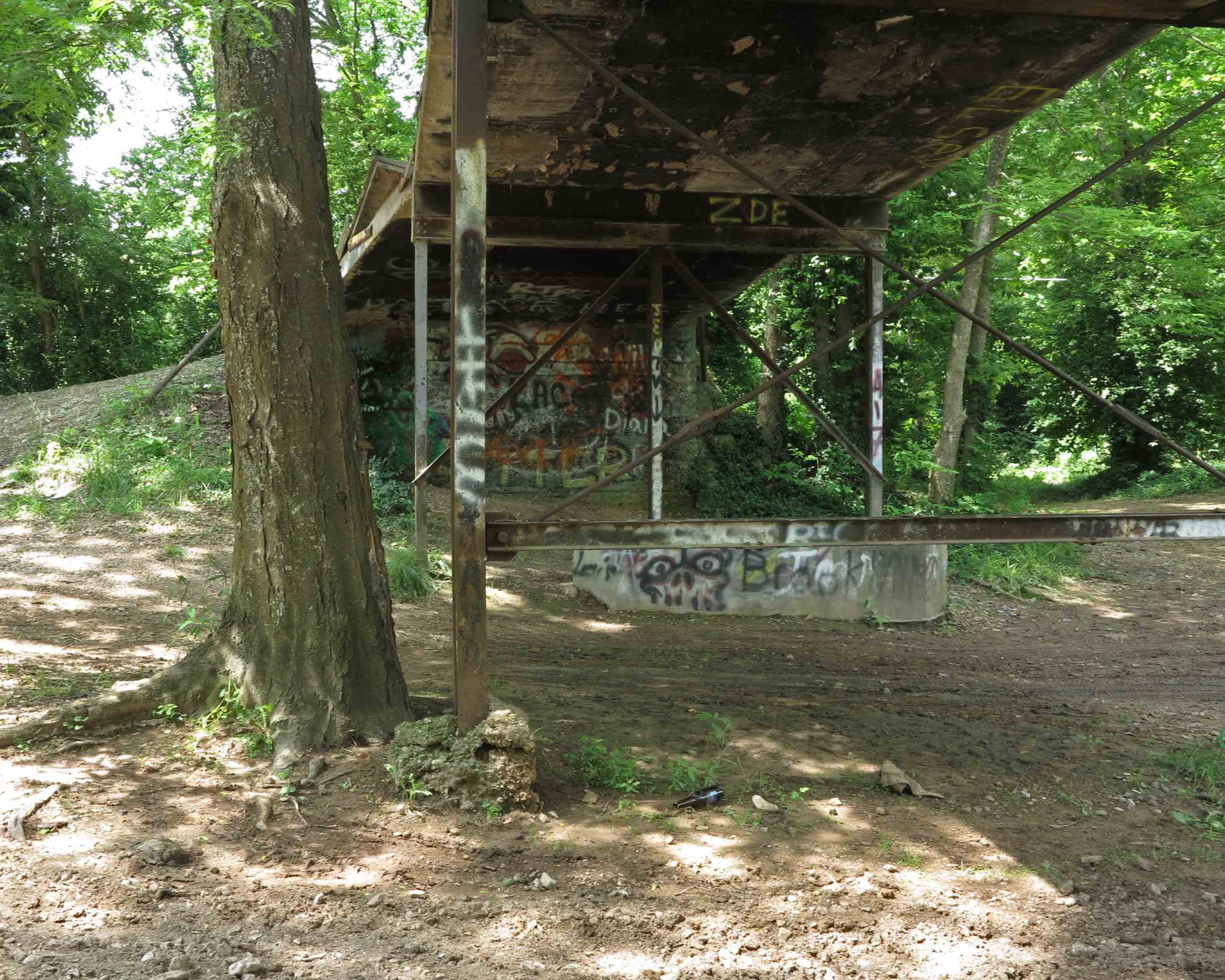
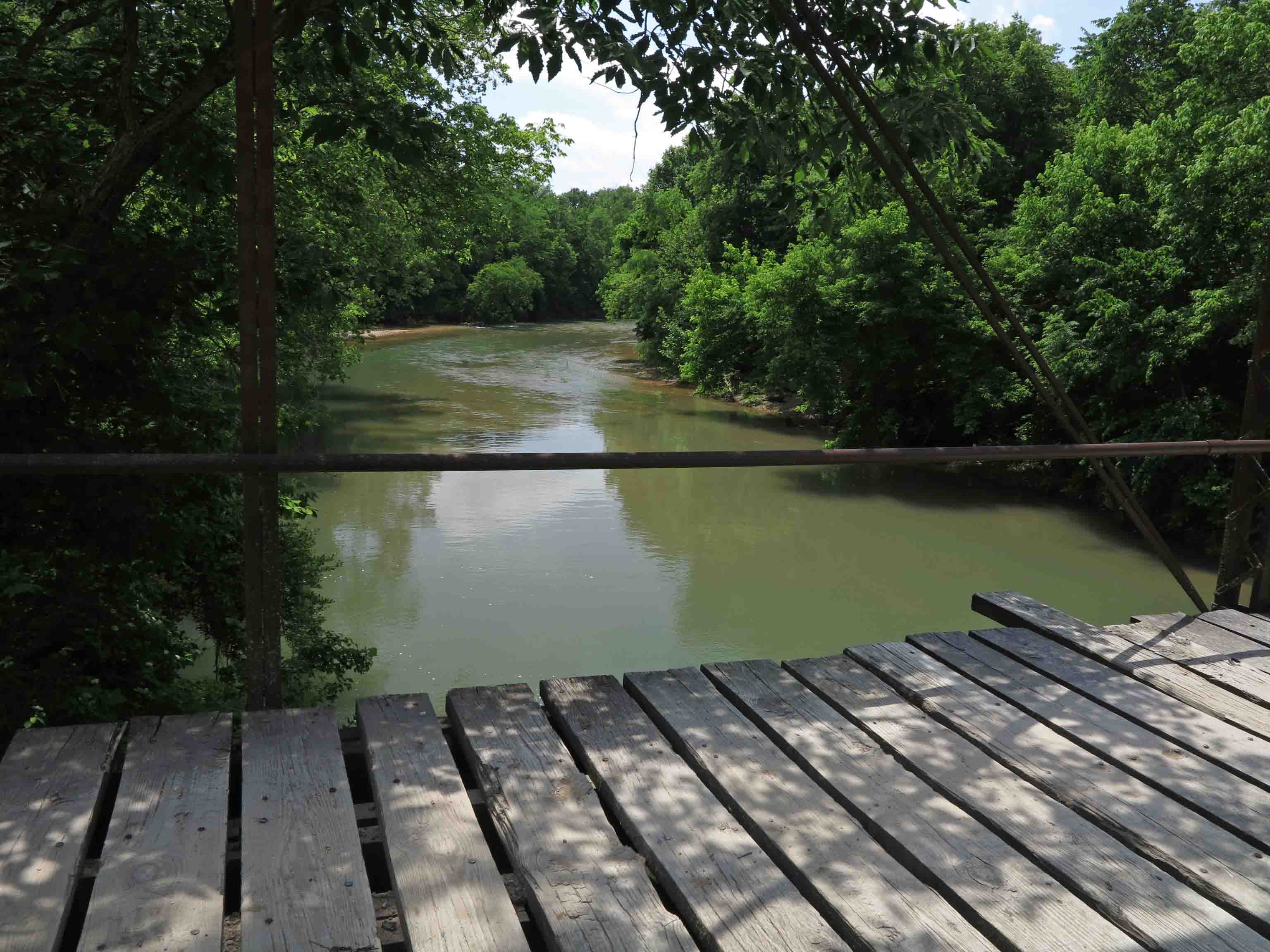
My wife and I took a turn too early off of Highway 39 while driving a scenic route in Missouri. After about 100 yards on a small paved road, a sign said, “Pavement Ends.” This was our cue to turn around, but not before exploring the rustic bridge a little farther down the road. What started out as a wrong turn became a pleasant stop and gave us a taste of rural Missouri Ozarks.
As often happens, a wrong turn is really a right turn providing special sights to explore. Sometimes I wonder how many special places we pass each day as we rush to our planned destinations.

Jenkins, MO

 GPS 36.775911, -93.685915

Flat Creek Bridge

Flat Creek Bridge

Flat Creek Bridge

Flat Creek Bridge

Flat Creek Bridge

Flat Creek Bridge

Flat Creek Bridge

Flat Creek Bridge

Underneath Flat Creek Bridge

Underneath Flat Creek Bridge

Underneath Flat Creek Bridge

Underneath Flat Creek Bridge

Underneath Flat Creek Bridge

Underneath Flat Creek Bridge – Jenkins party spot

Looking upstream from Flat Creek Bridge

Looking upstream from Flat Creek Bridge

Flat Creek Bridge

Flat Creek Bridge

In response to The Daily Post’s weekly photo challenge: “On the Way.”

No Cookie Cutter Accommodations Please: If not a tent, then a B and B

Walnut Street Inn Bed & Breakfast

Walnut Street Inn Bed & Breakfast, built by Charles McCann in the 1890s at a cost of nearly $6,000

One of my hiking buddies always opts for a mom and pop restaurant over chains when possible. I’ve picked up this practice and have now applied this approach to selecting overnight accommodations. When not staying in a tent, I prefer a bed & breakfast over one of the chain hotels.

Becca and I recently made plans to celebrate our 36th anniversary, so something a little nicer than a tent was in order. We had never visited Springfield, Missouri and wanted to explore a little of the Missouri Ozarks.
Because of our wonderful experiences during repeated stays with Mike and Rhonda at Mountain Thyme B&B just outside of Hot Springs, Arkansas, we decided to look at the bed & breakfast options in Springfield. Pricing of bed & breakfasts are comparable to hotels, but the food, fellowship, and personal attention far exceed even the nicest of hotels.

Mountain Thyme

Mountain Thyme B&B, off Arkansas Highway 7, two miles from the Ouachita Trail

We were pleased to find Walnut Street Inn, located right downtown on historic Walnut Street. We enjoyed a wonderful breakfast and then explored Springfield by foot. A short drive put us in the Springfield Conservation Nature Center, with a variety of hiking trails.

We stayed in the Cottage, part of the Walnut Street Inn two doors down the street. A third building, The Carriage House, is located behind the Walnut Street Inn.

The Cottage B&B

The Cottage B&B

Here are a few photos from the Walnut Street Inn.

Walnut Street Inn

Walnut Street Inn

Inside the Walnut Street Inn

Inside the Walnut Street Inn

Outdoor dining area

Outdoor dining area

Antiques in the main house

Antiques in the main house

Porch columns in Victorian style

Porch columns in Victorian style

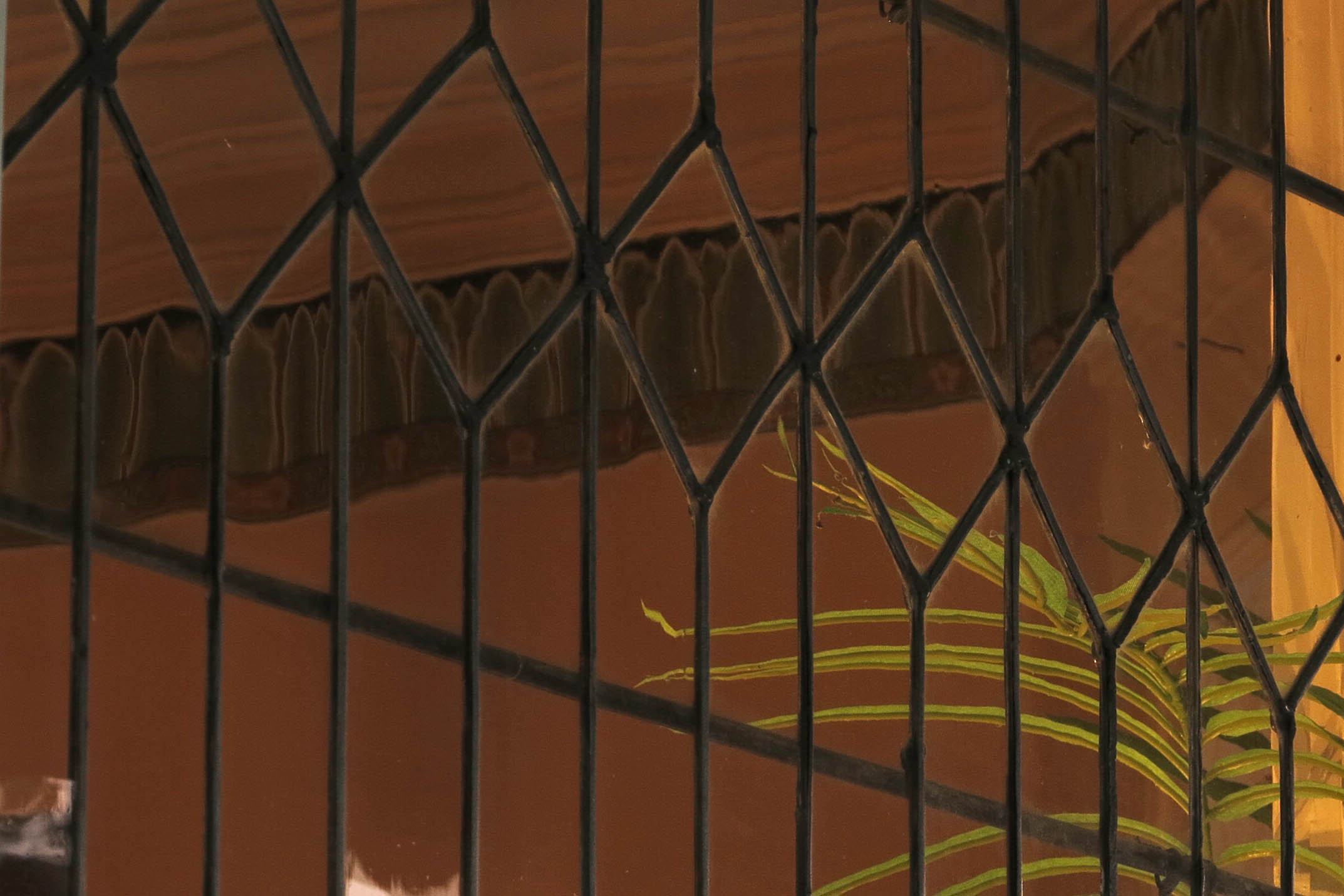
Detail of a window in the Walnut Street Inn

Detail of a window in the Walnut Street Inn

Walkway outside of our room

Walkway outside of our room

One benefit of staying in Springfield is hiking beautiful trails at the Springfield Conservation Nature Center and Lake Springfield. The Walnut Street Inn owner, Gary Blankenship, gave good driving directions to these areas. I would rise early and hike before breakfast, then have the day to explore the area with Becca. We walked several miles each day and had some wonderful meals together!

The Walnut Street Inn Bed and Breakfast – No cookie cutter accommodations, but a wonderful place to stay!

Springfield Conservation Nature Center

Springfield Conservation Nature Center

Springfield Conservation Nature Center

Springfield Conservation Nature Center

“Driving the Buffalo” in Do South Magazine

Eric Scowden, Photographer

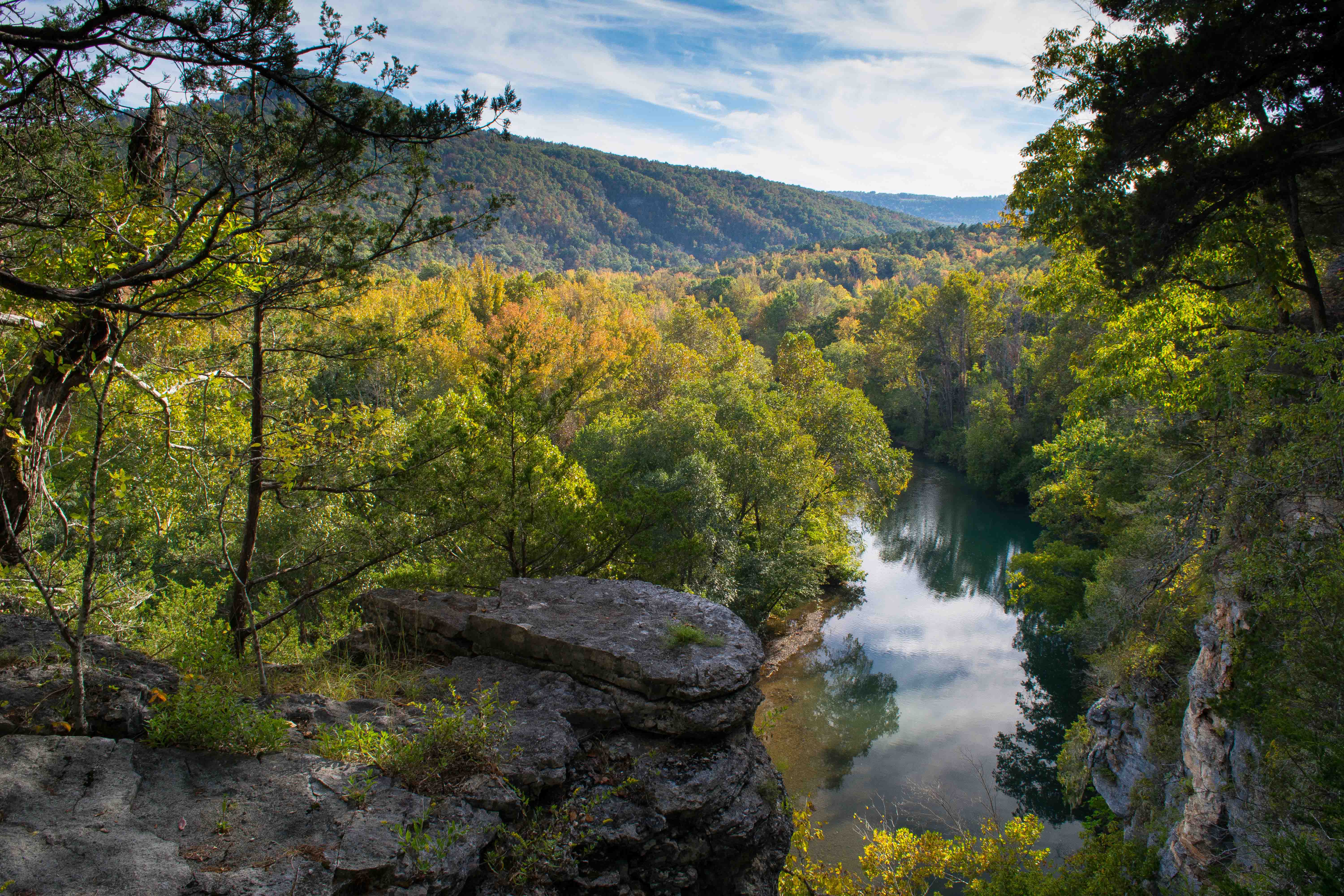
Buffalo River photo by Eric Scowden

Below is the link to an article I wrote for a wonderful regional publication, Do South Magazine. I always learn a lot by doing this type of writing. I want to say a special word of thanks to an outstanding local photographer who allowed me to use a couple of his photos. The opening photo showing a panorama of the Buffalo River and the elk photograph were both by Eric Scowden.

“Driving the Buffalo” from Do South Magazine, June 2015

Use the following link to read Do South Magazine: http://issuu.com/urbanmag/docs/dosouthjune2015_digital/45?e=5352110/13115800

On the Way and a Change of Plans: Hiking a Wet Marinoni Scenic Area
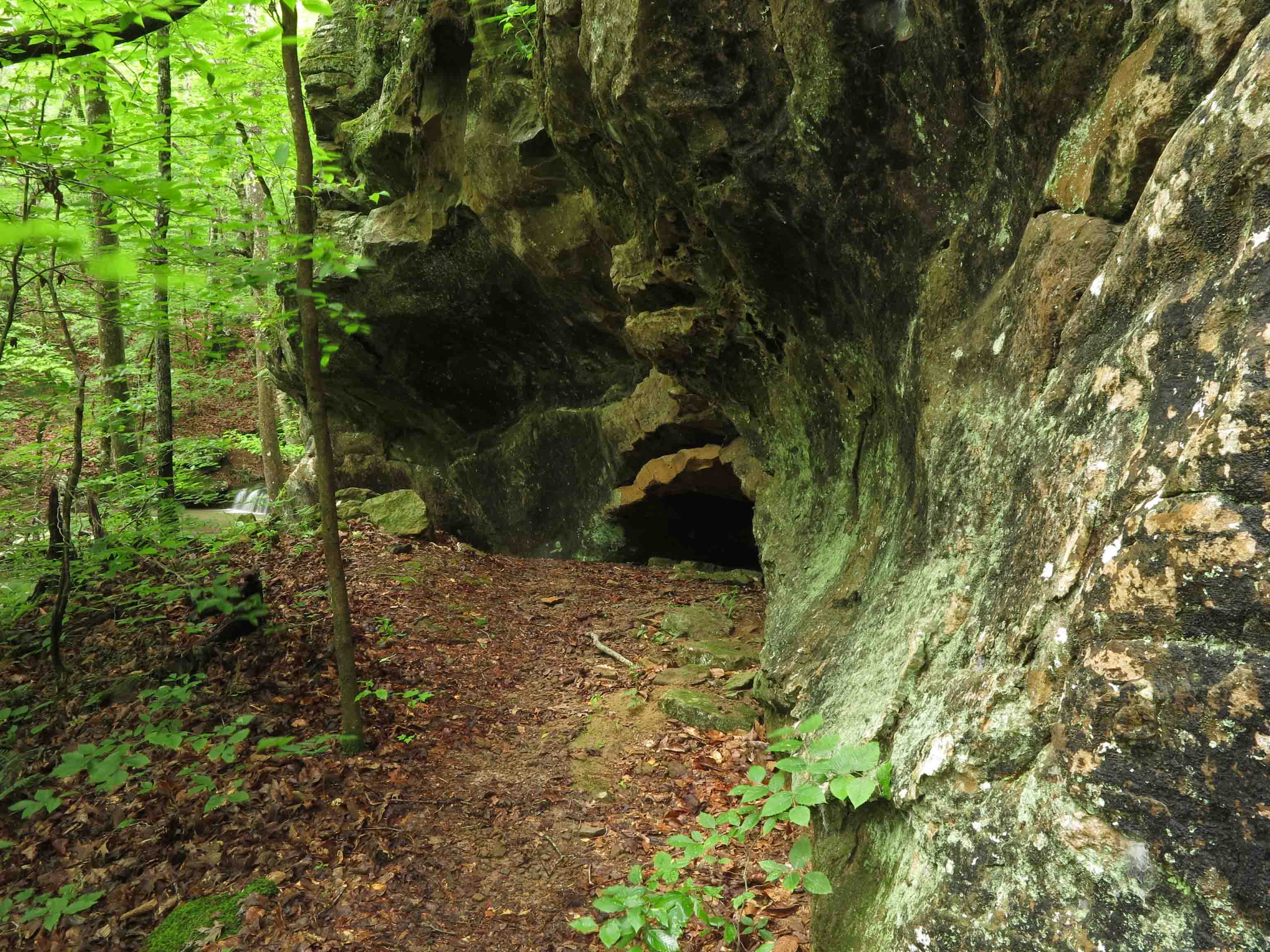
Stream flowing over the top of Marinoni Falls

Stream flowing over the top of Marinoni Falls

Hiking the Marinoni was my plan B today. Plan A was to check on my adopted section of the Ozark Highlands Trail. I got eleven miles east of Hwy 71 on Old Locke Road when I came upon a downed oak across the road. At first I thought my handsaw might be used to clear a single lane. After making a couple of cuts, I abandoned that idea. It was a chainsaw job. Hiker was restless and probably wondering what I was doing when we should be hiking. When we got back into cell range, I reported the tree and then headed to the Indian Creek Dawna Robinson Spur Trail east of Cass.

I’ve written about the Marinoni Scenic Area before, but I haven’t hiked it when water was flowing as strong as today. What could have easily been a two to three-hour hike was more like five with all of the photo stops. I felt thankful for that tree that changed my itinerary because the Marinoni was what I needed. Sometimes the best plan is plan B.

View of Marinoni Falls from a short distance.

View of Marinoni Falls from a short distance.

Marinoni Falls

Marinoni Falls

Small falls upstream from Marinoni Falls

Small falls upstream from Marinoni Falls

I spent enough time around these falls that Hiker-dog got impatient. She begins to bark when she thinks I’ve had enough time at the camera. I noticed that she began to pause and glance my way each time we passed any flowing water as if anticipating a photo stop.

Hiker watching the trees for squirrels while waiting patiently.

Hiker watching the trees for squirrels while waiting patiently.

I found it difficult to walk away from the Marinoni Falls. They provided an enjoyable time with my camera.

Small falls upstream from Marinoni Falls

Small falls upstream from Marinoni Falls

The towering walls above Briar Branch seem to envelop you like cathedral walls.

The bluffs above Briar Branch

The bluffs above Briar Branch

Bluffs above Briar Branch

Bluffs above Briar Branch

Edge of bluff with Briar Branch down in the distance

Edge of bluff with Briar Branch in the distance down to the right of the trail

Cascade close to the Marinoni marker

Cascade close to the Marinoni marker

IMG_9976rr

Little cave next to the Marinoni marker

Little cave next to the Marinoni marker

Large boulder across Briar Branch

Large boulder across Briar Branch

I never hike this section without pausing to be amazed at the size of this boulder down next to the creek.

Crossing Briar Branch

Crossing Briar Branch

Stone memorial for Dawna Robinson

Stone memorial for Dawna Robinson close to the trailhead

To read more about the Marinoni:

Making Time for Marinoni (includes driving directions to the trailhead)

Marinoni Revisited (Four Star Treatment) 

Fall in the Marinoni

In response to The Daily Post’s weekly photo challenge: “On the Way.”

A Familiar Trail in Unfamiliar Conditions

Shepherd Spring Waterfall

Shepherd Spring Waterfall from the trail

I wanted to avoid flooded roads so Hiker-dog and I headed to Lake Fort Smith this morning. We hiked the Shepherd Spring Loop Trail and enjoyed hanging out at the waterfall and Shepherd Spring for a while.

Shepherd Spring Waterfall

Shepherd Spring Waterfall

This waterfall is about seven feet tall and rarely runs this strong. The water has a beautiful flow because of the stair step shapes in the rock.

IMG_9719rr

I’d like to know the story behind this chimney located next to the trail and a short distance from Lake Fort Smith. Another chimney and Shepherd Spring are located along this section of trail.

IMG_9722rr

This is a normally dry drainage that crosses the trail as it flows to the lake.

Shepherd Spring

Shepherd Spring

Shepherd Spring always has water, but today it was flowing more heavily. The water storage tank no longer holds water so the water runs out at the base of the concrete wall.

IMG_9715rr

Portions of Lake Fort Smith were covered in debris from a fast moving and flood level Frog Bayou. Fort Smith broke precipitation records in May dating back to the 1940s.

Frog Bayou

Frog Bayou

I got a view of Frog Bayou from the trail high above. There’s no crossing in this area. It’s difficult to appreciate the water levels and volume of flow off in the distance, but you couldn’t pay me to cross that creek at these levels. As high as the water is now, you can see areas down below the trail that were covered by rushing water recently.

Small drainage

Small drainage

I had a closer look at this small drain that runs along the trail where it intersects back onto the OHT close to the waterfall.

Had to laugh on my return trip when I noticed the waterfall sign. Seems unnecessary now but it serves a purpose during the dry season when you have to imagine what it might look like with water.

It was a great day to hike a familiar trail clothed in springtime wet season conditions.

IMG_9772

Hiker was glad to get on the trail after several rainy days.

Hiker was glad to get on the trail after several rainy days.

Broken Down in the Ozarks

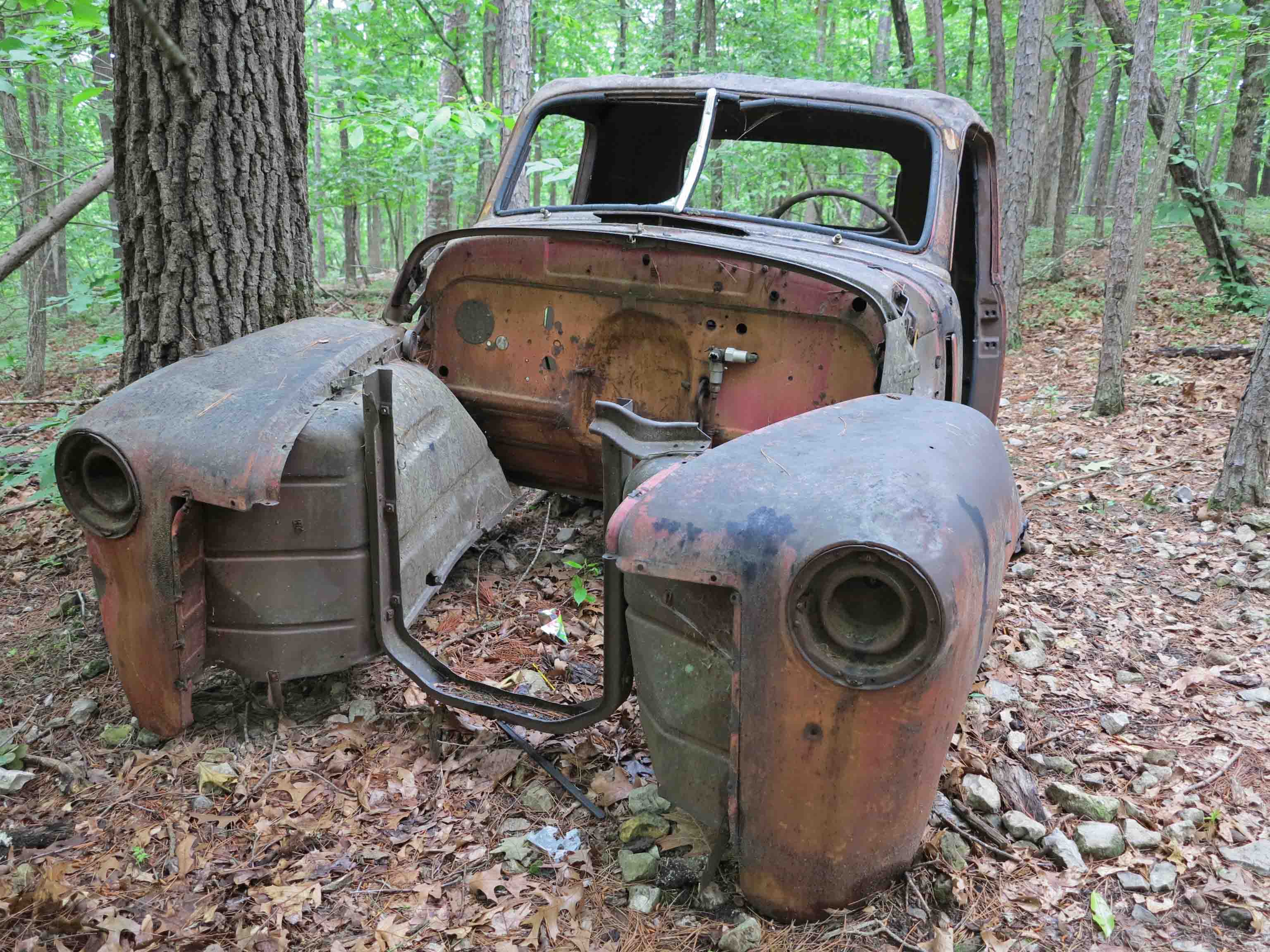
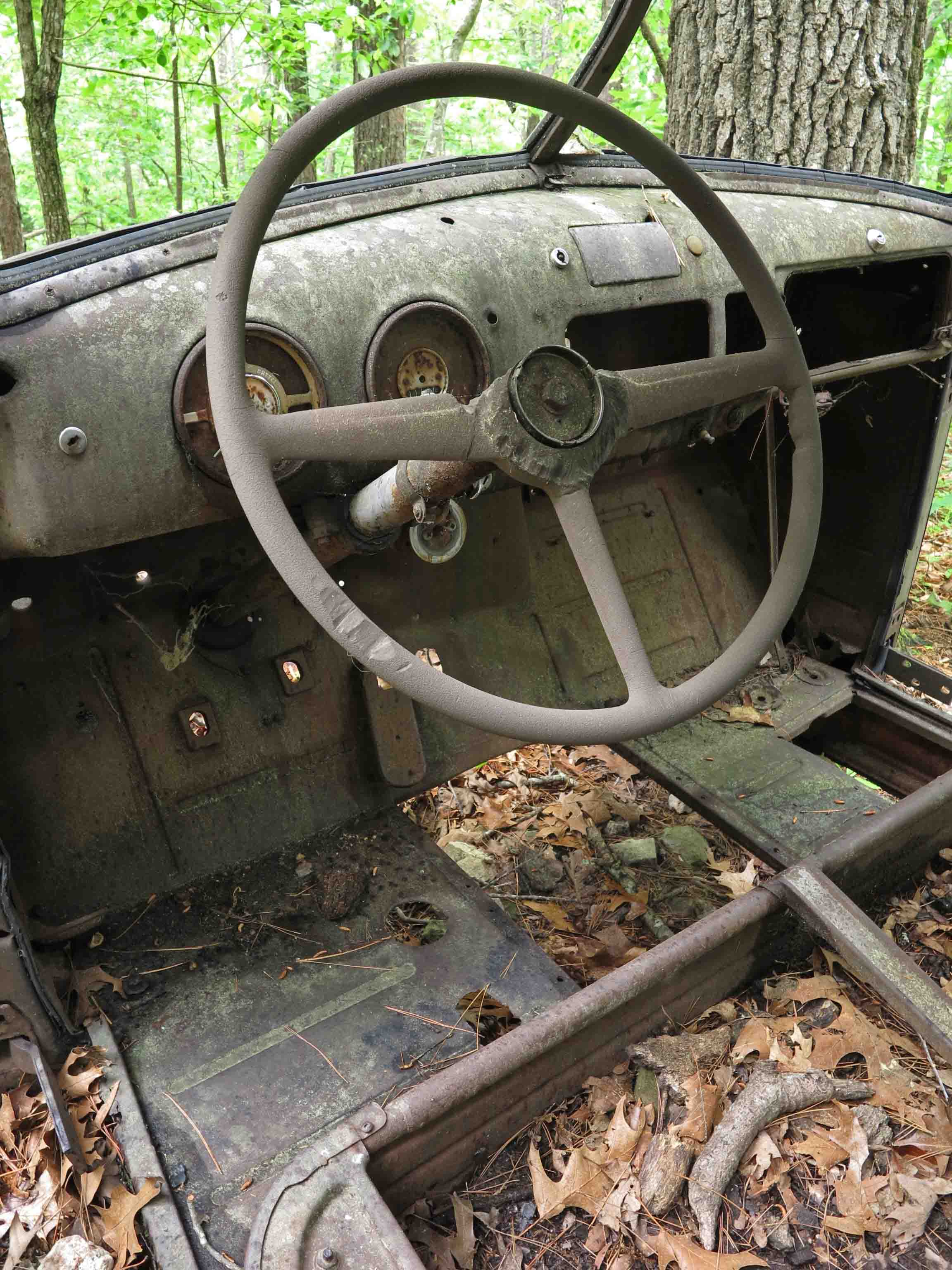
IMG_9633rr I came across the remains of this old truck this morning. It was on a ridge trail leading to Beaver Lake in Northwest Arkansas. I’d like to hear the stories this broken down piece of history could tell. IMG_9629rr IMG_9621rr In response to The Daily Post’s weekly photo challenge: “Broken.”

High Water Hiking on the Lake Alma Trail

McWater Falls

McWater Falls

We had more than six inches of rain within a 24-hour period last week. I did several out-and-back early morning hikes to have a look at water levels. With a few hours available this morning, Hiker-dog and I finally did the entire loop to see how high water levels had impacted the trail.

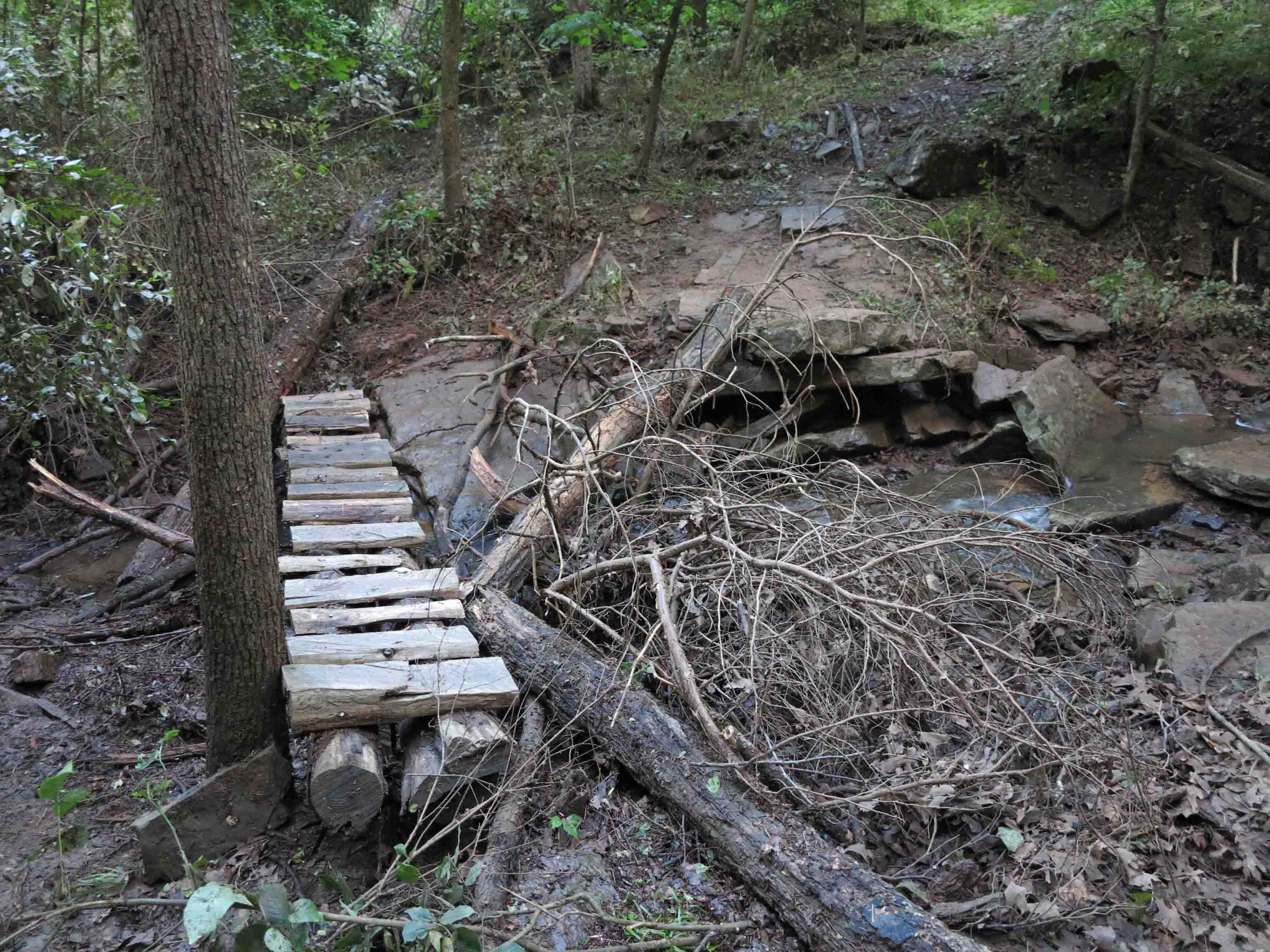
I was pleased that the trail from the picnic area all the way to Little Frog Bayou on the east side was in pretty good shape. McWater Falls was beautiful as always! An out-and-back on this section would be fine. See my trail description for this hike in E Fort Smith Magazine. The little bridge downstream from McWater Falls was washed out of position, but crossing on rocks is easy here.

Little bridge downstream from McWater Falls

Little bridge downstream from McWater Falls

Little Frog Bayou Bridge

Little Frog Bayou Bridge

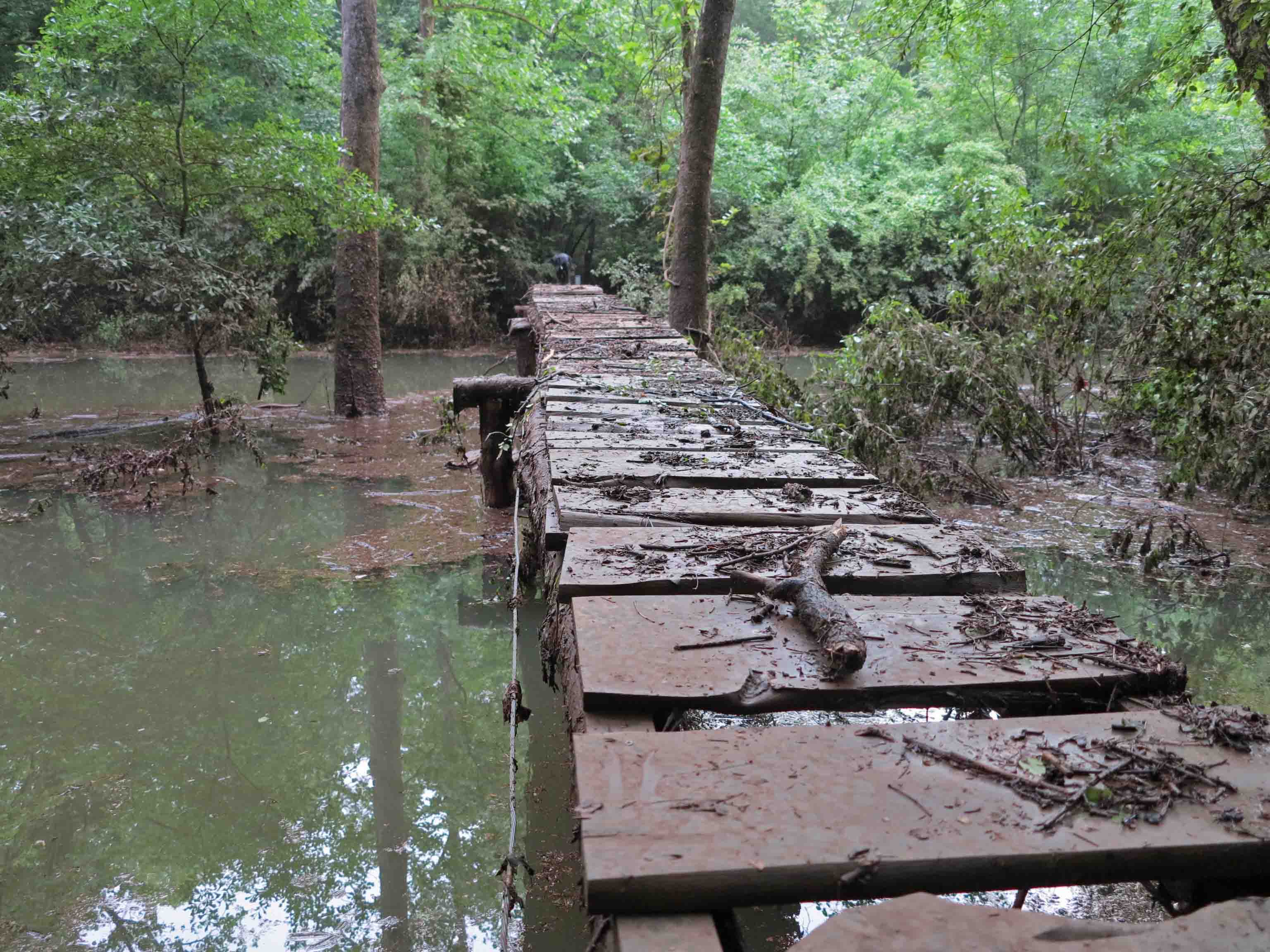
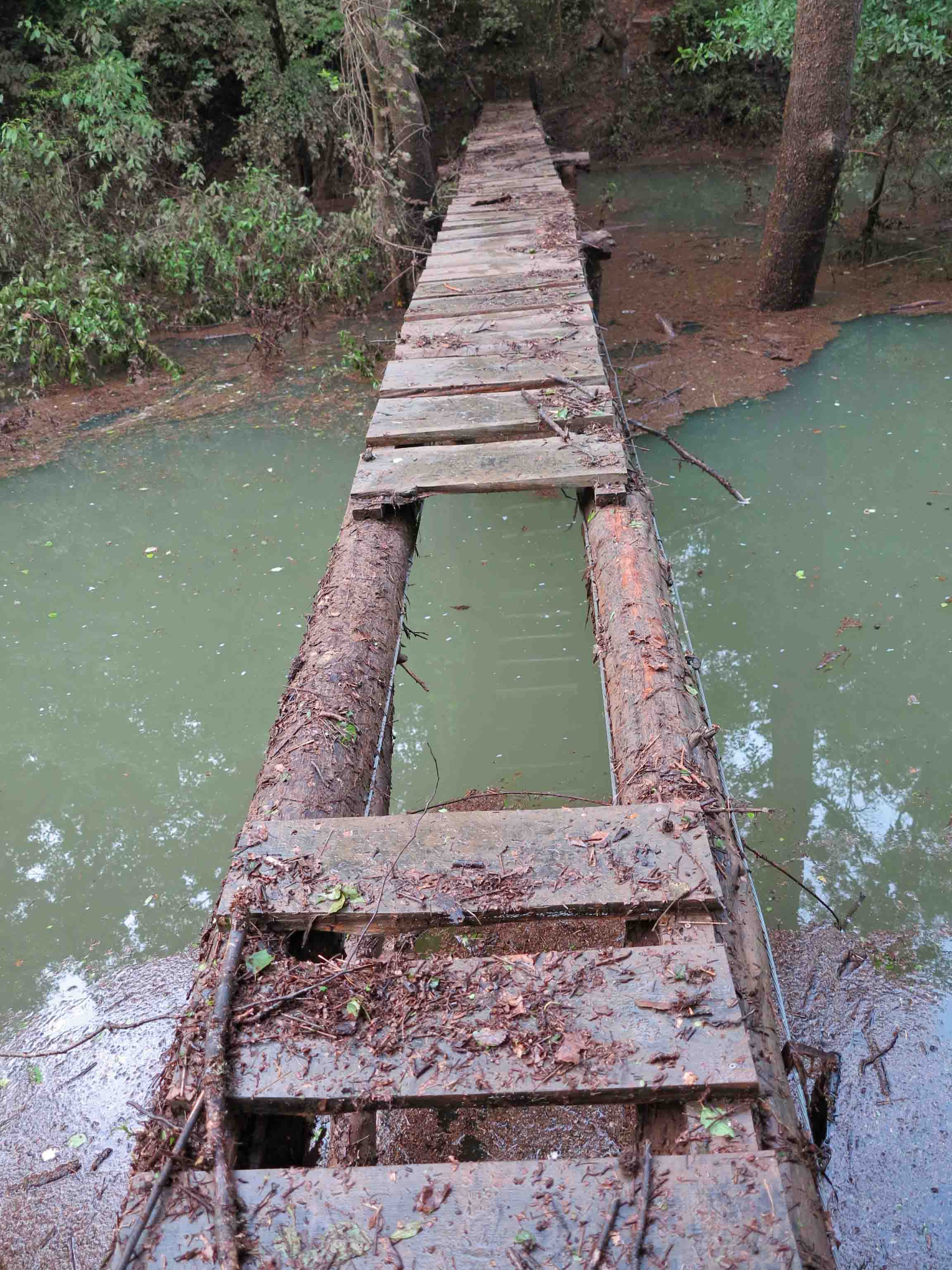
Arriving at Little From Bayou, I was amazed that the bridge was still in place with only a few boards missing (nice work Joe S. and friends). Do not cross the bridge until repairs can be made.

Little Frog Bayou Bridge high water damage.

Little Frog Bayou Bridge high water damage.

Hiker and I did not follow my advice but carefully crossed the bridge. We immediately began to wade through water along side of Little Frog Bayou. As soon as the trail turned south after the crossing and began to follow the creek I found myself approaching waist-high water. We left the trail and went to higher ground past the old well then back to the trail about sixty yards downstream where it was above water.

Historic well west of Little Frog Bayou

Historic well west of Little Frog Bayou

The next adventure was crossing the west creek (what we call Little Clear Creek). The bridge was still standing and held my weight. Water levels are usually around five feet below the bridge. Crossing the bridge involved some wading on the west side. We then sought higher ground since the trail was under water.

Little Clear Creek Bridge

Little Clear Creek Bridge

I came across some nice little bluffs high up over the creek and then headed back down to the main trail. The remainder of the hike was dry crossing the dam and back to the picnic area. We both had a good workout and were pretty well soaked. Nice morning on the Lake Alma Trail!

Rock formations west of Little Clear Creek

Rock formations west of Little Clear Creek

Hiker airing out on the dam.

Hiker airing out on the dam.

Dry walking next to the fishing dock below the picnic area

Dry walking next to the fishing dock below the picnic area

Sunday Morning Memory Walk

IMG_8723rr

This post doesn’t cover one of my typical Ozark hikes, but it does involve walking and a little personal exploration along the way.

When I visited my childhood church recently, I took the Sunday School hour to explore the old sanctuary no longer being used. It has been neglected over the years, but the stained glass windows are as beautiful as ever. I had fun using chairs, speakers, and stairwell handrails as makeshift tripods so I could record these windows that impressed me as a child. I appreciate their beauty even more today.

IMG_8722rr

The windows told the story of Christ’s life. The window above alluded to the betrayal of Christ by Judas.

Roy Hilton preached a sermon series on these windows during the months after they were installed. I must have been in my teens at the time so Brother Hilton would be pleased that I have any recollection of his sermons after all these years.

IMG_8706rr

This window may have symbolized the resurrection, but I’m not positive about this. I liked the butterfly or moth. If you look closely in the top left corner, you’ll notice mortar has chipped away from the wall around the window. I’m amazed at the good condition of the windows themselves.

IMG_8750rr

Roy Hilton was the pastor during my formative years. He was serious about sermon preparation and known as a great Bible teacher. Some of his series sermons could get pretty detailed and heavy. When sermons got too deep or long, I would enjoy some constructive daydreaming while staring at the windows or ceiling.

During my Sunday morning exploration, I couldn’t resist placing my camera on the floor and setting the timer for a photo of this ceiling that is so permanently imprinted in my memory.

Ceiling of the sanctuary

Ceiling of the sanctuary

Walking through my childhood church brought back memories of Roy Hilton.  He was honest, kind, and trustworthy. He also had a good sense of humor.  He was a servant leader in the best sense of the word.

Roy Hilton had a compelling story. I hope I remember this correctly. As a young man, he worked in a whiskey barrel factory. He’d been struggling with spiritual matters and came to the realization that he wanted to commit his life to God. He was working inside the factory as he reached this decision point.  His eyes came to rest on a large window on the wall of the factory. He had the vision of seeing everything he valued passing through that window and disappearing into the distance. From that point on he was fully committed to a spiritual life and eventually became a pastor.

Roy Hilton

Roy Hilton, pastor from 1965 to 1976

I walked through some other parts of the old building and eventually came to one of my childhood Sunday School rooms. Though these windows aren’t beautiful, their foggy colors bring back memories.

Sunday School class window

Sunday School class window

IMG_8727rr

I followed these creaky stairs down from my old class and returned to the present, thankful for the memories of my childhood church. Some of the beliefs that seemed harsh and unyielding as a child have softened or turned into overarching questions and for this I am thankful. Some of these questions occupy my inner thoughts and give me comfort as I continue down my personal paths.

My childhood church may crumble and fade, but memories of those richly colored stained glass windows will stay with me always.

IMG_8697rr

Etched window in the newer building with the old sanctuary in the background.